Written by: Shameen Arshad
Posted on: July 06, 2026 |  | 中文
| 中文
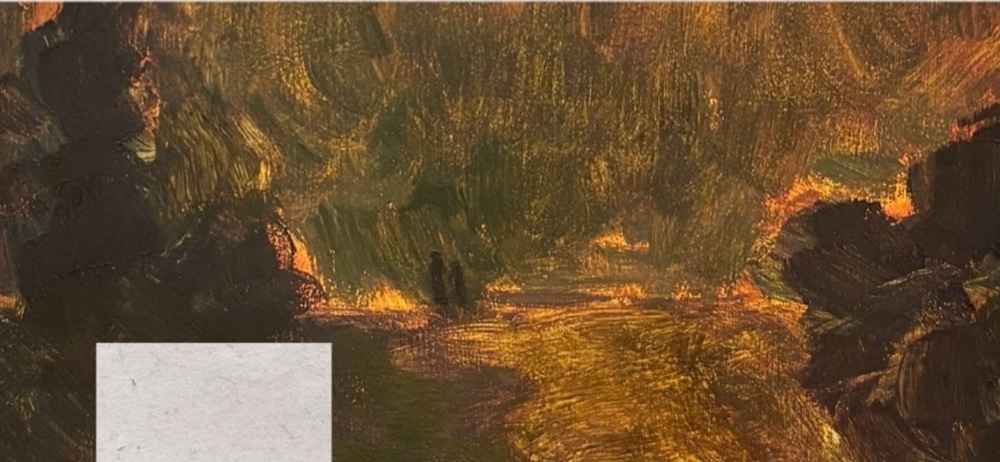
The exhibition Places we carry, currently on display at Alliance Française, Islamabad, is a deeply personal and emotionally charged exploration of human sentiment and memory. Curated by Sarah Rajper, the show presents the work of four artists - Aleezah Qayyum, Nain Tara, Mahnoor Javad, and Zahabia Khozema, whose practices reflect on the relationship between people and the spaces they inhabit. The exhibition examines the exchange between the natural and constructed world and humanity: how each informs the other and contributes to its evolution, preservation, transformation, or decline. It speaks of the inevitable changing nature of landscapes, whether through human intervention, abandonment, environmental shifts, or nature simply taking its course. Simultaneously, it reveals the enduring hold that places and the natural world exert over the human psyche.
The exhibition presents "landscape" in a myriad of ways. It refers not only to physical geography but also to psychological topographies and emotional terrains. There are works that celebrate the majesty of the natural world and others that depict spaces conquered by human presence or, conversely, bereft of it. The subjectivity of the term becomes apparent as the exhibition moves between concrete spaces and interior landscapes, revealing how something seemingly objective as a landscape is profoundly shaped by the narratives we attach to it, the emotions it evokes, and the events that have unfolded within it. In this sense, the exhibition can be read as a collection of mindscapes - records of how each artist perceives the world around them and how those perceptions shape identity, memory, and worldview. The works transport the viewer to spaces suspended between reality and imagination.
One is instantly reminded of the Romantic period of painting, in which landscape became a vehicle for expressing feelings and subconscious musings - emotions hidden from the eye, yet deeply palpable.
Aleezah Qayyum's work possesses a beautiful immediacy, condensed within her rough, energetic mark-making and choice of untreated canvas surface. The artist embraces the rawness of the material, allowing its texture to become an active participant in the image. Her seemingly unplanned gestures and confident handling of paint imbue the works with a wild, uninhibited energy that reinforces their spontaneity. Seen collectively, the paintings resemble a form of visual note-making, accumulating over time and suggesting an ongoing process rather than a finished image.
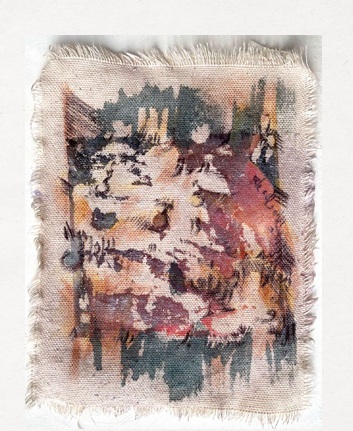
Irwati I by Aleezah Qayyum
Qayyum's oil paintings, with their fleshy tones and thick applications of paint, present the human body itself as a landscape. The amorphous forms speak less of physical terrain and more of the instability and fluidity of human emotion. The heavy paint appears to ooze off of the surface, carrying a sense of violence and discomfort, lending the works a sinister quality as forms appear to morph and distort within the confines of the frame.
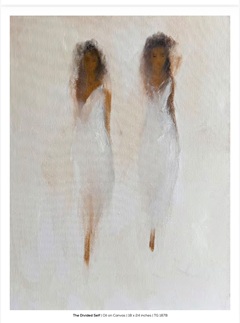
Mahnoor Javad's dreamscapes toe the line between reality and imagination. The landscapes that inspire these paintings seem as though they may never have existed at all. In her works, the surrounding environment often assumes the role of the protagonist, in contrast to Qayyum's paintings, where bodily presence takes precedence.
The hazy forms and blurred transitions evoke a sense of ephemerality. Figures appear suspended in a transitory state, neither fully present nor absent. This dreamlike quality manifests itself through a lack of clear divisions: skies merge into backgrounds, and figures dissolve into their surroundings.
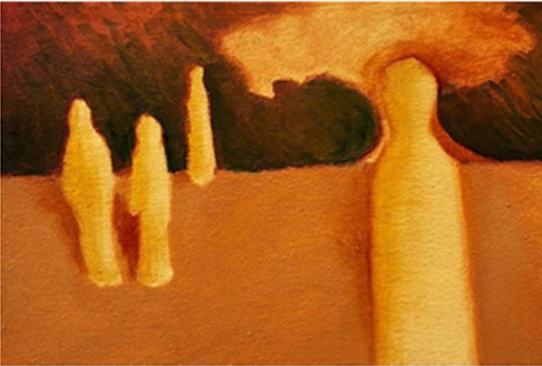
Watching II by Mahnoor Javad
Javad’s painting possesses remarkable fluidity, lending the compositions their dynamic quality. Variations in the thickness of paint suggest differing levels of lucidity. Thin washes of paint evoke fleeting memories and transient moments, while thicker applications and more solid lines suggest experiences witnessed with greater clarity and permanence.
The simplicity of her silhouetted figures allows for multiple readings and possibilities, while the repetition of similar compositions reinforces the sensation of recurring dreams. Works such as Still II demonstrate how palpable texture can embody deeply intangible emotions, with rich layers of paint seemingly impregnated with restless energy.
The exhibition also foregrounds the emotional potency of colour and its extraordinary power over human perception. It highlights not only the symbolism attached to colour but also its deeply subjective nature, shaped by inherited cultural meanings and personal experiences.
The emotionality of colour is perhaps most evident in Nain Tara's paintings, where the artist takes the viewer on an emotional journey through a terrain of human sensibilities. Her varied and vibrant palette transforms the paintings into explorations of personal experience to which the viewer is granted intimate access.
Her work displays the greatest freedom from conventional representation and the furthest departure from observable reality, despite remaining grounded in a subject rooted in lived experience—the presence of absence. The paintings possess a quiet intensity, containing within them a confluence of emotions and memories. Her marks appear almost to dance and sway across the surface.
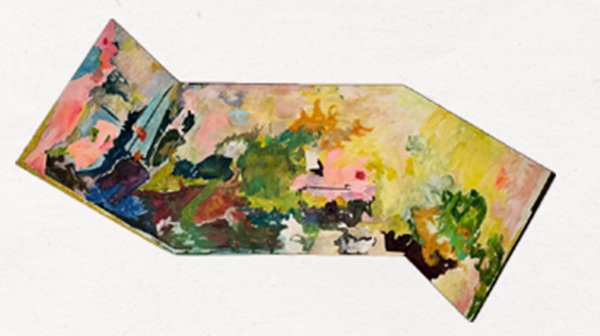
Untitled by Nain Tara
The title I Try to Hold, What Already Is Gone immediately suggests a deeply personal meditation on loss, nostalgia, and the impossibility of preserving that which is fleeting. Her work embraces absence and transience, inviting the viewer to contemplate memory not as a stable archive but as something constantly shifting and slipping away.
Tara's use of colour allows the viewer's eye to travel unhindered across the surface of the canvas, while the multiplicity of tones and hues hints at the complexity of the emotional subject matter.
Another adept understanding of colour is evident in Zahabia Khozema's work. The paintings exist as a symbiosis between smooth layers of oil paint and quick, energetic pastel marks, giving otherwise flat and inanimate structures a sense of vitality. The gestural marks become traces of human presence within these deserted environments. Simultaneously, the unrealistic palette lends the paintings a synthetic quality that hints at decay, aptly reflecting her subject matter - the memories of a boy from an industrial town in Central Punjab that has gradually become a ghost town.
Though the compositions depict seemingly ordinary scenes, they are embellished with vibrant and unexpected colours that generate an almost electric energy. The artist's exuberant palette, set against rigid concrete structures, creates a compelling tension, as though she is momentarily restoring memory and human presence to spaces that have long been abandoned.
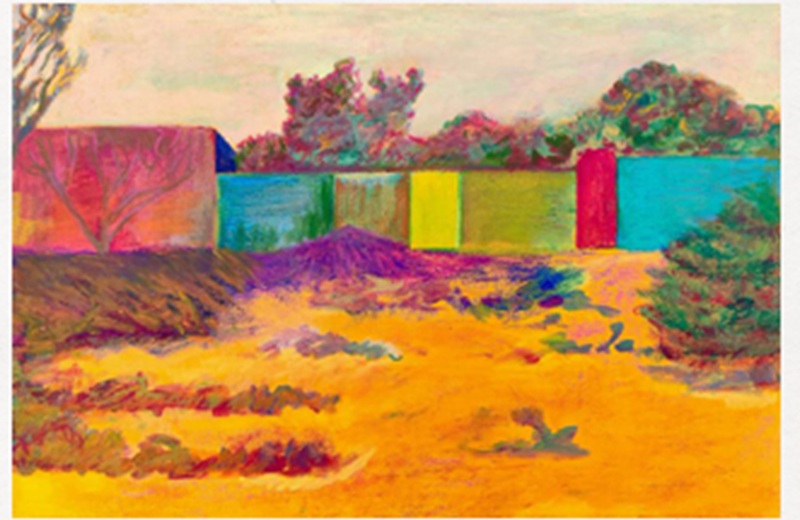
Where is Rehan by Zahabia Khozema
Her titles further engage the viewer, suggesting fragments of personal memories while simultaneously inviting us to project our own experiences onto these landscapes.
Places We Carry ultimately reminds us that landscapes are never merely places. They are repositories of memory, emotion, longing, and loss. The exhibition proposes that we do not simply inhabit places; rather, places continue to inhabit us long after they have changed, disappeared, or been left behind. The exhibition remains open to the public until 4 July at Alliance Française, Islamabad.
You may also like: