Written by: Asal e Musafa
Posted on: July 09, 2026 |  | 中文
| 中文
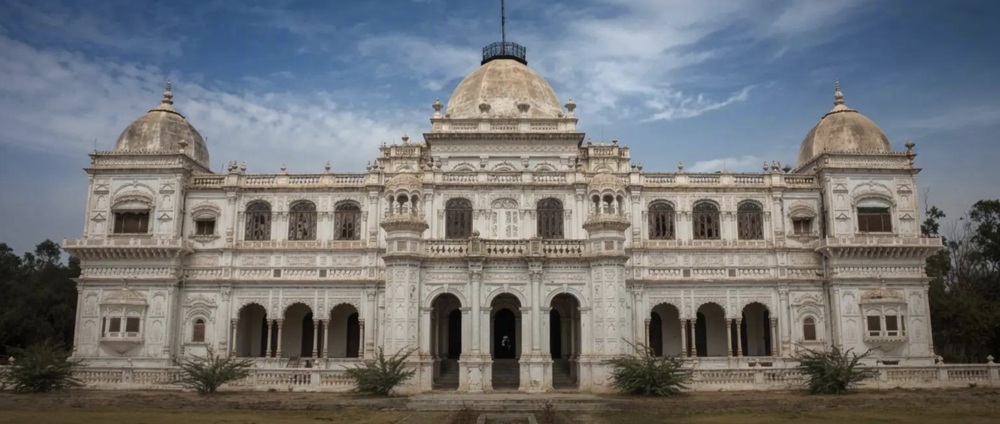
Sadiq Ghar Palace
Sadiq Garh Palace is one of the standing architectural remnants from the colonial period. It was constructed during the 19th century to serve as a princely complex for the Abbasi family of Bahawalpur in Dera Nawab Sahib, southern Punjab, Pakistan. Once a symbol of princely grandeur and technological innovation, Sadiq Garh Palace remains a striking reminder of the opulence of the former State of Bahawalpur. Although much of its former glory has faded, the palace continues to captivate visitors with its eclectic architecture and fascinating history.
Construction of Sadiq Garh Palace began in 1882 under the patronage of Nawab Sadiq Muhammad Khan IV, the ruler of the Princely State of Bahawalpur. Completed in 1895 under the supervision of Italian engineers, the palace and its accompanying outbuildings cost approximately Rs 1.5 million to build. The Sadiq Garh Palace is reflective of the fascination the aristocrats of Bahawalpur held for the grand palaces of Europe, which is seen in the architecture of not only this palace but also other palaces, such as the Noor Mahal, as well.
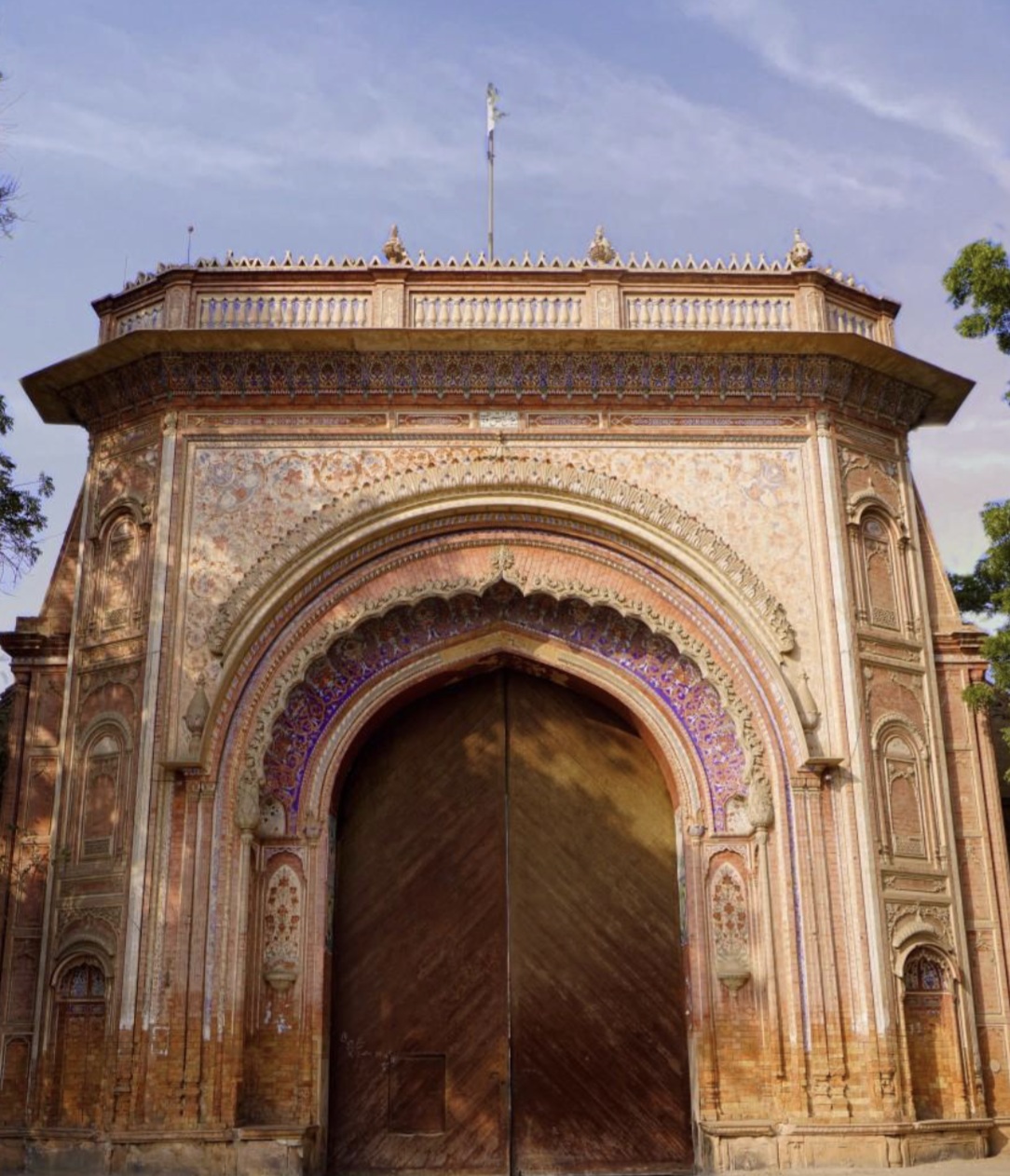
Entrance to the palace
Designed in the Beaux-Arts style, the palace was adapted to suit the climate and aesthetics of the Indian subcontinent. At a time when electricity was still considered a luxury, Sadiq Garh Palace was equipped with its own power generators, allowing it to operate electric elevators and illuminate its many halls with hundreds of lamps. The estate also featured an advanced plumbing system supplied by a dedicated three-story water reservoir, which provided water to both the palace and its landscaped gardens. Although historical accounts suggest that the water system never functioned entirely as intended, it nevertheless demonstrated the remarkable technological sophistication of the residence.
Architecturally, the palace holds an imposing grandeur. Overall, the palace comprises a two-story rectangular structure, anchored by four octagonal corner towers. In the center is a main durbar hall, where the Nawab received guests and conducted official ceremonies. The hall is crowned by a barrel-vaulted roof that culminates in a large octagonal dome rising high above the rest of the structure. On the southern façade, a spacious porch framed by three elegant arches once welcomed arriving guests, many of whom would have approached the palace in the latest automobiles of the era.
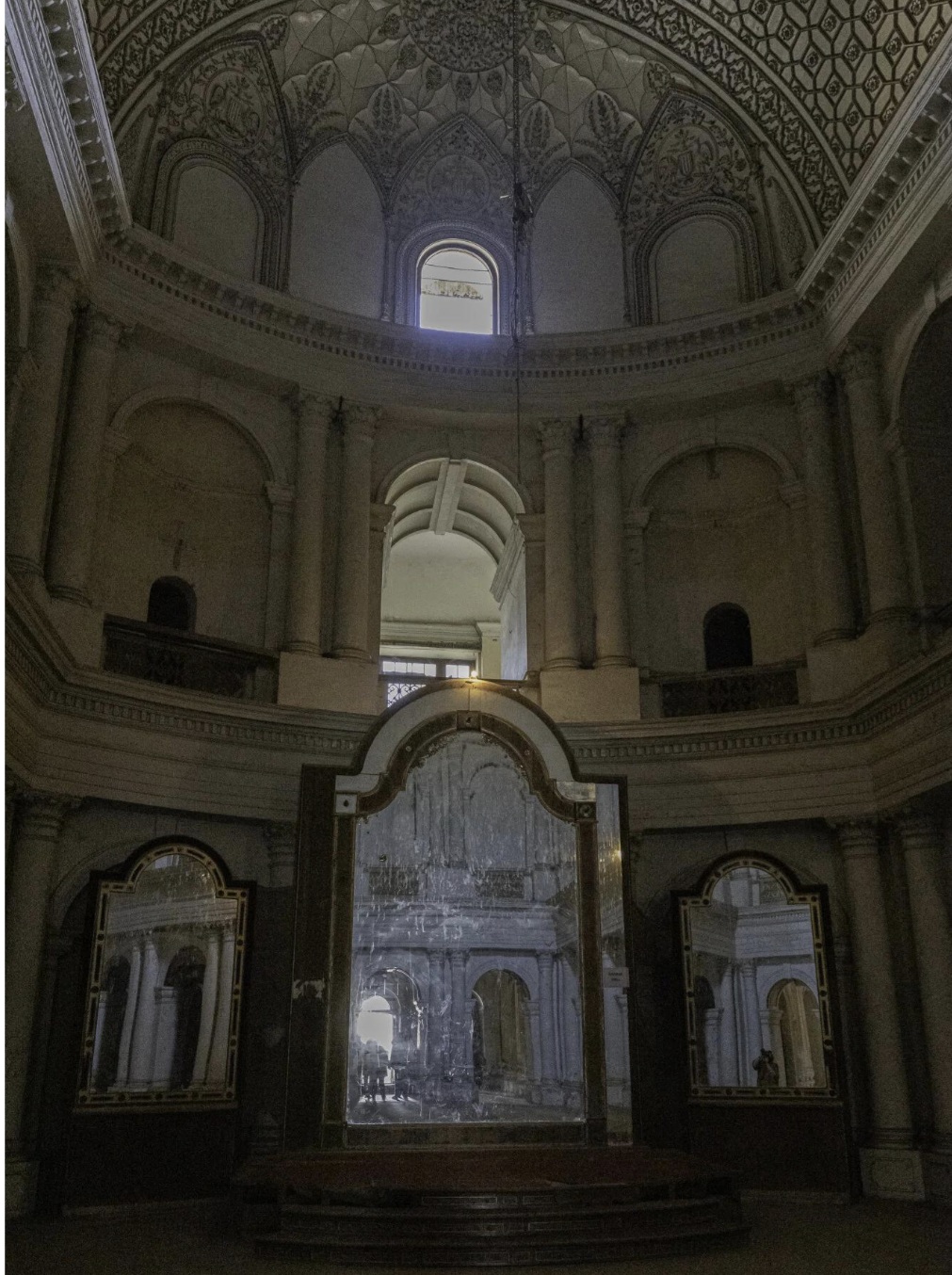
Reception hall of the palace
Perhaps the most fascinating aspect of Sadiq Garh Palace is its unique architectural fusion. Rather than adhering to a single style, the palace combines European, Mughal, Sikh, and local influences into one harmonious composition. The paired columns supporting the ground-floor porticos are reminiscent of Italian Renaissance and Neoclassical architecture, drawing comparisons to buildings such as Rome’s Borghese Palace and Turin’s Chapel of San Lorenzo. Yet these distinctly European features are softened by scalloped Mughal arches, projecting chajjas (eaves), ornate jharokha balconies, and bangla-style awnings commonly associated with Sikh and Mughal architecture. The result is a structure that reflects both the cosmopolitan outlook of its patron and the rich architectural heritage of the region. Like the exterior, the interiors of this palace were equally extravagant. According to historical accounts, the palace contained approximately 120 rooms, with every pair of rooms decorated according to the artistic traditions of a different country or culture. This unusual concept reflected the eclectic tastes of Nawab Sadiq Muhammad Khan IV, who was known for his fascination with luxury and rare collectibles. Among his most famous passions was his collection of nearly 1,700 watches, several of which he reportedly wore simultaneously.
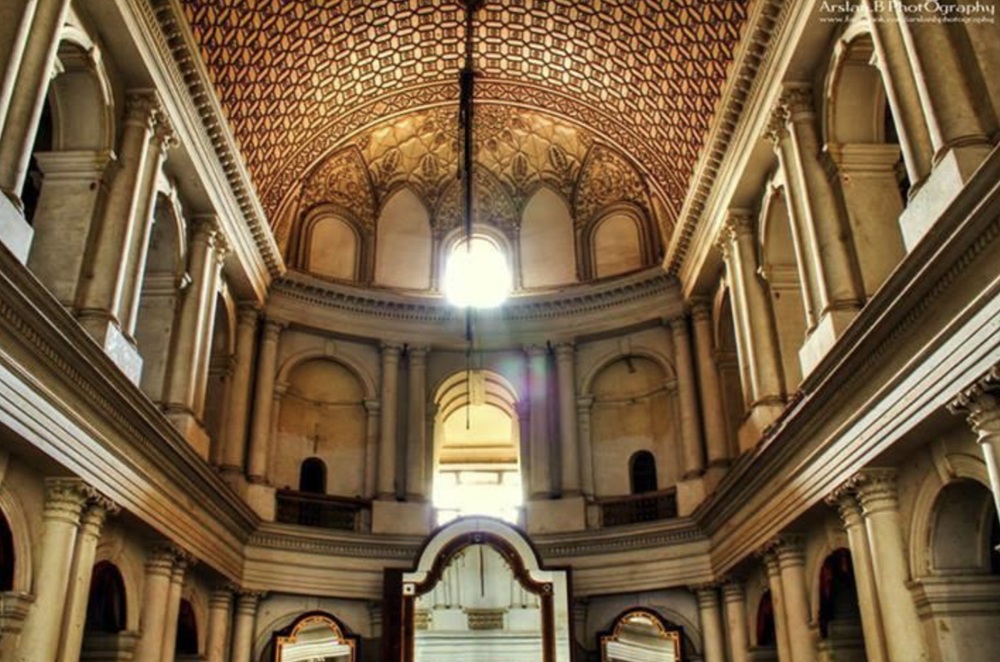
The Durbar Hall
Many of the palace’s rooms were furnished with imported treasures. The grand durbar hall displayed three enormous mirrors brought from Britain at considerable expense, while the Nawab’s private bedchamber housed an elaborate silver bed weighing nearly 290 kilograms. It also contained a built-in music box capable of playing a short excerpt from Charles Gounod’s opera, Faust. Unfortunately, this extraordinary piece is believed to have disappeared during disputes over ownership in the early 1990s.
Despite its splendour, the palace’s fortunes changed dramatically after the dissolution of the princely states. One of its final moments of international prominence came in 1973, when Pakistani President Zulfikar Ali Bhutto hosted a reception there for foreign ambassadors and their spouses. Shortly afterwards, however, the government’s land reform policies and the application of the Antiquities Act effectively placed the palace under state control. Legal disputes between the government and various branches of the Abbasi family prevented any clear resolution of ownership, leaving the estate abandoned and sealed for decades.
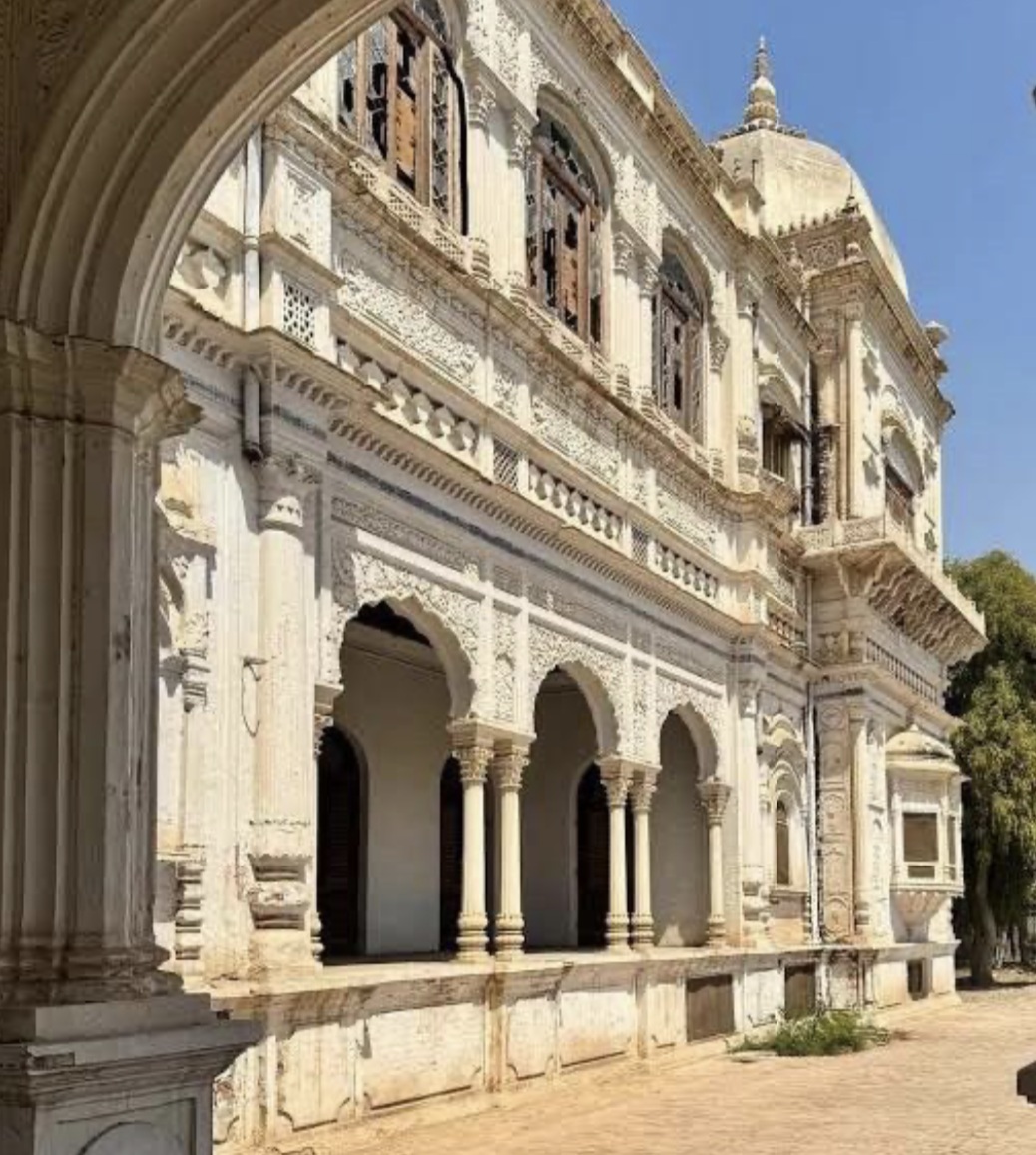
Zoomed-in view of the palace’s veranda
The consequences were devastating. Without proper maintenance or security, the palace became vulnerable to vandalism and looting. Valuable furniture, decorative fixtures, historical artefacts, and even plumbing fittings gradually disappeared. At the same time, the Nawab’s estate was divided among twenty-three different claimants, making restoration efforts increasingly difficult. With no single authority responsible for its preservation, one of Pakistan’s grandest palaces slowly fell into disrepair.
Today, Sadiq Garh Palace remains both a magnificent architectural achievement and a poignant reminder of the importance of preserving cultural heritage. Though weathered by time and neglect, its soaring domes, elegant arches, and richly layered architectural influences continue to tell the story of an era when Bahawalpur was one of the most prosperous princely states in the subcontinent. Preserving this remarkable landmark would not only safeguard an important chapter of Pakistan’s history but also ensure that future generations can appreciate the artistry, ambition, and cultural exchange embodied within its walls.
You may also like:
From the Horn of Africa to Bahria Town: Habesha Café Brings Centuries of Coffee Culture to Rawalpindi
(October 15, 2026)