Written by: Zulfiqar Ali Kalhoro
Posted on: July 21, 2026 |  | 中文
| 中文
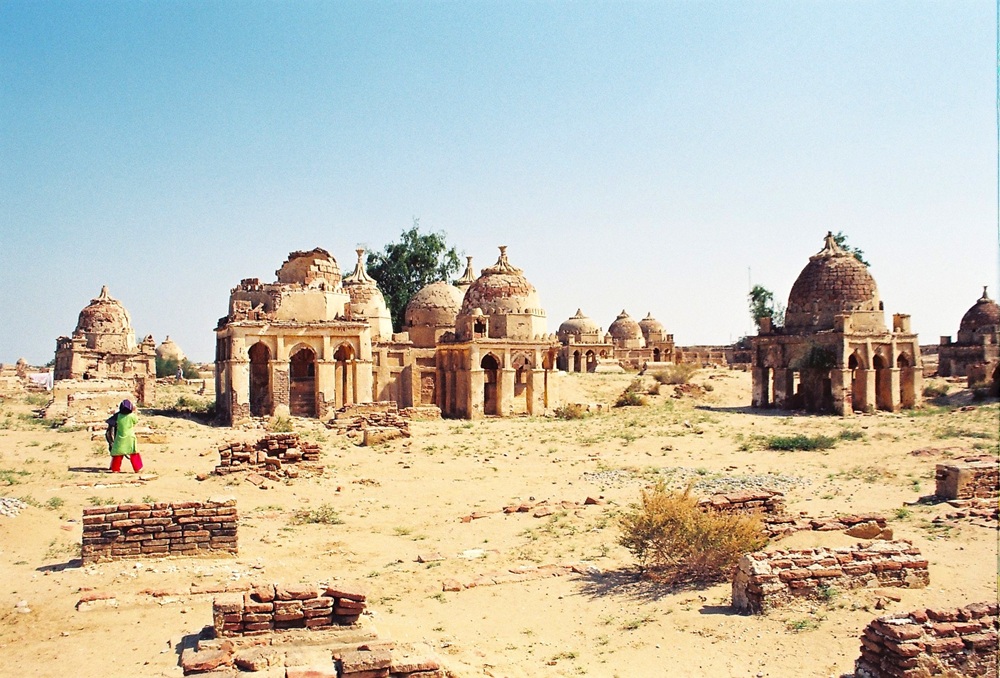
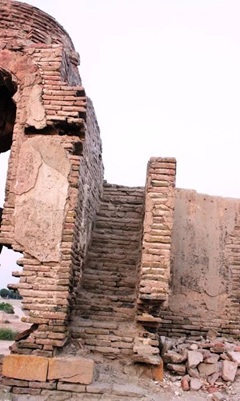
The necropolis of Mian Nasir Muhammad Kalhoro
Sindh is notable for its rich cultural heritage, particularly reflected in its numerous painted tombs, which were constructed during distinct historical periods: the Kalhora (1700-1783), the Talpur (1783-1843), and the colonial era (1843-1947). These tombs are uniquely adorned with various thematic elements, among the most captivating being the romantic tales of Sindh.
The narrative of Sasui-Punhun is particularly significant; it has not only captured the imagination of the local populace but also inspired painters, who vividly illustrated episodes from this folktale on the walls of the tombs. These artistic representations serve as both a cultural archive and a testament to Sindh's storytelling tradition.
The tombs representing these themes are distributed across various districts in Sindh, making them accessible for both historical study and cultural appreciation. Furthermore, the character of Sasui holds a prominent place in Sindhi poetry, with nearly all classical poets referencing her in their works. Notably, Shah Abdul Karim Bulri (1536-1623) is recognised as the first poet to weave the character of Sasui into his poetry.
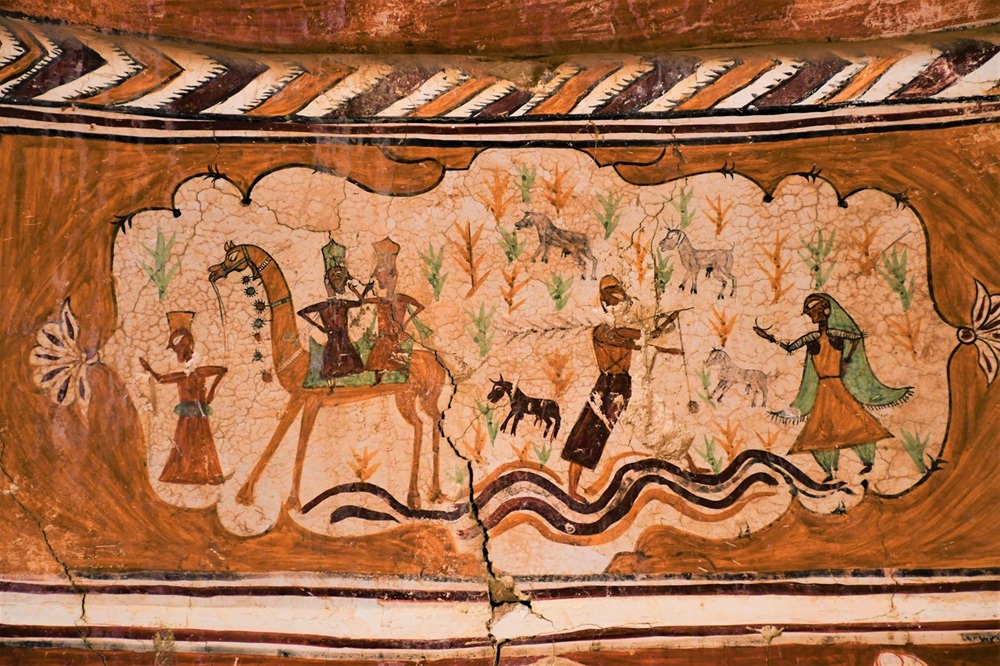
Painting of Sasui and Punhun story in the tomb of Dato Laghari in Johi
Historic painted tombs in various districts of Sindh portray several key episodes from the celebrated romance of Sasui and Punhun. Among the most frequently represented scenes are the departure of Punhun's brothers from Kech Makran and their arrival at Banbhore, the forcible return of Punhun to Kech Makran, Sasui's arduous journey in pursuit of her beloved, and her encounter with a shepherd in the wilderness.
All four episodes are depicted in the Kalhora, Talpur, and British-period tombs located in four districts: Kamber-Shahdadkot, Dadu, Shaheed Benazirabad formerly Nawabshah and Sanghar. Most of the story's main episodes are depicted in a single panel in the tombs. Sometimes, separate panels have also been made to represent these episodes. 'Departure of Punhun's brothers' is also separately represented. Sometimes, one or two brothers of Punhun are depicted. In one of the paintings in a tomb at the necropolis of Mian Nasir Muhammad Kalhoro in Dadu's Khairpur Nathan Shah taluka, both brothers of Punhun are shown going to Banbhore. One brother is shown seated on a camelback, and another is shown on foot leading a camel. This motif was popular among Kalhora and Talpur painters, who often depicted the brothers of Punhun in a separate panel. In a few representations, only one brother of Punhun is depicted along with a shepherd. He seems to be asking probably about the route to Banbhore. In the tomb of Dato Faqir at Jalab Dero in Johi taluka, two panels depict the two episodes of the story. On one panel, Puhnun's brother is depicted leaving for Banbhore, and in another, he meets the shepherd and asks for the shortest route to Banbhore.
The folk painters also focus on the climax of the story, when the brothers of Puhnun return him to Kech-Makran. When Sasui gets up in the morning and comes to know about her husband being forcefully taken by her in-laws to Kech-Makran, she vows to follow and meet her husband. This episode of the story is vividly depicted in the Sindhi tombs. Sometimes, all four characters of the story- Sasui, Punhun, the brothers of Punhun and the shepherd have been painted on the same panel. In a few tombs, all four characters have been painted separately on separate panels. However, in most cases, a single panel depicts all four characters or episodes of the story.
The earliest representation of this motif can be found in three tombs at the necropolis of Mian Nasir Muhammad Kalhoro. This painted narrative later appears in the tomb of Mir Allahyar Khan Talpur near Drigh Bala in Dadu district. The canopy of Piyaro, located west of the tomb of Ghanwar Faqir in Thull village in Dadu's Johi taluka, depicts several folk romances. Eight panels illustrate different folk tales, snapshots of everyday life, and equestrian scenes. Among these, the folk romances of Laila and Majnun, as well as Sasui and Punhun, are prominently featured. One panel illustrates Laila meeting her beloved Majnun, who is sitting under a tree. Next to Majnun is a depiction of a camel, symbolising his companion during his time in the wilderness. In another panel of the canopy, Sasui is seen pleading with her in-laws not to separate her from her beloved Punhun. Punhun is depicted being carried away by his brothers on a camel towards Makran.
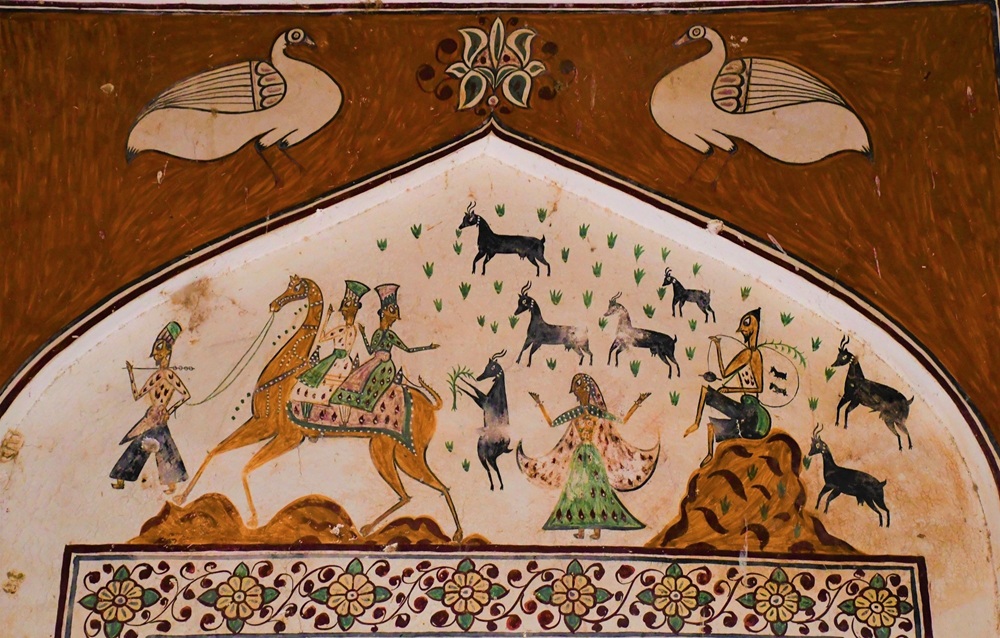
Painting of Sasui and Punhun story in a Muridani Jamali tomb.
In some paintings, the artist portrays the shepherd as a villain, and in others, as a gentleman who helped guide Sasui on his way to Kech-Makran.
Apart from the Dadu district, several tombs in the Kamber-Shahdadkot district collectively illustrate three episodes within a single panel. The best-known examples are the Jamali tombs in Kamber-Shahdadkot; unfortunately, both tombs collapsed during the 2010 floods. The tombs of Mir Sobdar Jamali and Rehan Khan Jamali featured depictions of Sasui with her maid. The brothers of Punhun are shown taking him back to Kech-Makran. In these paintings, the shepherd is depicted spinning yarn (charkho) while grazing his goats.
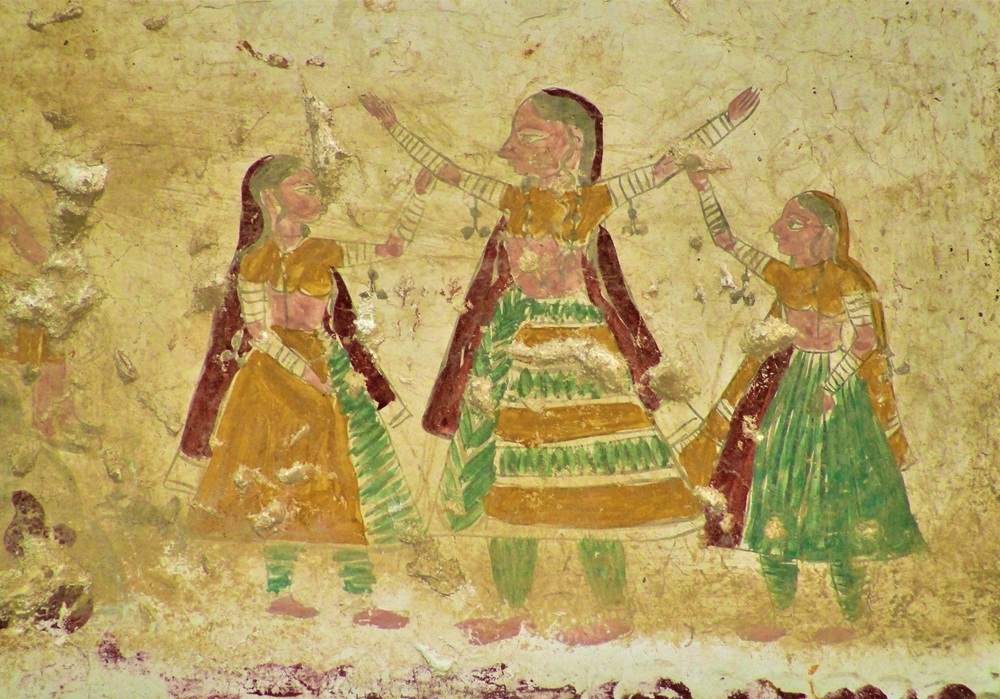
Sasui with her friends in a tomb at Tilla Shah necropolis
Unlike other representations of Punhun and his brothers, these particular depictions show them armed. Punhun is illustrated holding a gun, while his brother wields a large axe. In contrast, earlier representations show Punhun's brothers carrying only clubs as they escort him back to their kingdom.
A similar representation can be found in a tomb at the Tilla Shah necropolis in the Sanghar district, where one of Punhun's brothers is depicted carrying a club. In this mural, four brothers of Punhun are shown: two are seated on camels while the other two are on foot. Earlier representations in the tombs at Dadu and Kamber-Shahdadkot feature only one camel, with Punhun and one brother riding together, while another brother walks alongside them.
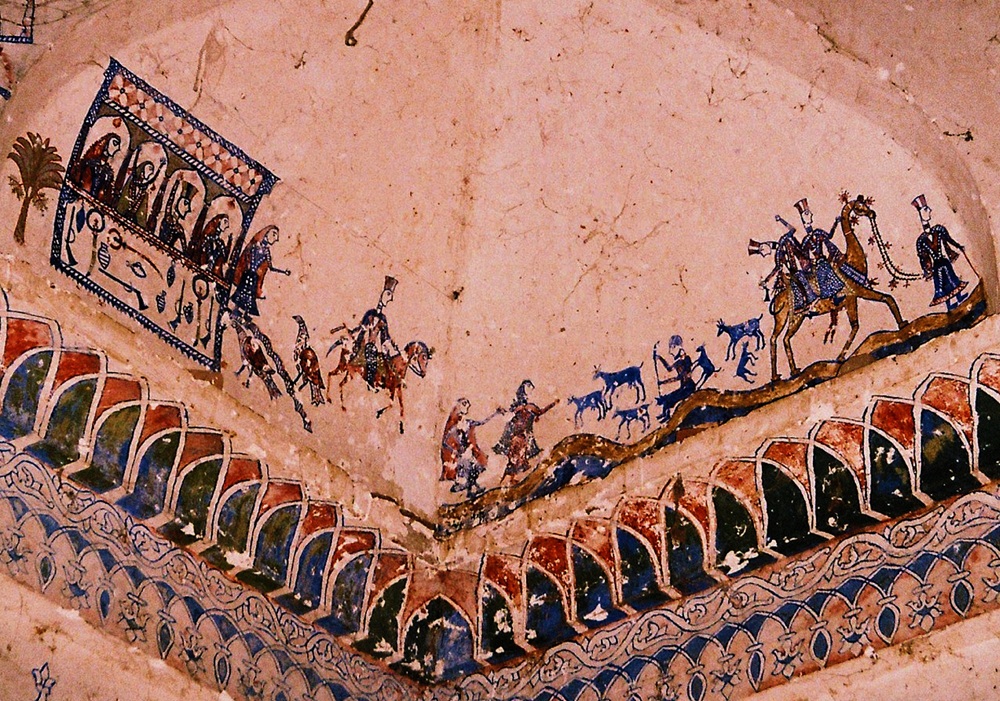
Three episodes of the romance of Sasui and Punhun, on the right, in the tomb of Rehan Khan Jamali.
One of the most refined murals portrays Sasui alongside her two friends, who seem to have pacified her and convinced her not to take the perilous route through the treacherous mountains of Lasbela. Despite their efforts, she remains determined to follow the footprints of her beloved Punhun. In the tombs of Kamber-Shahdadkot and Dadu, Sasui is depicted alone, standing in the wilderness as she searches for the road to Kech-Makran. In the Kamber-Shahdadkot tomb, the artist portrays Sasui with just one friend who is trying to persuade her not to follow the camel caravan carrying Punhun.
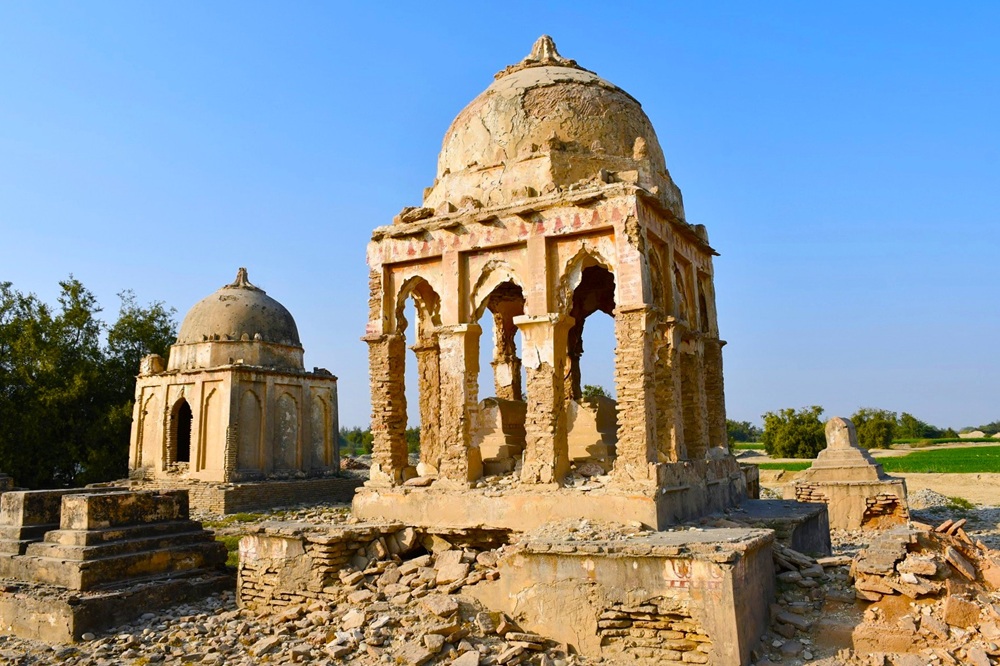
Tombs of Jalabani Lagharis in Johi
The folktale of Sasui and Punhun is a significant cultural narrative in Sindhi tradition, prominently illustrated at the necropolises of Tilla Shah and various tombs across different districts. This poignant love story has captivated Sindhi artists, who have sought to portray its themes through visual art.
Sindhi artists interpreted the tale differently; some adopted a naturalistic approach, focusing on realistic representations of the characters and settings, while others embraced a more primitive style, emphasising symbolic expression over realism. The most intricate and polished illustrations of this folktale can be found in the tombs of historical graveyards, such as Mir Allahyar Khan Talpur, Muridani Jamali, and Tilla Shah, showcasing the depth of artistic talent and the cultural significance of the narrative in Sindhi art. These illustrations serve not only as artistic expressions but also as a means of preserving and communicating the cherished themes of love and sacrifice inherent in the Sasui and Punhun story.
You may also like:
From the Horn of Africa to Bahria Town: Habesha Café Brings Centuries of Coffee Culture to Rawalpindi
(October 15, 2026)