Written by: Ayesha Amir
Posted on: June 30, 2025 |  | 中文
| 中文
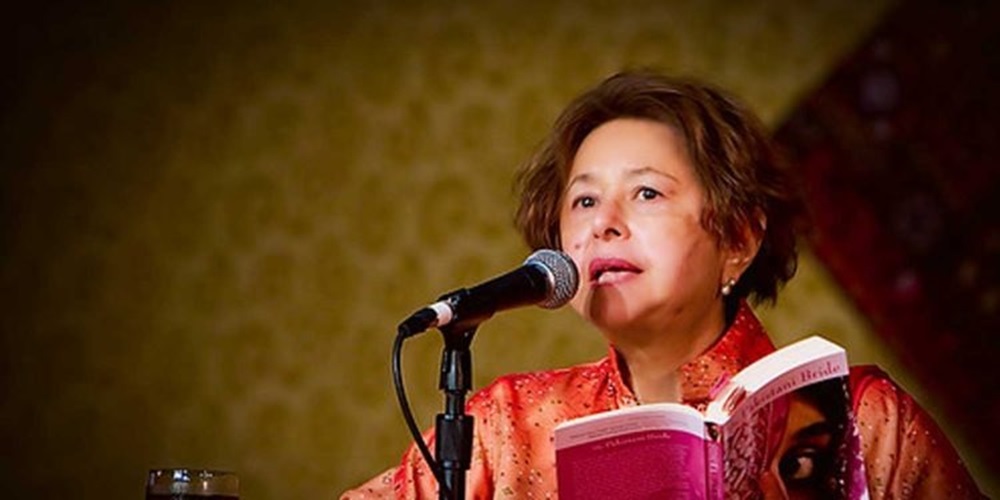
Bapsi Sidhwa
To literature enthusiasts, Bapsi Sidhwa is a known name for her works of fiction. As for her last novel written in 1993, An American Brat is often categorized as a story that reflects Sidhwa’s own complexities of a Parsi and American-Pakistani identity. It is a coming-of-age story which, on the surface, follows a trajectory that avid readers find themselves too familiar with. Not only avid readers, but anyone who has watched Pakistani dramas are familiar with the concept of a sheltered young girl grappling with forbidden love and a hostile outside world. But beyond the deceptively simple plot of the novel lies a quiet political pulse and a deeply intimate exploration of identity, belief and belonging. The novel speaks to the condition of cultural in-betweenness, not just as a theme, but as an emotional aspect that serves as the backdrop for the entire book.
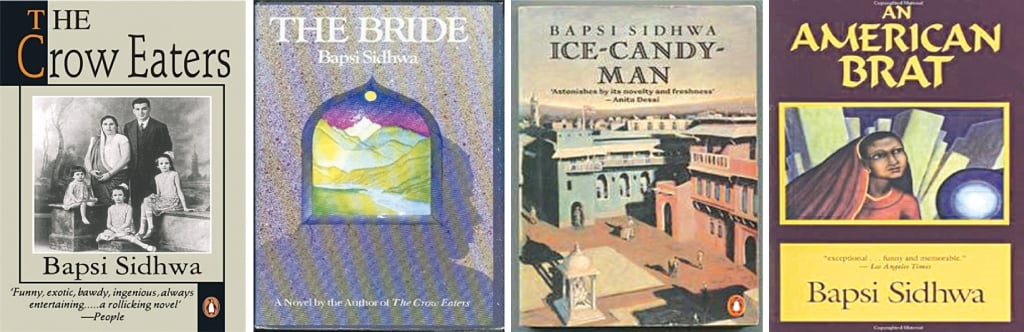
Bapsi Sidhwa's books
To provide a little summary, the story centers around Feroza Ginwalla, a sixteen-year-old Parsi girl from Lahore, who is sent to the United States by her mother, Zareen. Her mother takes this decision when she is troubled by Feroza’s growing religious conservatism and political rigidity. Though as the initial conversation between Cyrus, Feroza’s father, and Zareen imply that Feroza’s behaviour may not be her own fault. It may just be her way of dealing with the social relations around her given that they consist of a Muslim majority. Through mundane conversations amongst the characters, Sidhwa shows how General Zia-ul-Haq’s Islamization policies in the 1970s and 1980s affected lives on a micro level. The character Zareen hopes to send her daughter to America in hopes that it will liberalize her mindset. But what unfolds later is a fascinating exploration of the diaspora experience.
Feroza’s journey from Lahore to Denver, and eventually to a college in Idaho, becomes the journey through which Sidhwa portrays her narrative. Other characters such as Zareen (the fiercely modern mother), Manek (Feroza’s idealistic uncle) and David (Feroza’s American boyfriend), all play roles in shaping her experiences and, by extension, her gradual disconnection from her roots. Through them, Sidhwa explores themes of generational gaps, diasporic identity and an ideological drift from what one is taught to internalize.
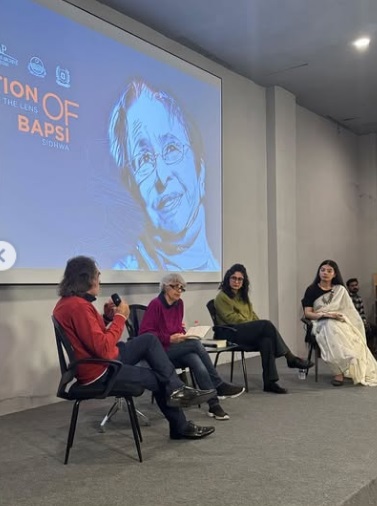
A panel talk titled 'Partition Through the Lens of Bapsi Sidhwa' featuring Ms. Mina Malik, Dr. Rizwan Akhtar, Ms. Shaista Sirajuddin and Mrs. Nasreen Rehman.
While the novel’s events, such as the culture shock Feroza experiences in America, teenage rebellion, a romantic entanglement or familial disapproval, may appear conventional or even cliché, An American Brat carries within these mundane events the heavy weight of a very particular sociopolitical moment. The 1970s and 80s in Pakistan were marked by shifts in social norms under Zia’s regime, which directly impacted minority communities like the Parsis. Feroza’s early anxieties, including her discomfort at her friend having to wear a headscarf, are not just adolescent melodrama that Sidhwa skillfully portrays, they are windows into a Pakistan where supporters of secularism had faced such anxieties.
Thus, Feroza’s personal transformation mirrors a broader political metaphor. Her growing “Americanization” is not only about wearing certain clothes and having a boyfriend outside the Parsi community, it is also a commentary on gender restrictions and religious compulsions. Sidhwa juxtaposes these two worlds, although not much in detail because we don’t get to see Feroza’s “restricted” life in Pakistan as much as we see the “freedom” she celebrates in America.

Pak-America cultural comparisons are prevalent in the novel.
It is thus that one cannot help but draw parallels between Feroza and Bapsi Sidhwa herself. Both belong to the Parsi minority in Pakistan and both settled in the United States. But Sidhwa resists the temptation to project herself directly onto Feroza. This is because An American Brat reads like an emotional recollection of the dissonance and confusion one feels when caught between two cultures. What we do see is Sidhwa’s deep empathy for displacement and her almost witty presentation of cultural contradictions. Her portrayal of Feroza is affectionate but does not spare her from being presented as naïve, stubborn and even occasionally arrogant, all of which feel authentic.
Although Feroza’s identity as a Parsi is central to the novel, Sidhwa does not overplay it. Instead, it lingers as an understood fact about Feroza’s life, lingering in the background, with subtle yet witty marker of “otherness” that she has felt during her life. The novel portrays how, despite Feroza’s family being progressive and even affluent, they are not shielded from the effects of rising Islamic conservatism.

The lead character's Parsi identity is central to the novel.
Through this, Sidhwa has delicately shown how minority identity is not just about numbers but about feeling foreign in one's own land. Feroza’s transformation in America and her eventual estrangement from her mother, is an echo of this, the paradox of escaping marginalization in her own country by embracing another kind of alienation in another one. Although the journey of the novel is relatively straightforward, Sidhwa employs ornate prose and witty remarks to make up for an otherwise twist-less story. Her observation of emotions is excellent, and we can see that through the various anxiety-inducing scenes. Such as, the panic at a passport being examined too long, the way a sari marks you out in an American street. We as readers feel every pulse of Feroza’s anxiety in those moments.
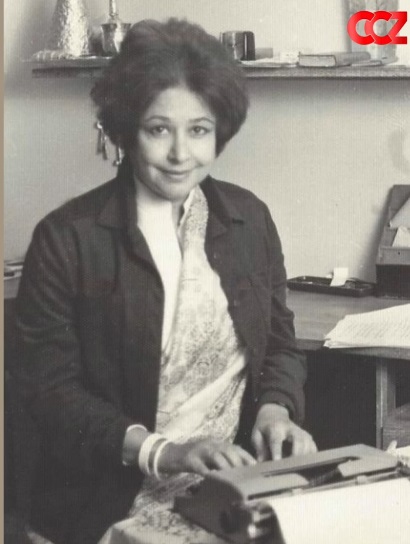
Young Bapsi Sidhwa
While plot points like the David romance may feel predictable – yes, the brown girl falls for a white American, and yes, the family disapproves – it is how Sidhwa handles these tropes that makes for a fun read. Sidhwa does not dramatize their breakup. Instead, she lets it dissolve quietly, leaving us with a sense of anticlimax that feels intentional. The real heartbreak is not David; it is Feroza’s realization that her fantasy of assimilation into American culture through romance was always destined to be hollow.
An American Brat thus is not just about one girl’s journey from Lahore to America. It is about how identity fractures and reforms in the liminal spaces of airports, dorm rooms and phone calls. Sidhwa reminds us that migration and diaspora, being away from your community but carrying it with you, is part of what transforms your identity. It is the roots you carry despite undergoing drastic changes in life that truly matter.
You may also like:

From the Horn of Africa to Bahria Town: Habesha Café Brings Centuries of Coffee Culture to Rawalpindi
(October 15, 2026)