Written by: Aiza Azam - Posted on: October 15, 2012 |  Comments | 中国 (Chinese)
Google Translation: اُردو | 中文
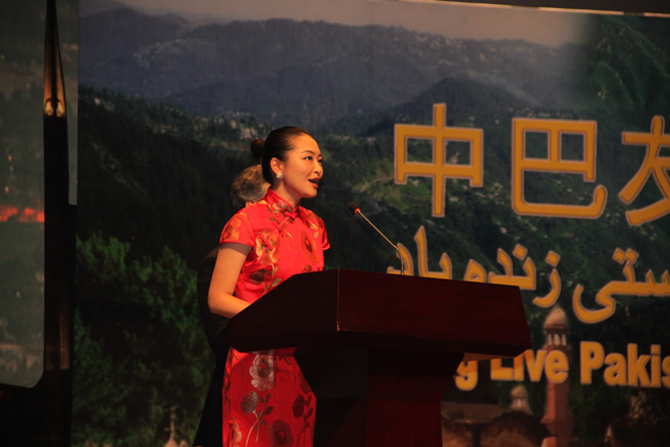
For Musarrat, settling into life in Pakistan was a smooth transition. Though she had come here alone and faced moments of homesickness in the initial months, she quickly familiarized herself with the city she had known briefly before. She had help from several friends and was able to rely on generous neighbours. “They would often ask me over to eat with them, and I was also invited to a local wedding ceremony or two.” The entire affair of beginning life in a new place, she says, was “very fulfilling” for her.
 Musarrat’s knowledge of Urdu allowed her an advantage that very few other expats had. By her own admission, it let her connect with the local people on a deeper level and made for a much more enriching experience. It especially paid dividends in her work, which involved lots of travelling and meeting people from all strata of society, from heads of state to school children from small villages.
In connection with her work, she had been to several cities: DI Khan, Quetta, Multan, Gilgit, Hunza, Muzaffargarh, Muzaffarabad and Swat, are a few of them. “I’ve done quite a bit of travelling on the Karakoram highway in particular,” she said. In Swat, she visited the Sabawoon (New Dawn) school, a UNICEF funded institution that provides free religious education and counseling to the Swati youth. In Rawalpindi, she visited an army hospital to meet with people injured in conflict with militants. But it was Quetta that she found most fascinating, even though the constant protection by army cars and helicopters created an almost tangible tension at all times. “It’s impressive how much the army has done to develop the area.” For her, these experiences underscored how much the country has sacrificed in its battle against terrorism.
 Musarrat’s work involved writing several new stories on a daily basis and sending regular reports to the head office in Beijing, but she also did a large amount of oral news reporting in Urdu. In addition, she ran the CRI Confucius Classroom in Islamabad, a venture to promote the Chinese language and culture. CRI is cooperating with the Sindh government in its program for compulsory teaching of Chinese in schools from 2013 onward, has organized for Chinese teachers to come to Pakistan and has donated a number of books to the Pakistan National Library.
China Radio International has been active in Pakistan for over 50 years. It broadcasts in five cities, featuring content related to all facets of relations between Pakistan and China, and boasts more than 3 million Pakistani listeners who call or write in with regular feedback on the programs. A major area of CRI’s focus is to counter the Western media’s negative projection of Pakistan by highlighting stories or information that contribute to a positive image of the country, and tell the world that what they see on Western screens is a flawed image. All of CRI’s employees in Pakistan are Chinese, but it employs a substantial number of Pakistanis in China. Within this year, CRI plans to go into 24 hour live broadcasting.
 Musarrat’s Urdu skills came in handy outside of work as well. Once, it helped get her out of a tight spot. She reminisced that when she first went to take the test for her driving license here, she almost failed because she hit a red traffic cone with her car. But she quickly talked to the official she was with, explaining that she had recently come here to contribute towards her country’s friendship with Pakistan. He was so pleasantly surprised at hearing her speak in Urdu, and so well, that he allowed her another chance.
Being able to speak Urdu also helped in shopping. “It’s such an advantage because its very useful in bargaining!” she laughed. Her favorite clothing outlets are popular names like Khaadi, Generation, Gul Ahmed and Chen One. “I’m in love with the fashions here. And Pakistani clothes are beautiful!” Even as she was leaving for China for good, she continued to buy Pakistani clothing.
“My husband said I wouldn’t be able to use them in China and I agree,” she admits, “but they are just so beautiful, I can’t help it.”
Click to view picture gallery