Written by: Adeel Wahid
Posted on: April 06, 2026 |  | 中文
| 中文
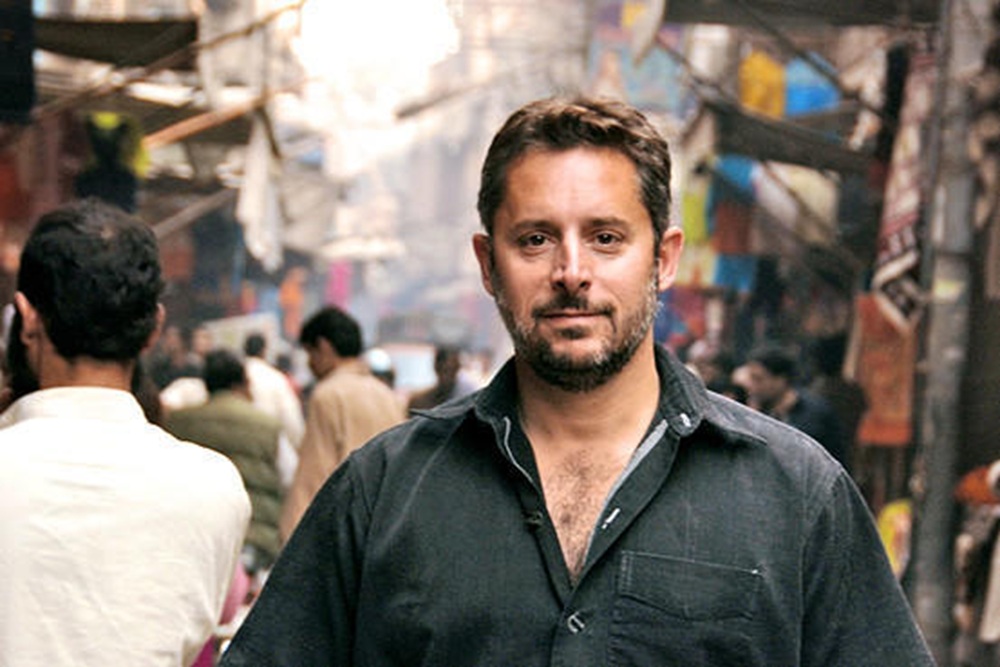
Daniyal Mueenuddin, the author of ‘This is Where the Serpent Lives’
The charm of the book, “This is Where the Serpent Lives”, lies in our familiarity with the stories that Daniyal Mueenuddin narrates. These are stories of fidelity and betrayal; of “golden boys” and “serpents”; of abject poverty and power, with the constant backdrop of hardened class hierarchies, seemingly impenetrable - almost immutable. But, in all this, is also the familiarity with the characters and the surroundings. The book is based in Pakistan, and features us – or at least some of us.
We see our lived experiences reflected back, with very measured, restrained observations – almost subliminal but nonetheless there - on issues around politics, class, the opulence and excesses of the rich. This is juxtaposed alongside those serving at the farms, and in the homes, lurking in the shadows, a call away, to take their masters’ shoes off their feet, replenishing the drinks through the night, ensuring that everything that may be desired remains available, as the masters host their guests. The frivolous wants of some weighing much heavier than any possible needs of others.

Mohsin Hamid, Daniyal Mueenuddin and Kamila Shamsie
But if the book was all about the servants’ servility, and their blinding faith – inculcated from young ages in Pakistan - in serving the masters, it may have resembled, in some ways, to Ishiguro’s “The Remains of the Day”: Mr. Stevens’ loyalty to his master, Lord Darlington, blinds him altogether to his master’s many deficiencies, and makes him oblivious, even, to the basic wants of his own life. Some of it, in fact, is encapsulated in Mueenuddin’s larger-than-life character, Bayazid, a product of his own unique circumstances, ever-faithful and dependable. The book, however, also explores other dimensions of human character.
Mueenuddin’s characters, in fact, display quite a range. While Bayazid, growing up an orphan, is compelled to develop the social and entrepreneurial skills to survive and handle difficult situations, his friend Zain, with his relatively comfy upbringing, bookishness and idealism, is no match for what life throws at him. Growing up with the Kool-Aid that Bhutto offered back in the late 1960s and 70s, Zain buys into the promise, but Bayazid remains skeptical. Mueenuddin does not seem to take sides, as he doesn’t in any of the places in the book where they may be contesting viewpoints. But, then, the way the book pans out, it seems that Mueendudin would have rather agreed with Bayazid. In a rigidly fixed society, the marginals were not going to find themselves uprooting the traditional bastions of power. At most, as Bayazid observes, “[t]his is maybe just about some new people grabbing the whip from the old ones”.
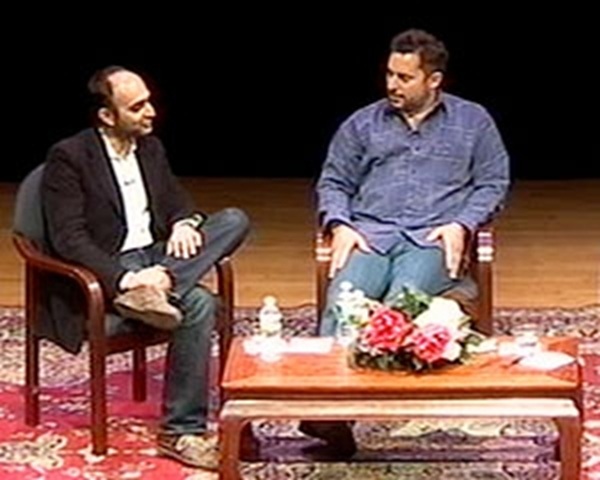
Daniyal Mueenuddin and Varun Gauri
And then there is the young Rustom, with his fancy schooling and upbringing in the US, that are only impediments in running the farm, in south Punjab. The prestige that his family carries can take him just as far, and with parents and grandparents gone, Rustom struggles to be taken seriously even by the local district superintendent of police (DSP), as a tribe just adjacent to his lands, mount a challenge to his landholdings and power. Ever present in his conscience are the democratic values that he imbibed from the West, and the possibility of a life that could have been lived in New York, as he figures out ways not to cede too much ground to his well-entrenched accountant (munchi), and other local power-brokers.
This is where Mueenuddin, probably, draws the heaviest from his own life. He, himself, has lived a life not too different from Rustom, having largely been raised in the US, attending elite institutions there. Rustom, probably, is some initial version or permutation of Mueenuddin, himself, as Mueenuddin also took on the daunting task of managing a farm in southern Punjab, after having attended law school, and working at a law firm, in the US. Such credentials are hardly a preparation for managing a farm in rural Pakistan.
Daniyal Mueenuddin and Mohsin Hamid
In Rustom, he captures the sensitives of a person, well-intentioned and well-meaning, navigating an environment, completely foreign to him, in which he has to learn to exert power through traditional means. Without showing that “muscle”, asserting oneself, there is the vulnerability of losing everything to those with more rugged and enhanced Darwinian survival skills. With Rustom, we experience the burden of having too much, since it may come laden with the responsibility of holding onto it, as the vultures around him develop an understanding that an outsider – “too soft, too mannered, too Westernized” - may have been put in a precarious position, where what he has is up for offer.
As a result, Rustom has to rely on his cousin, Hisham, a fellow landlord, who knows the ways, already having ousted the claim of his brother, Nessim, to the landholdings, and much more. Nessim, the younger brother, is earnest and bookish, but loses out to the worldly Hisham, in more than one way. Hisham, growing up knew how to work the contacts, and develop a network of friends and acquaintances, facilitated due to his education at Aitchison – the network that can make life immensely easy in Pakistan. Nessim, meanwhile, relinquishes his claims, after a betrayal from Hisham, escaping and settling in as a lawyer in the US.

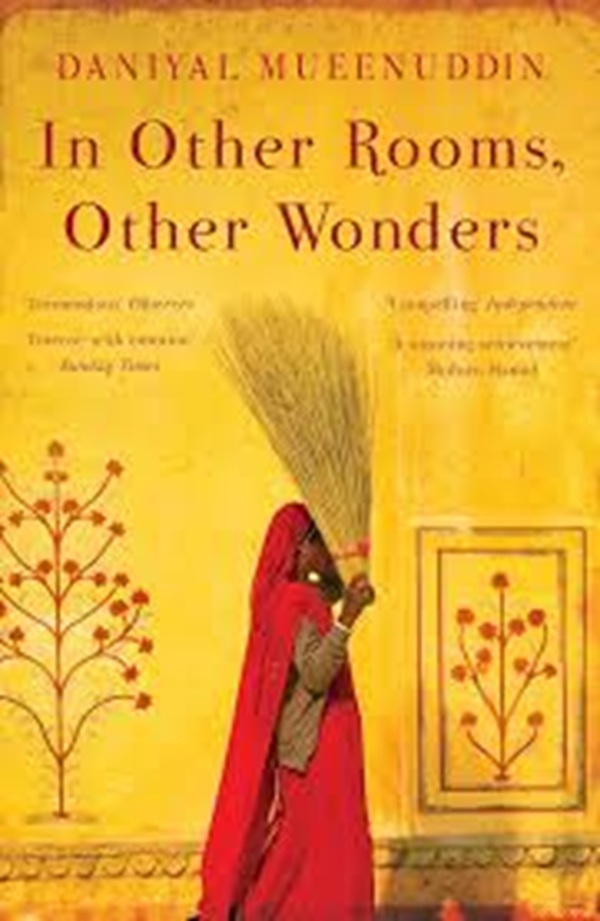
In Other Rooms, Other Wonders by Daniyal Mueenuddin
The power that massive landholdings bring, where one can live as a monarch of sorts, is in display with the life that Hisham and his wife, Shahnaz, live out in the book. Vacationing in London and shuttling between their city-home in Lahore and their village residence, custom-made, with even a swimming pool with walls thrown around, the two live a life levitating above the ordinary worries of ordinary people. In the midst of the most traditional and conservative of societies, on the farmland in southern Punjab, the power enjoyed by the landed gentry makes possible an island on which Westernized mannerisms can be adorned, unapologetically. Even in the village, someone can be trained to cook Western cuisines. Hisham can ensure that he has the constant supply of whiskey available for himself, and any other important guests visiting him from the city. Hisham’s father, Colonel Atar, who governed his farm with much more of an iron-fist, would even take liberties with the villagers’ wives, with impunity. Bound by no rules for themselves, the landed elite, displayed in the book, live unrestrained lives, on the backs of an obsequious servant class.
While the masters, in their self-perpetuation, may allow some pathway of growth to one or two of their servants, that growth has to be on the terms, and at the pace, dictated by the masters, themselves. Saqib, one of the most trusted employees, learns this painful lesson. It is, for instance, alright for Atar family’s accountant, Rana Abdul Sattar, to swindle some, accumulating enough over a lifetime to buy four shops for his son in Multan, but this theft has to be discrete and hidden. Some theft, even when publicly known, is allowed, as a cost of doing business. But what cannot be allowed is the ambition to rapidly climb the ladder, and placing oneself equal to the masters.

Daniyal Mueenuddin
Mueenuddin has opened up the lives lived on the rural farms in Pakistan. His own background offers an interesting vantage point - a distinctive lens - through which to view the completely different worlds of the masters and the servants in the same settings. The servants occupy a unique position as they interact with the meagerness of their own lives, after having seen the excesses of those they serve, on a daily basis. Some make peace with it, themselves; while others are made to make peace with it. In a deeply unequal society such as ours, Mueenuddin forces us to take into account the grotesqueness of it all.
You may also like: