Written by: Zulfiqar Ali Kalhoro
Posted on: December 26, 2025 | 
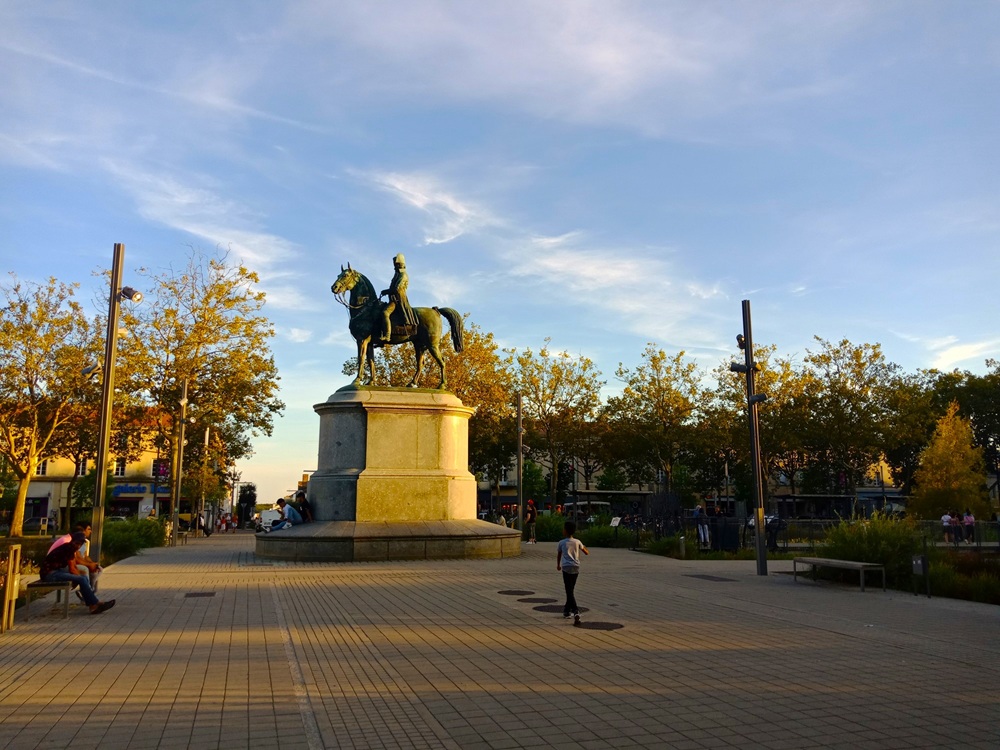
Napoleon Square in La Roche-sur- Yon (Picture credits to Zulfiqar Ali Kalhoro)
On September 8, 2019, I flew from Madrid to Nantes to visit La Roche-sur-Yon. The next day, I had to attend an international meeting on the Megaliths of the World, which was scheduled to take place at the Historial de la Vendée in the village of Les Lucs-sur-Boulogne. After arriving in Nantes, I drove to La Roche -sur-Yon. The drive from Nantes to La Roche-sur-Yon was truly enchanting.
The French countryside is stunning, with vast green fields, rustic farmhouses, and charming villages dotting the landscape. I stayed in the Campanile hotel in La Roche-sur-Yon, a lovely town in western France. Other conference participants also stayed at the same hotel. The next day, on September 9, all participants travelled to the Historial de la Vendée, a modern, innovative museum in Les Lucs-sur-Boulogne, to attend the conference.
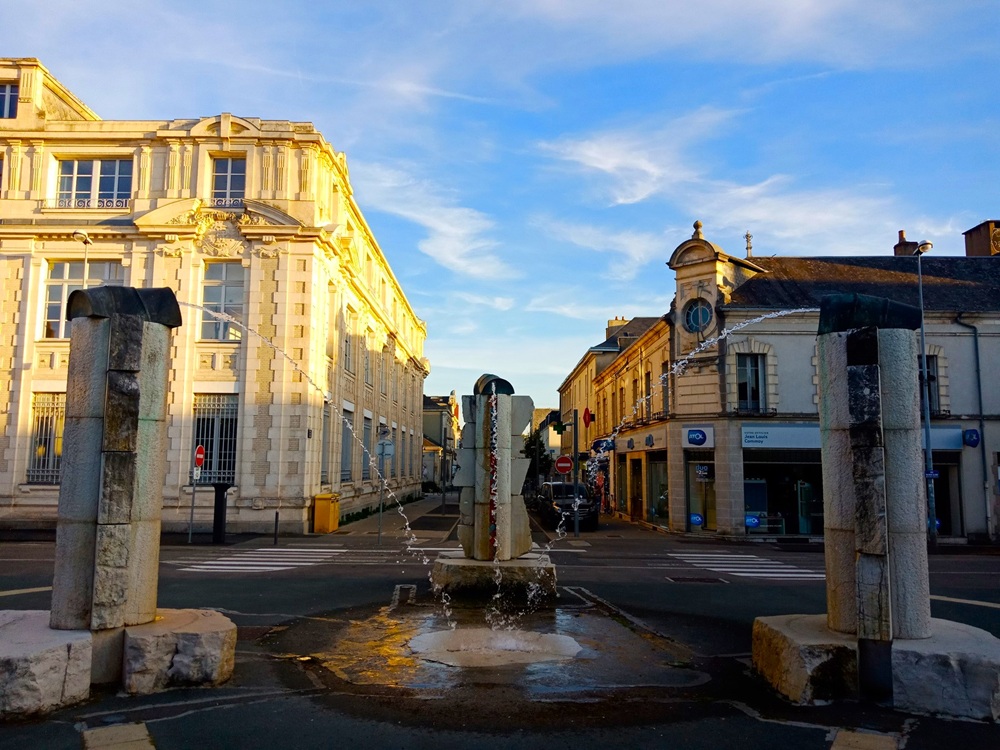
La Roche-sur-Yon (Picture credits to Zulfiqar Ali Kalhoro)
Participants from around the world attended the conference to share their research on megaliths. I also read my paper on megaliths of Pakistan. The museum building is an impressive structure. After the first day concluded, I decided to take a walk around the town's main square, starting from my hotel. In front of the Campanile hotel is the beautiful Marie Stuart Hotel, where I often enjoyed a coffee. Occasionally, I also had a cup of coffee at a café just across the street.
On the way to the town's central Napoleon Square, one crosses beautiful cafes and restaurants crowded with people.
In the evenings, after the conference sessions concluded, I would venture out to explore the town of La Roche-sur-Yon. Each stroll through its streets unveiled a layer of its rich history and vibrant cultural life. During my one-week stay, I took the opportunity to visit many of the town's notable landmarks and historic sites. I visited the elegant Church of Saint-Louis, noted for its neoclassical façade, a reminder of Napoleon's vision for the town. I also visited the Church of Sacré-Cœur. It is one of the notable architectural landmarks in La Roche-sur-Yon, which serves as a symbol of faith and artistic expression. Situated in the town's center, this impressive church provides both a space for spiritual reflection and a window into the city's evolution from a Napoleonic creation to a vibrant modern community. The Church of Sacré-Cœur was built in the early 20th century while La Roche-sur-Yon was expanding beyond its 19th-century urban design. The church's architecture blends Neo-Gothic and Neo-Romanesque styles, both popular in that era. Its elegant façade features twin bell towers flanking the central entrance, which immediately captures the visitor's attention.

The church of Saint Louis in La Roche-sur-Yon (Picture credits to Zulfiqar Ali Kalhoro)
The Church of Saint-Louis in La Roche-sur-Yon is another significant landmark that showcases the city's Napoleonic roots. Designed in the early 19th century as part of Napoleon's urban planning, the church features a neoclassical style, evident in its architecture. Beyond its religious function, the Church of Saint-Louis symbolizes the town's historical development.
Apart from churches, one of the most popular tourist attractions in the heart of La Roche-sur-Yon is the Mechanical Park (Les Animaux de la Place Napoléon or Animals of the Place Napoleon), located in Place Napoléon. This captivating and imaginative site represents a remarkable blend of art, engineering, and public space design. Inaugurated in 2013, the park emerged from a creative initiative to revitalize the city's central square while honoring its Napoleonic heritage.
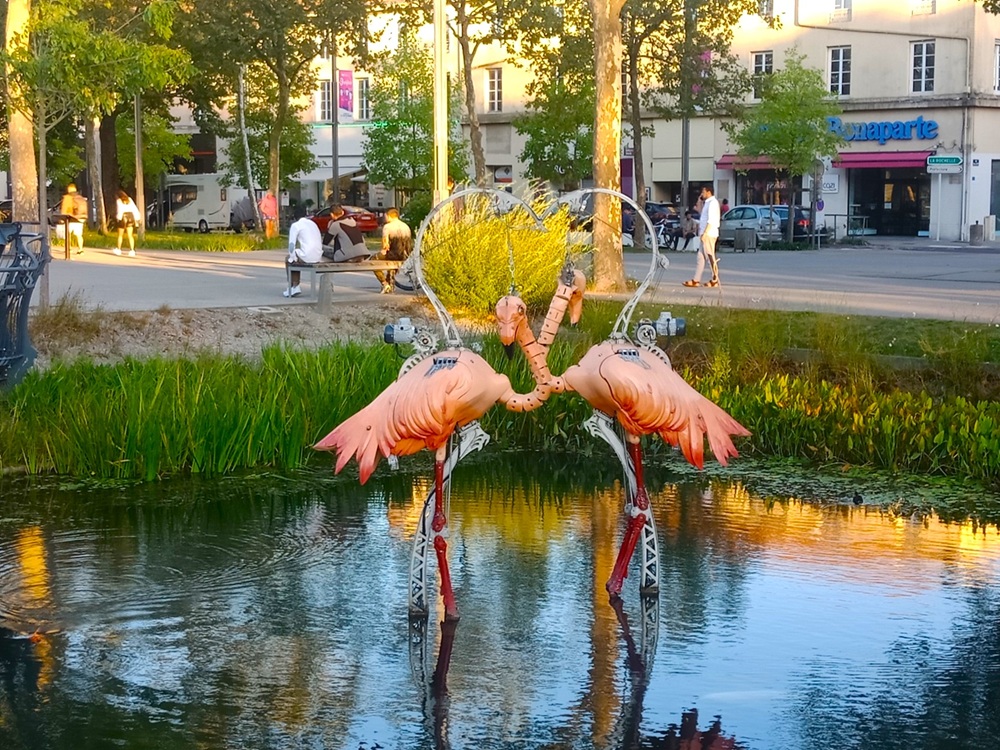
Mechanical flamingos in Animals of the Place at Napoleon square (Picture credits to Zulfiqar Ali Kalhoro)
Designed by the Nantes-based artistic company La Machine, known for its monumental mechanical creations like The Great Elephant in Nantes, the Mechanical Park transforms how public art interacts with urban life. The installation is inspired by the geometric layout of the city, which was designed by Napoleon Bonaparte in 1804.
In the park, visitors can see a variety of large mechanical animals that inhabit the artificial basins of Place Napoléon. Among these creatures are a crocodile, a hippopotamus, flamingos, dromedaries, and even giant koi, all brought to life through intricate mechanisms featuring gears, levers, and hydraulics. These creations are not just static sculptures; they move, breathe, and respond to human interaction. Visitors can operate them via accessible control panels that animate wings, tails, jaws, and fins. This interactivity transforms the square
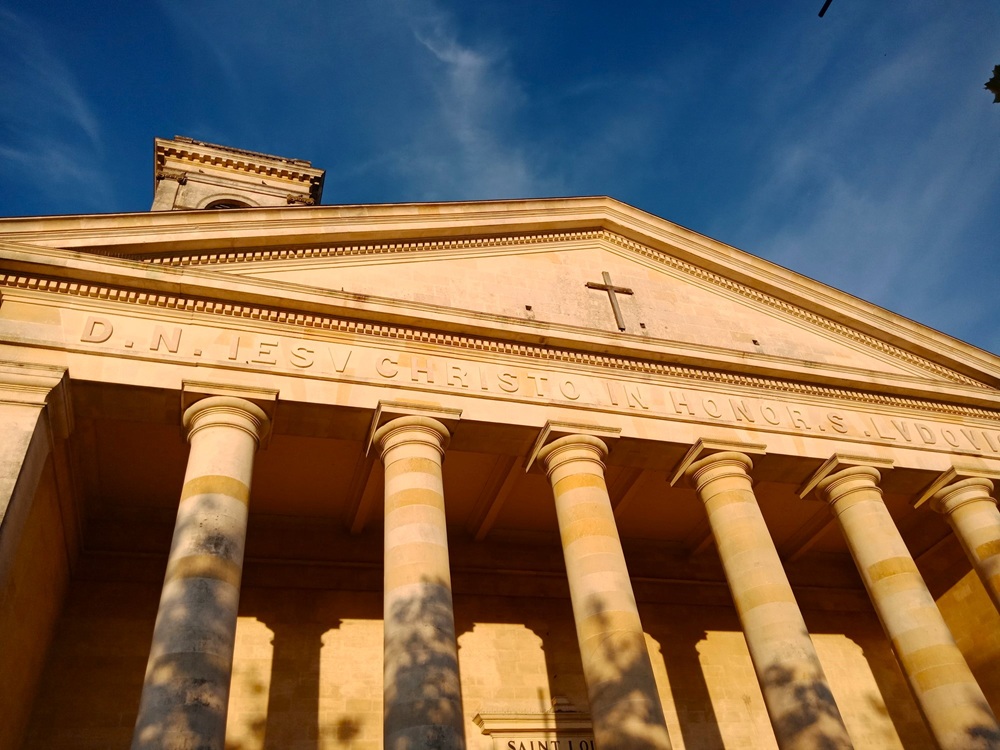
Facade of the church of Saint Louis in La Roche-sur-Yon (Picture credits to Zulfiqar Ali Kalhoro)
More than just a tourist attraction, the Mechanical Park has become a symbol of La Roche-sur-Yon's cultural revival.
Haras de la Vendée, founded in the early nineteenth century, is one of France's historic national stud farms and is an important cultural landmark in La Roche-sur-Yon. Established under Napoleon's directive to support and regulate horse breeding, the site today preserves its rich equestrian heritage through well-maintained stables, training grounds, and architectural ensembles.

The author at historical de la Vendee, France
One place that truly fascinated me in La Roche-sur-Yon was the Maison Renaissance. This building is one of the town's oldest surviving structures and serves as a rare architectural reminder of the pre-Napoleonic settlement. Built in 1566, it exemplifies Renaissance domestic architecture, featuring a sculpted stone façade, elegant window frames, and a carefully proportioned design. Today, it operates as a small cultural space that hosts temporary exhibitions and heritage activities. As a preserved landmark amidst a largely modern urban landscape, the Maison Renaissance provides an important link to the region's distant past. It enriches La Roche-sur-Yon's cultural landscape.
There are several parks in La Roche-sur-Yon where visitors can relax. The streets of La Roche-sur-Yon are lively and vibrant, filled with tourists who enjoy browsing local shops and immersing themselves in the city's daily rhythms. During my stay in the town, I continued to explore these spaces.
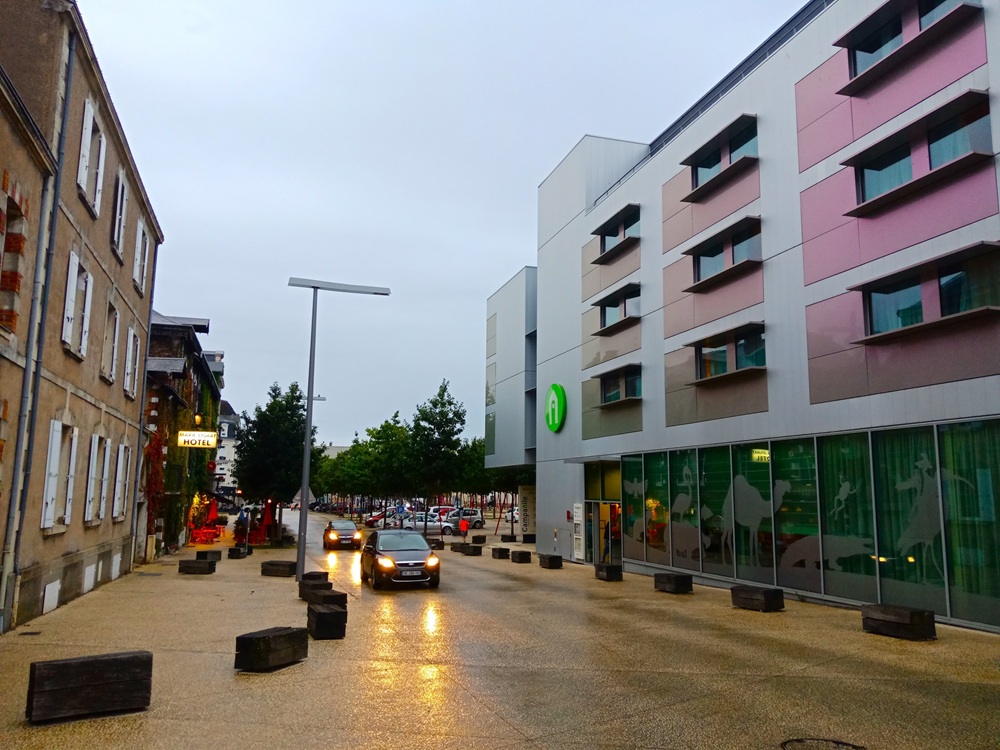
A street in La Roche -sur-Yon (Picture credits to Zulfiqar Ali Kalhoro)
Additionally, there are various tourist sites to explore outside of La Roche-sur-Yon. I visited several megalithic sites in Vendée and Brittany, which I will discuss in separate articles.
The writer is an anthropologist at the Pakistan Institute of Development Economics (PIDE), Islamabad. He has authored 17 books on Pakistan's cultural heritage and anthropology. He tweets @kalhorozulfiqar. He may be contacted at zulfi04@hotmail.com
You may also like: