Written by: Waseem Abbas
Posted on: July 18, 2025 |  | 中文
| 中文
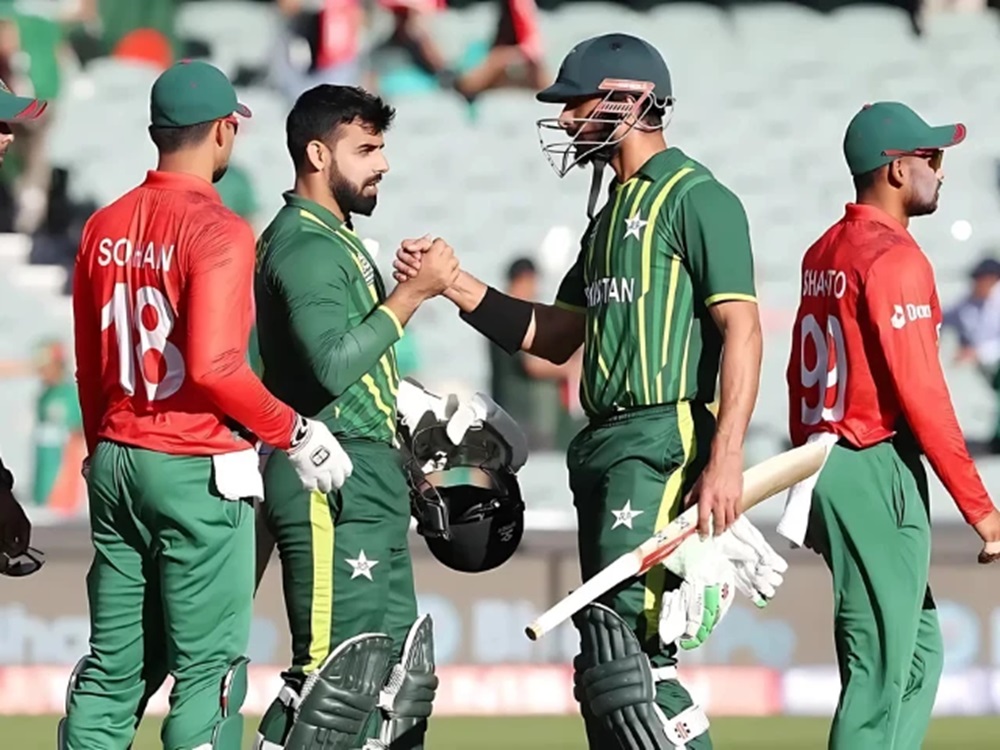
Shadab Khan and Shan Masood shake hands after winning a match against Bangladesh.
After a long hiatus, Pakistan cricket is back with a 3-match T20I series against Bangladesh, starting on the 20th of July in Mirpur. The series also indicates the combinations Pakistan is considering to build the team for the T20 World Cup 2026, suggesting that Pakistan might proceed without the senior duo of Babar Azam and Muhammad Rizwan, who have been indispensable to the Pakistan T20 team over the past five years. Alongside the veteran openers, Pakistan has either dropped or rested most of the senior players for this series, such as Shadab Khan, Haris Rauf, Naseem Shah, Hasan Ali, Muhammad Waseem Jr and Shaheen Shah, among others.
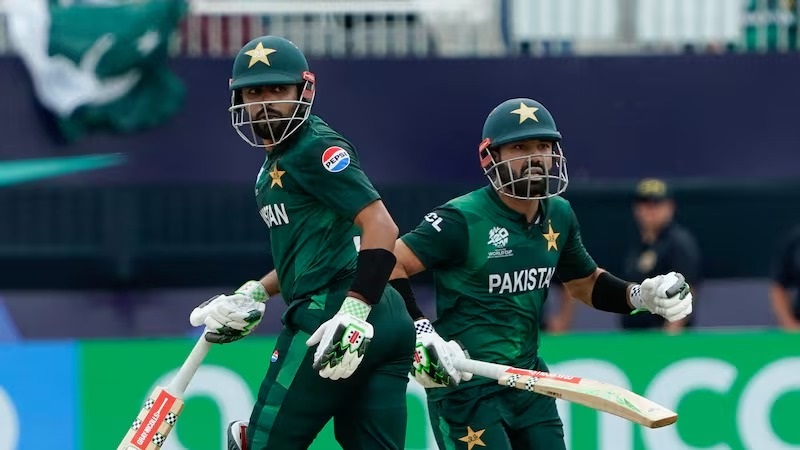
Muhammad Rizwan and Babar Azam
Pakistan has selected a combination of youngsters for the Bangladesh series, with notable new inclusions like Ahmed Daniyal, Salman Mirza and Sufiyan Muqeem. Seasoned Muhammad Nawaz is also surprisingly back in the team without any notable performances, while youngster Arafat Minhas, a like-for-like replacement for the senior all-rounder, could not get the selectors’ nod.
Pakistan’s claims of pursuing an aggressive style of cricket seem contradictory. Players like Usman Khan, Abdul Samad and Irfan Khan Niazi are far more suited to the brand of cricket that Aaqib Javed and company claim to follow, yet they have been dropped without being given adequate opportunities. Pakistan lacks genuine middle-order players who can take on the opposition, as the batting unit is stacked with top-order players who have accumulated runs in domestic competitions while opening the innings. Fakhar Zaman, Sahibzada Farhan, Saim Ayub, Hassan Nawaz and Muhammad Haris are all originally openers, while Hussain Talat and Salman Agha, though genuine middle-order players, are not known for their aggression.
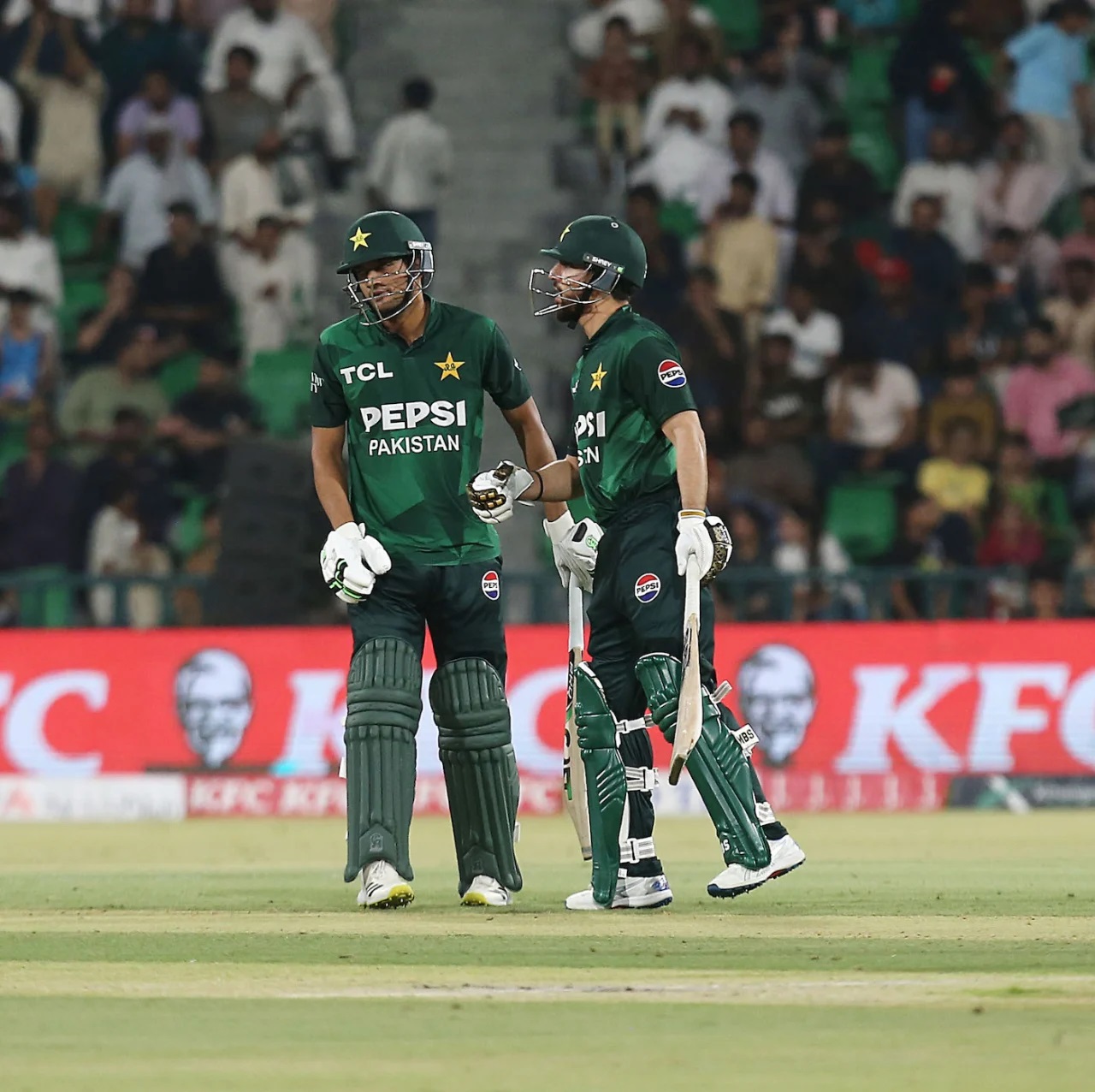
Hasan Nawaz and Salman Agha
For example, Hussain Talat, with a T20 career strike rate of 125, has been selected over Usman, Samad and Niazi, who have strike rates of 145, 144, and 134 respectively. Similarly, although Salman Agha is currently in good form and has shown leadership capabilities, he is not well-suited to T20 cricket, with a strike rate of just 122 in 99 T20 matches. Moreover, it is surprising that a player like Haider Ali continues to miss out, despite boasting a strike rate of 161 since 1 Jan 2024, the highest among Pakistani batters with at least 500 runs in this period.
When Pakistan’s head coach Mike Hesson was recently asked about the future of the senior duo, he remarked that they are in the plans. Hesson stated that Babar is competing with openers like Fakhar and Saim for the opening spot in the team and could return if the need arises. Hesson did not comment on Rizwan, as he is clearly competing with Muhammad Haris, who was the best player in the recently concluded home series against Bangladesh. Pakistan should also not conflate Babar with Rizwan, as Babar has been far more suited to T20 cricket compared to Rizwan. Babar’s career strike rate in both T20 and T20Is is 129, while Rizwan’s is 125. Even if current form is any indicator, Babar, with a strike rate of 135 since the start of 2023, has significantly better statistics than Rizwan, who has a mediocre strike rate of 121 in this time period.
The upcoming T20 Asia Cup, likely to be held in the UAE later this year, and the T20 World Cup 2026, where Pakistan will play all of its matches in Sri Lanka, are expected to be low-scoring tournaments. The scoring rate in Sri Lanka since 1 Jan 2024 is 7.87 and in the UAE 8.03, the second and fourth lowest among all countries during this period. Keeping this in mind, it would not be illogical for Pakistan to consider Babar, who can rotate the strike and absorb pressure. In high-octane games, if history is any precedent, targets are usually not high and players need to rely on the basics. As Babar has all the shots in his arsenal and can play all around the ground, he, along with Fakhar Zaman, might be a useful addition alongside youngsters like Hasan Nawaz, Mohammad Haris and Saim Ayub.
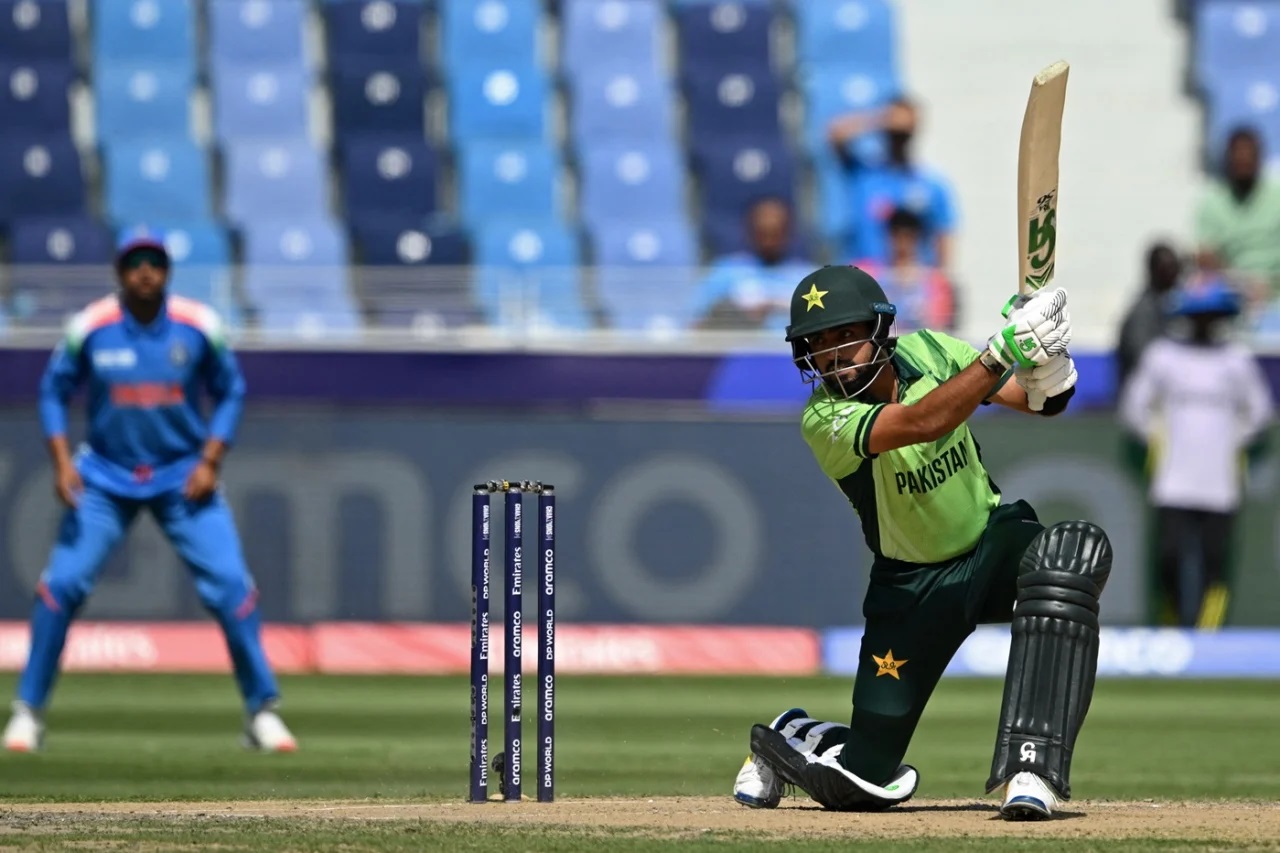
Babar Azam playing a cover drive against India during the Champions Trophy.
Pakistan’s decision to stick with Khushdil Shah, Saim Ayub and Salman Agha, alongside the recall of Mohammad Nawaz and the appointment of Shadab Khan as vice-captain, suggests that the team management is prioritizing spin-bowling all-rounders for the upcoming T20 tournaments. The inclusion of Sufiyan and Abrar Ahmed as specialist spinners further indicates a strategic move to strengthen the spin department, likely in preparation for the spin-friendly conditions expected in Sri Lanka and the UAE, hosts of the upcoming mega events.
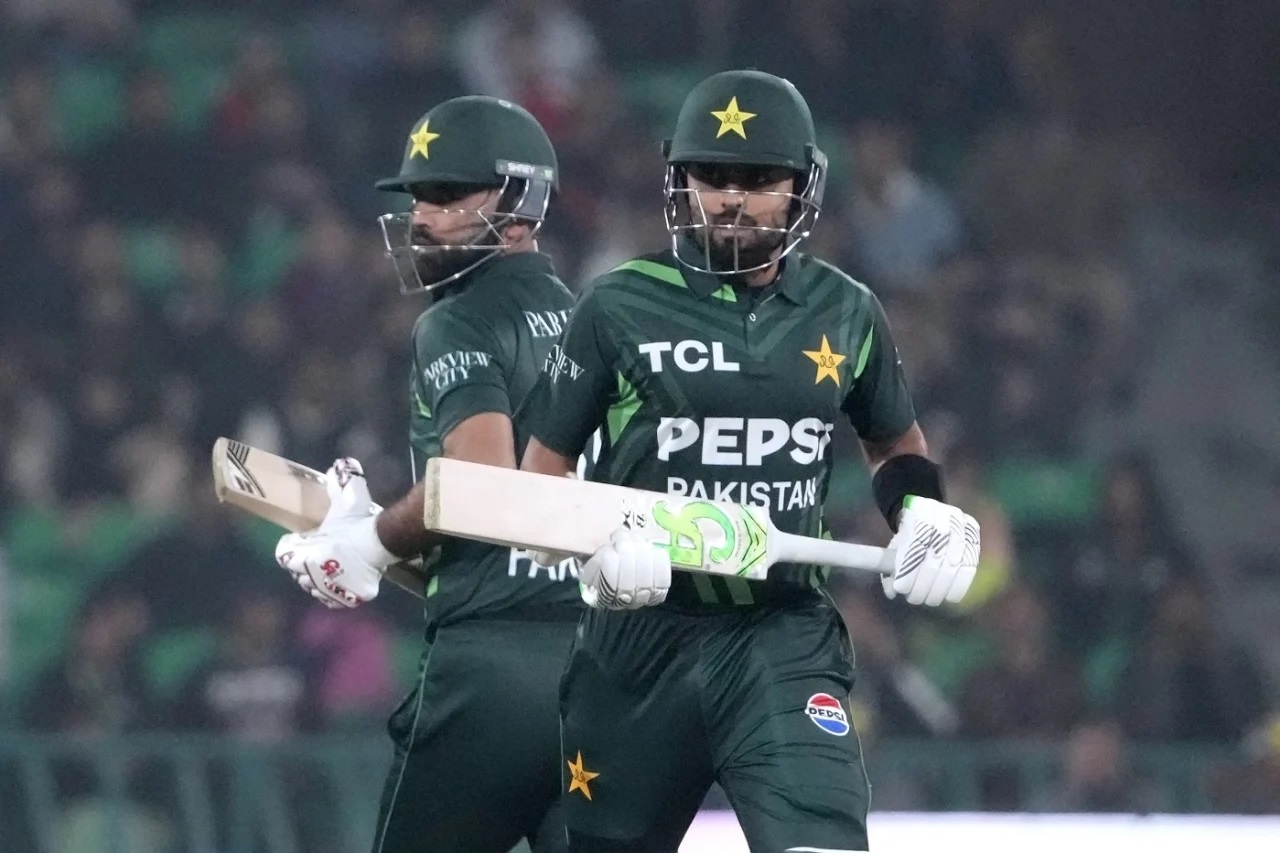
Babar Azam and Fakhar Zaman
Despite Salman Agha’s modest profile as a T20 cricketer, the management appears to value his leadership qualities and his role in promoting a high-intent batting approach. Notably, despite scoring runs, Agha has not secured a fixed position in the batting order and has willingly demoted himself in recent tournaments to accommodate better team combinations, an uncommon trait in Pakistan cricket. His expertise against spin bowling and ability to contribute with the ball as an off-spinner further cement his place in the squad, at least until the next World Cup.
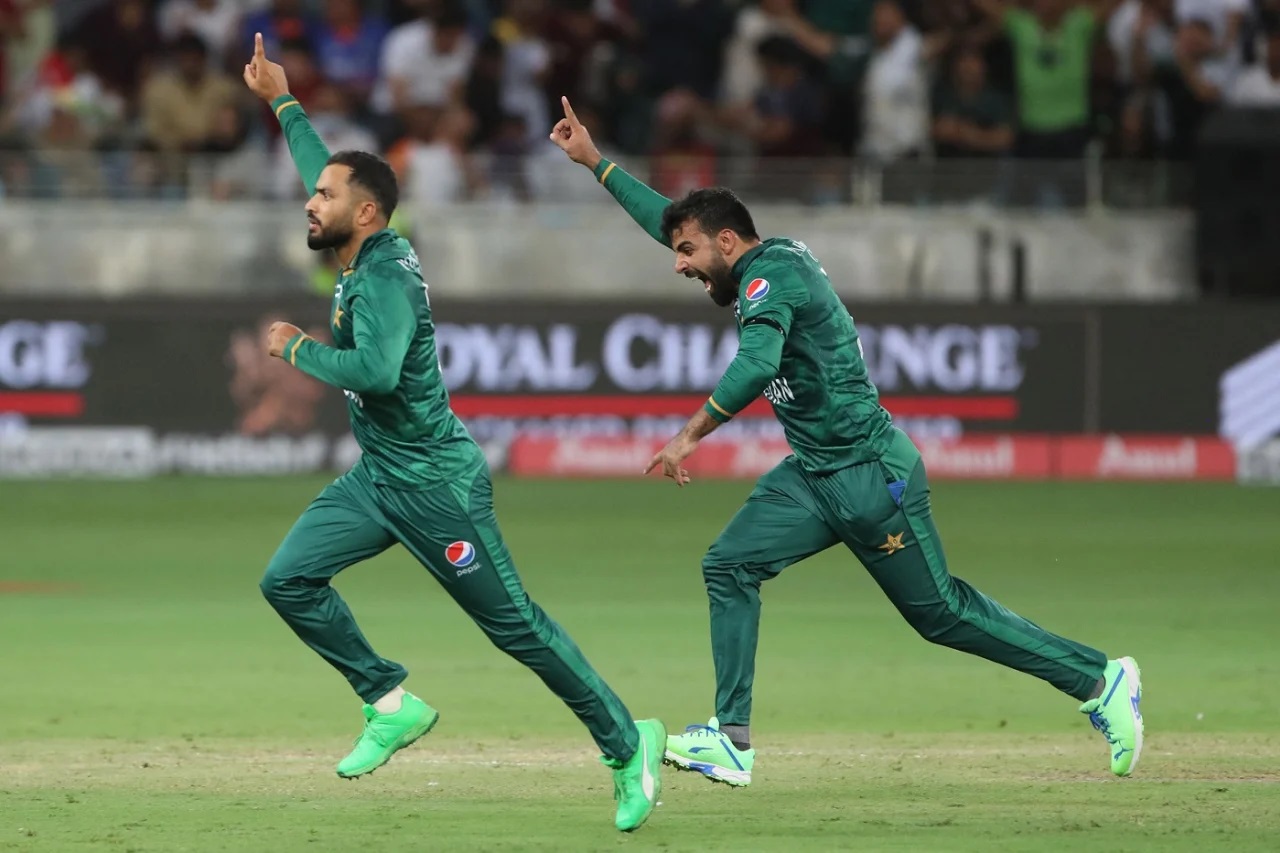
Muhammad Nawaz and Shadab Khan celebrate against India in Dubai, 28 August 2022.
The first match is scheduled on the 20th of July, the second of the 22nd and the third on the 24th of July in Mirpur, Bangladesh.
You may also like: