Written by: Zulfiqar Ali Kalhoro
Posted on: November 13, 2025 |  | 中文
| 中文
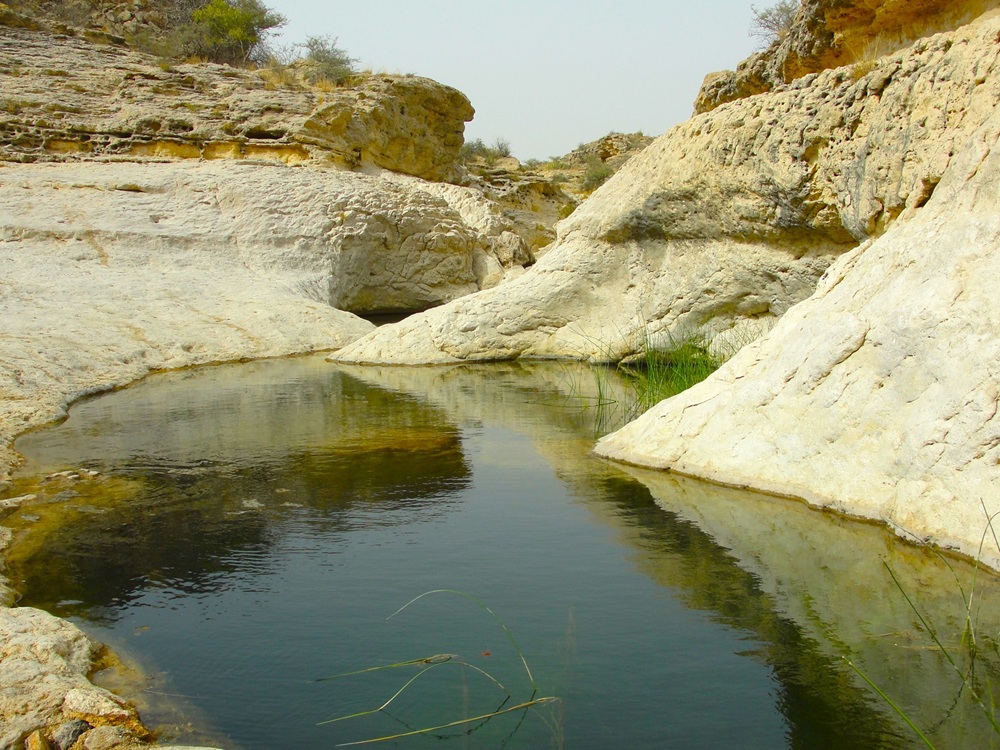
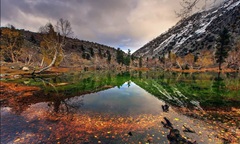
A view of Maher Valley, Malir district. (Picture credits to Zulfiqar Ali Kalhoro)
Documenting rock art is quite challenging in the rugged terrain of Sindh's Khirthar and other mountain ranges. I have been exploring and documenting rock art in Sindh for over two decades. To gain a broader understanding of Sindh's historic and prehistoric rock art, I explored every mountain range in the province. Moreover, I have also visited various rock art sites across Pakistan. During these explorations, I discovered several rock art sites not only in Sindh but also in Balochistan and even in Gilgit-Baltistan, particularly in the Gojal Valley. My exploration of rock art continues, revealing insights into Sindh's prehistoric and historic perspectives.
From Sindh's rock art, one learns about its ancient origins and the themes favored by the artists. One of the most intriguing aspects I observed during my exploration is the selection of specific rock walls for painting and engraving, while others nearby remained untouched. This selective approach to site choice can be viewed through the lens of site specificity, a concept often explored in art theory that emphasizes how the context and environment influence artistic expression. The relationship between the ancient population and their environment adds another layer of interest to my exploration of rock art sites. It suggests that the rock art was not merely a reflection of individual creativity but also a communal engagement with the land, where meanings were constructed in relation to the physical and spiritual landscapes the artists inhabited.
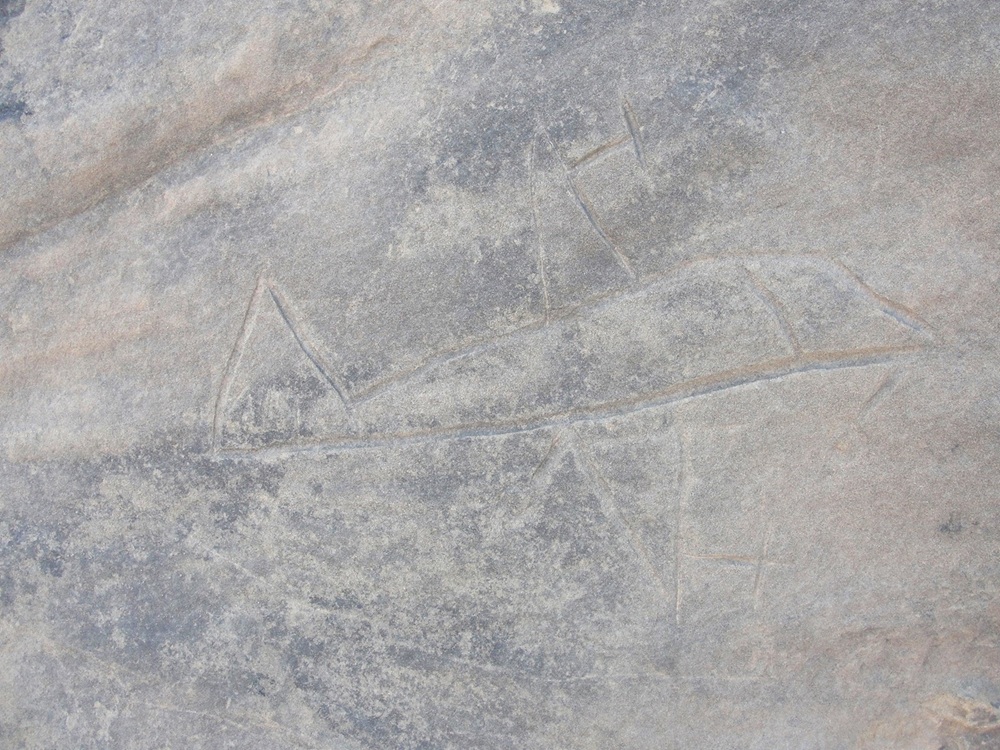
A depiction of an airplane at Khaval Lak, Dadu district. (Picture credits to Zulfiqar Ali Kalhoro)
This context-dependent approach helps to frame the rock art as a dialogue between the community and its environment, revealing insights into social practices, belief systems, and the inspiration drawn from nature. The selective use of certain rock faces could indicate a reverence for particular sites that held spiritual or cultural significance, thus enhancing our understanding of how these artworks functioned within their sociocultural frameworks. The rock art of Sindh provides insights into the extinction of certain animals, likely due to climatic changes the region experienced in ancient times. The landscape, rich in natural beauty, serves as a backdrop to this ancient art. For example, images of bison can be found in Sindh's rock art, whereas bison are no longer present in the area today.
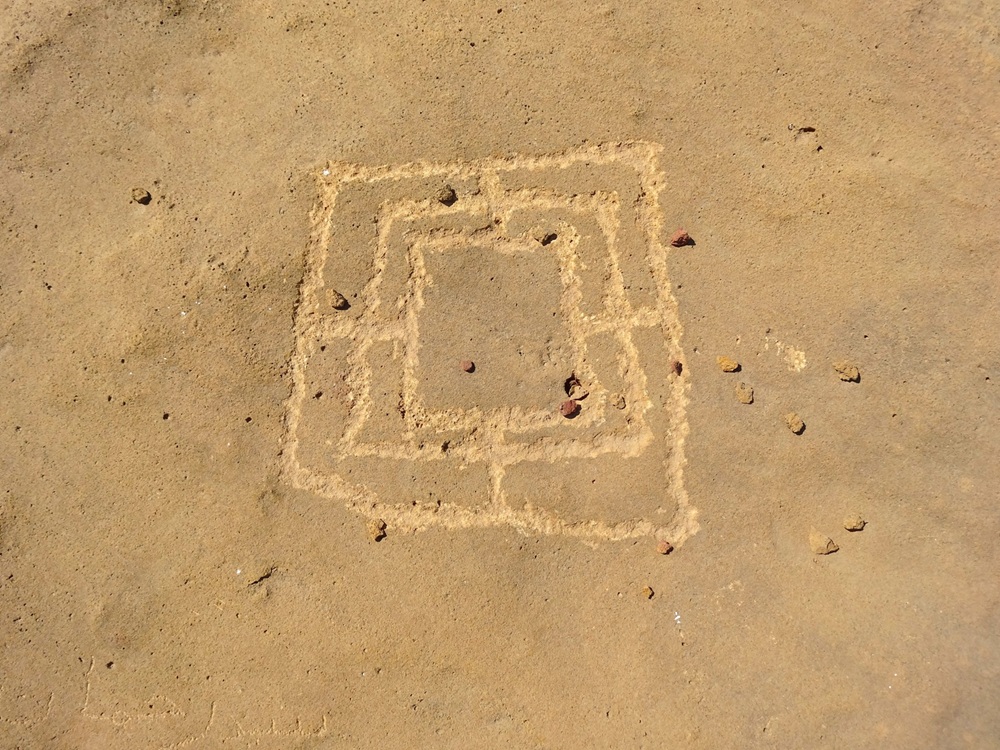
A game board at Thado Dam rock art site, Malir district. (Picture credits to Zulfiqar Ali Kalhoro)
One of the most intriguing aspects of this rock art and the surrounding landscape is the interaction between the present population and these ancient sites. The local community often associates the ancient engravings with non-believers.
I have seen images of bison in the Gaj Valley. Such magnificent images of bison are not found across Pakistan. In fact, the bison are only found in the rock art of Sindh.
One of the most captivating themes found in the rock art of Sindh is the depiction of bulls. These images reflect not only the artistic skills of ancient creators but also the cultural significance of bulls in the region's history and mythology. The artistry captures the strength and grace of these animals, often set against rugged terrain. These images are found at many rock art sites in the Nali, Gaj, Khashani, Taki, Makhi, Buri, Seeta, and Mazarani valleys. The prehistoric bull images are found in all these valleys. However, during my rock art exploration in Khirthar and other mountain ranges of Sindh, I also came across ethnographic images of bulls, particularly in the valleys of Gaj and Makhi in Dadu district.
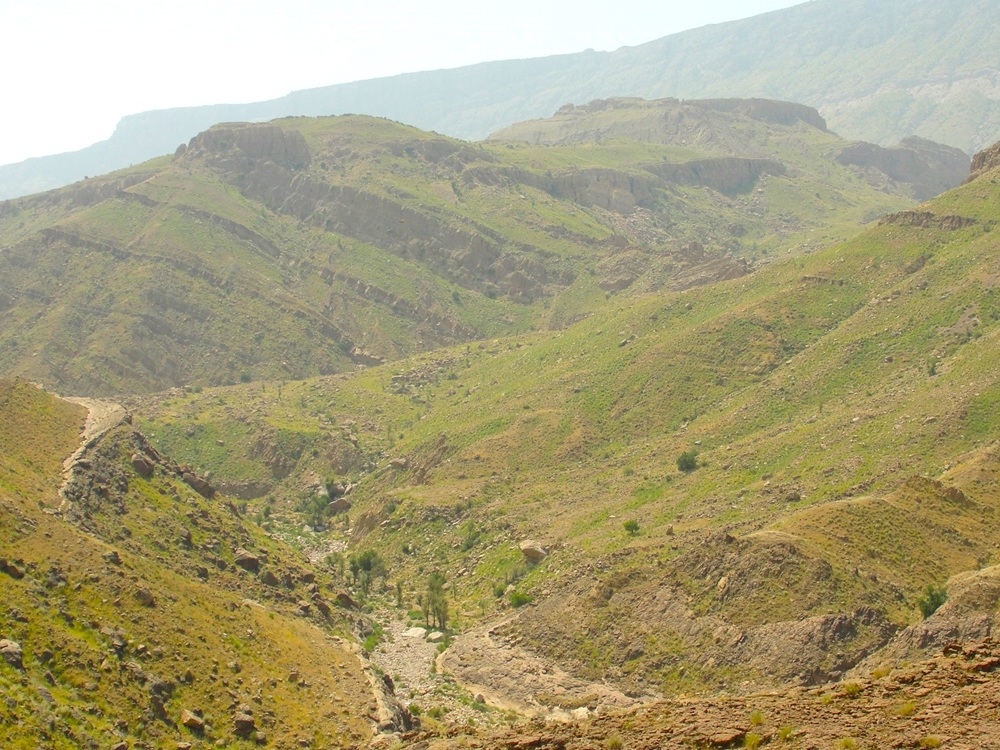
A view of Khashani valley in Dadu district. (Picture credits to Zulfiqar Ali Kalhoro)
Ethnographic petroglyphs are found throughout Sindh, from Mazarani to Makhi in Dadu district, and in the Maher, Thado, and Mol Valleys in Karachi's Malir district. The most common themes in these petroglyphs include game boards, anthropomorphic figures, animals, animal tracks/footprints, axes, birds, plants, flowers, handprints, footprints, sandal or shoeprints, hunting scenes, the moon and stars, cars, helicopters, aircraft, buses, and other vehicles. These motifs are frequently seen along various valleys in the Malir district and Gaj, Nali, and Makhi in the Dadu district. Many rock art sites in the Nali, Gaj, Khasahni, Taki, Makhi, Buri, Seeta and Mazarani valleys feature these images. Prehistoric bull images are present throughout all these valleys.
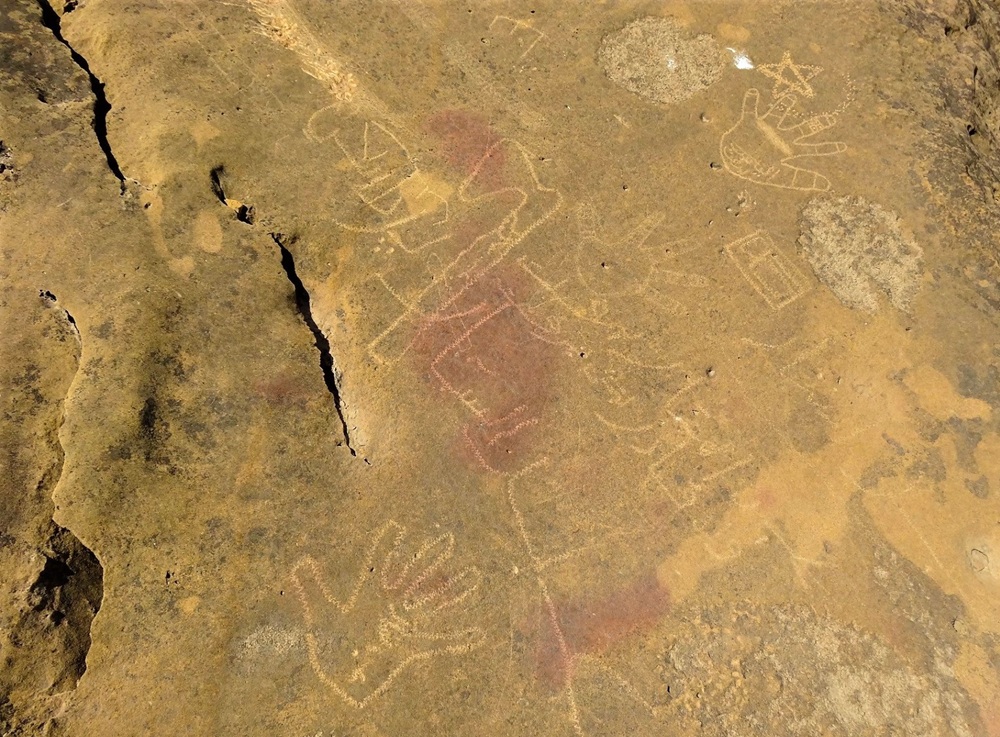
Hand and axe petroglyphs with names of the artists at Lahut Buthi, Mol Valley. (Picture credits to Zulfiqar Ali Kalhoro)
Sindh stands out as the only region in Pakistan where the ancient tradition of rock art is not just a relic of the past, but a living cultural expression that persists today. Unlike other parts of the country where rock engravings and paintings have long fallen silent in archaeology, Sindh's landscape still resonates with the voices of its ancestors through ongoing ethnographic practices. In the rugged valleys and rocky outcrops of the Khirthar and beyond, particularly in places like Loondo Dhoro in Taki Valley, Mol valley, Angai Valley, Gaj and Makhi Valley, locals continue to carve symbols, motifs, and other markings on stone surfaces.
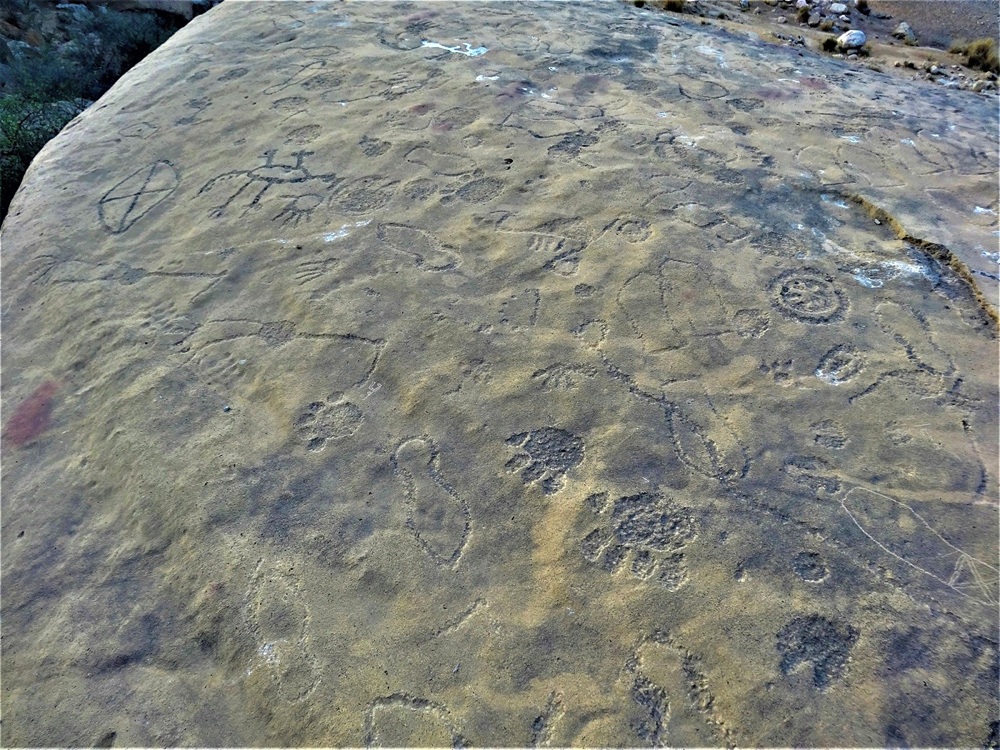
Rock carvings in Mol valley in Karachi's Malir district. (Picture credits to Zulfiqar Ali Kalhoro)
These living traditions span thousands of years of cultural continuity, connecting prehistoric artists with today’s communities that inscribe stones for different purposes. The endurance of these practices shows a deep connection between people, the land, and beliefs, where the rock face remains a sacred space of identity and memory. Sindh, therefore, offers a rare glimpse into how ancient artistic traditions can change yet still endure, maintaining the timeless dialogue between humans and stone.
The writer is an anthropologist at the Pakistan Institute of Development Economics (PIDE), Islamabad. He has authored 17 books on Pakistan's cultural heritage and anthropology. He tweets @kalhorozulfiqar. He may be contacted at zulfi04@hotmail.com
You may also like: