Written by: Khadija Khan
Posted on: November 23, 2026 | 
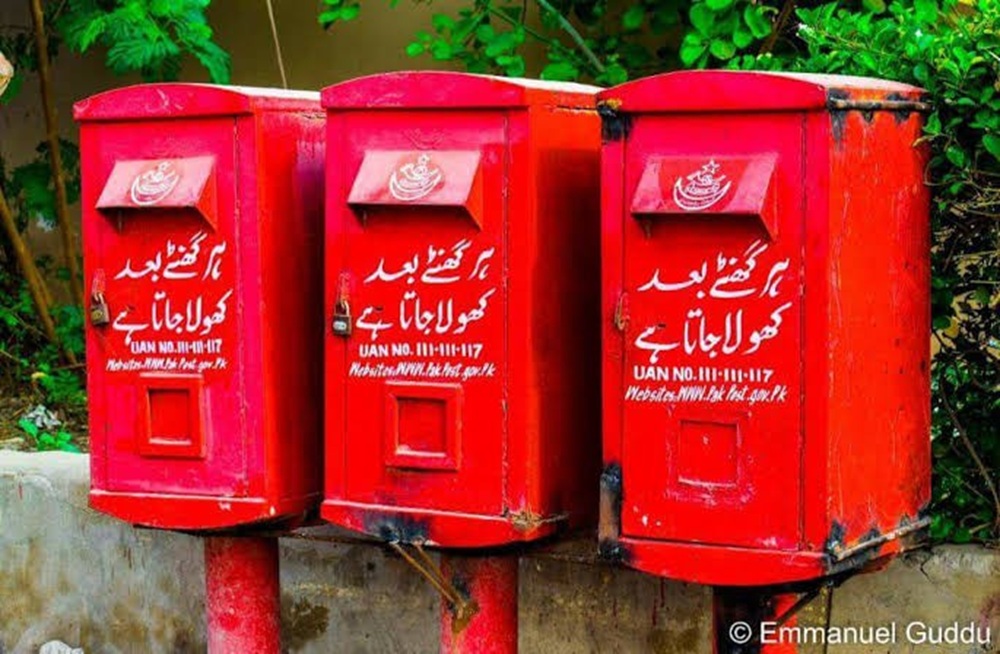
Red letterbox, a small piece of street furniture that still marks the post office's presence.
Stand outside any old post office in Pakistan and the building tells you something before you step in. The walls are thick, the ceilings are high, the doors are tall enough to make you feel slightly small. These were not casual structures. When the British laid out their postal network in the nineteenth century, the post office was one of the plainest ways to show that the state had arrived, and that it meant to stay. Decades after the empire left, the buildings are still speaking, even if fewer people are listening.
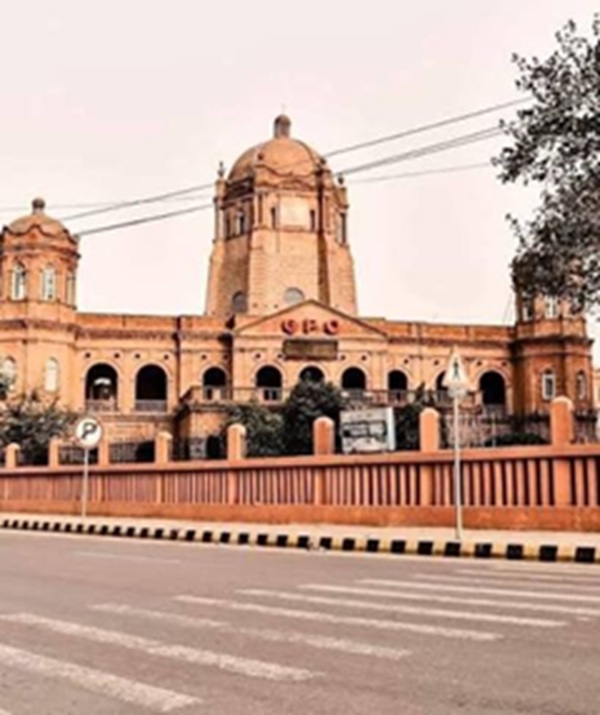
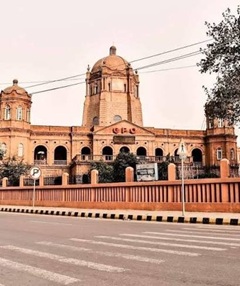
The red-brick facade of Lahore's General Post Office at GPO Chowk, Mall Road
A surprising amount of this architecture was standardised. The Rawalpindi General Post Office, built between 1876 and 1880 at the junction of Kashmir Road and Mall Road, is said to follow the same basic layout as the main post offices in Bombay and Delhi. Sorting halls, counters and offices were arranged the way the department wanted them, then dressed in local clothing: arches, brackets and decorative touches borrowed from Mughal and regional building traditions.
The mix was deliberate. Colonial builders found that a government office wearing familiar motifs looked less like a foreign import and more like something that belonged. The result is neither purely British nor purely Indian, which is exactly why it still looks so distinctive today. The Rawalpindi building sat in cantonment territory, and for years it had a section just for military mail.
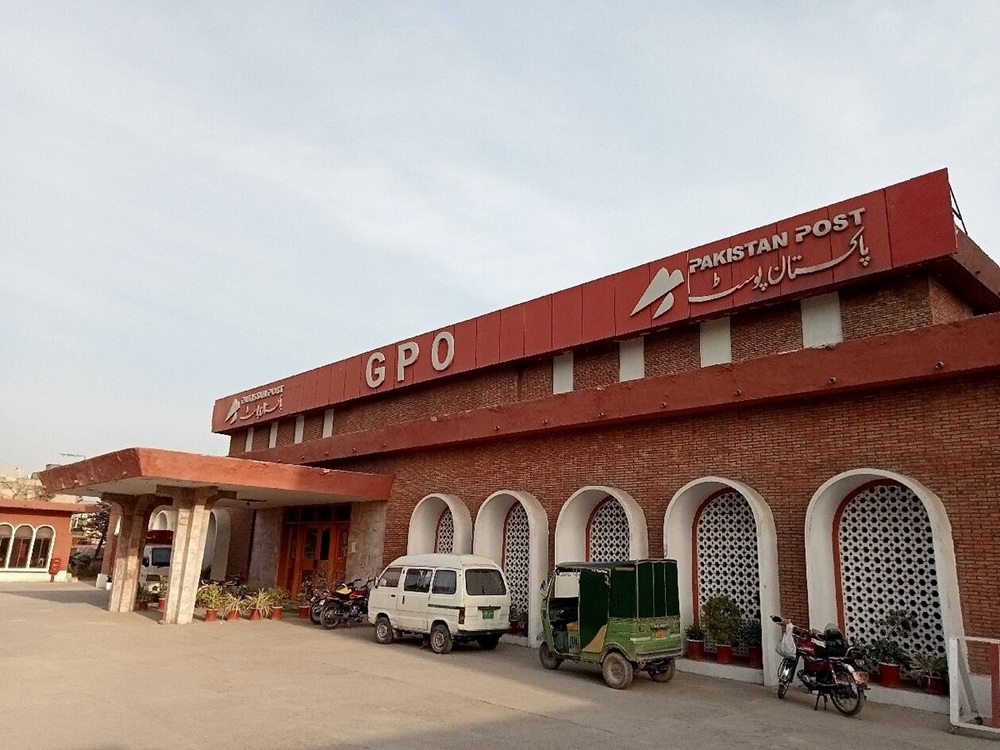
Rawalpindi's General Post Office, completed around 1880, follows a layout used in other colonial cities
The General Post Office in Lahore is the grandest of the lot. Most accounts date it to 1887 and link it to Queen Victoria's Golden Jubilee, crediting the design to Sir Ganga Ram. It stands at GPO Chowk on Mall Road, in red brick, with arched windows, domes and a pair of minarets that nod to the Mughal city around it. Inside, two large halls once took in the city's letters and telegrams.
It was also the first British-era building in Lahore to be formally conserved, in work led by Yasmeen Lari and her firm, and it appeared on a commemorative stamp in 1996. There is something fitting about a post office that ended up on a stamp.
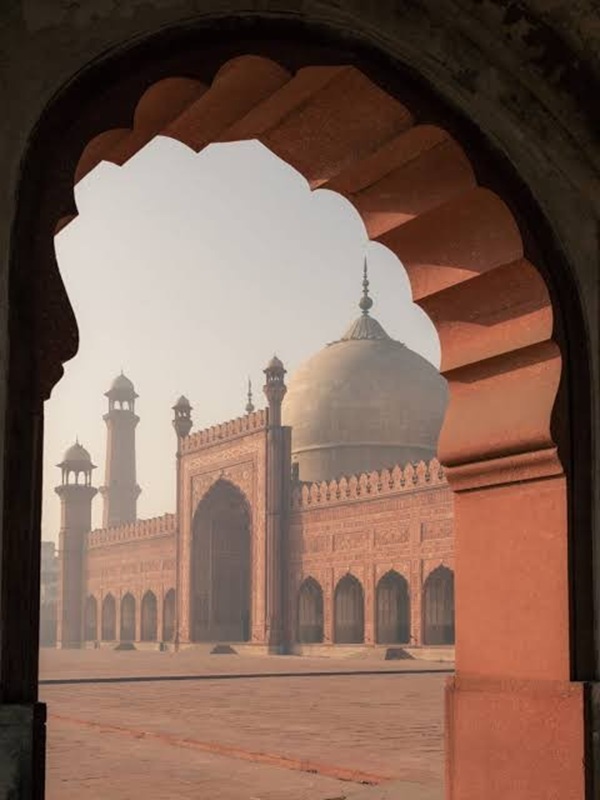
arches give Lahore's GPO a Mughal accent on a Victorian-era plan
Minarets and Karachi tells a different story. Its first combined post and telegraph office went up in 1866 on what was then McLeod Road, designed by a Captain P. Phelps for roughly twenty thousand rupees. The telegraph line to London had been laid two years earlier, so the building handled messages as well as letters. That structure is gone. After independence a new General Post Office was planned, with its foundation laid in 1955 and its opening in June 1960.
The present red-brick building is reportedly the work of the architect M.A. Ahad and is often described as showing the influence of Walter Gropius: clean lines, large halls, big doors, high ceilings, and peepal trees outside. It does the same old job, announcing a public institution, but in the language of a new country rather than an old empire.
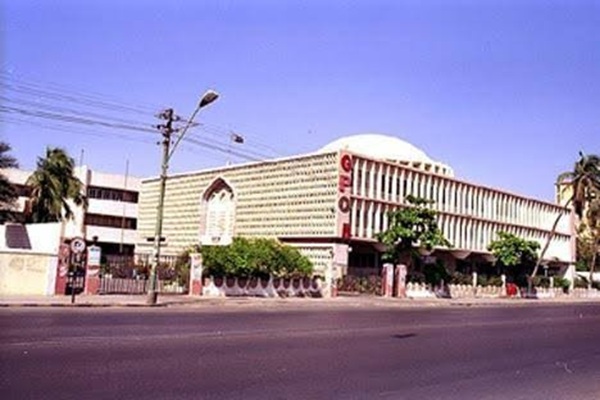
Karachi's GPO trades colonial ornament for modernist lines and large, plain halls
Look closer and the language is in the details. Tall ceilings and deep openings kept sorting rooms bearable long before air conditioning. Wide counters, wooden pigeonholes and heavy doors were built for volume and durability, not charm. Near the Rawalpindi post office, some older buildings still carry balconies inspired by Kashmiri woodwork. Even the red letterbox outside is part of the vocabulary: a small, round, stubborn piece of street furniture that says mail is collected here. None of it was designed to impress you with decoration. It was designed to be trusted, and for generations it was.
High ceilings and long wooden counters were built to handle crowds and keep rooms cool
The trouble is that the work these buildings were designed for has changed. Letters have given way to WhatsApp and email, and many people now prefer private couriers. Around Rawalpindi, more than 80 percent of local post offices have reportedly closed and neighbourhood letterboxes have been removed. At the Karachi GPO, a counter clerk told a reporter he sees only three or four customers a day. Staff there speak of neglect and a fear of privatisation, and the building's future is described as uncertain.
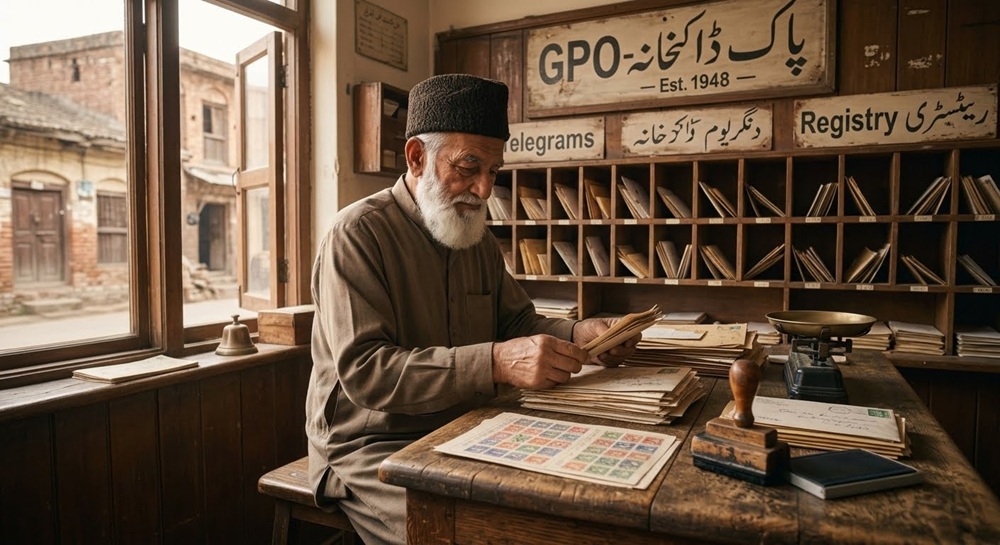
Behind the counter, a handful of clerks still keep these old halls running
Pakistan Post still runs around 13,000 offices, so the network has not vanished. But a hall built for crowds feels very different when it is nearly empty. The Not every story is bleak. Murree's post office, established in 1867, was restored in 2015, and the Rawalpindi building still works, handling parcels, registered mail and money orders, with a philatelic bureau that sells commemorative stamps. Next time you pass one, go inside. Buy a stamp, look up at the ceiling, and notice how the room was built to make an ordinary errand feel official. These buildings are archives of how a state once wanted to be seen.
You may also like: