Written by: Tehzeeb Hussain Bercha
Posted on: October 20, 2025 |  | 中文
| 中文
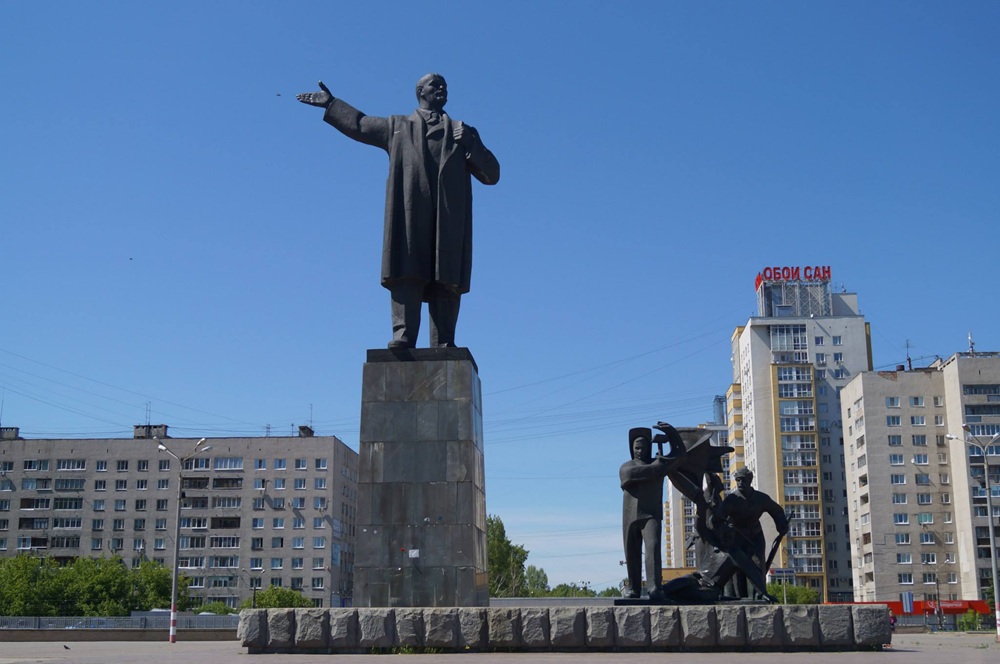
Lenin Square
My first connection with the great Russian writer Maxim Gorky began about seventeen years ago, in the early days of my youth. I sat in a quiet corner of the Biddulph House Library in Gilgit, absorbed in The Mother. Somewhere within those pages, a longing stirred in me, a dream to one day walk the streets of Gorky’s city, Nizhny Novgorod, and spend tranquil evenings by the Volga, Europe’s longest river. Perhaps that yearning was divinely destined, for today that dream has come true. With gratitude to the government of Nizhny Novgorod, the Russian Federal Agency for Youth Affairs, and the World Youth Festival Directorate, I found myself breathing the same air that once inspired Gorky, immersed in a landscape both poetic and soul-stirring.
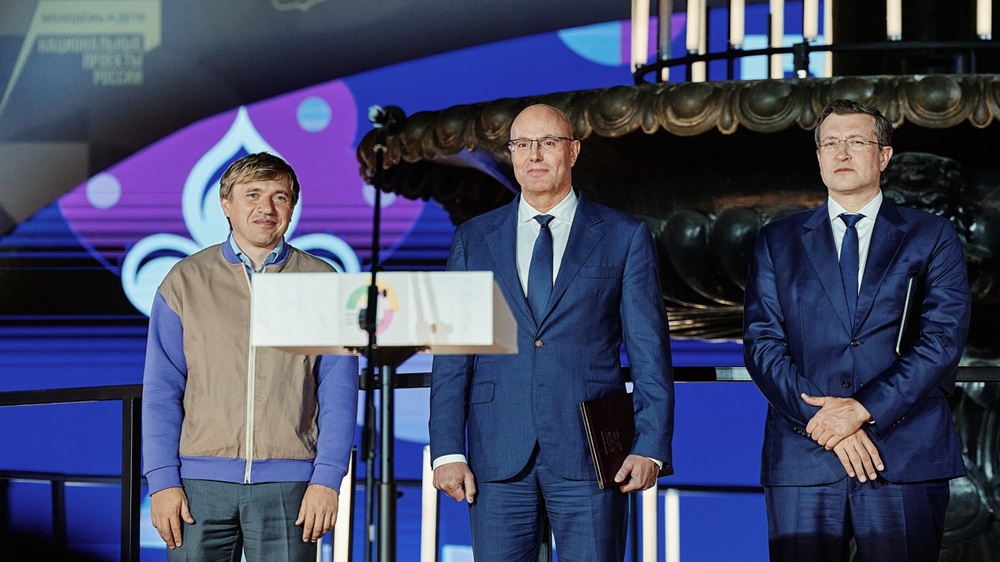
Deputy Prime Minister Dmitry Chernyshenko and Governor of Nizhny Novgorod Gleb Nikitin attended the opening ceremony.
Stepping into Nizhny Novgorod felt like entering a dream. After a long journey, I felt no weariness, only quiet excitement. An hour of rest was enough before I set out for the famous Nizhny Novgorod Fair. That morning the organizers handed me a travel card, my key to the city, offering free rides on public transport and entry to museums, landmarks and historic sites. For a traveler eager to explore, nothing could be more perfect. With that card in hand and curiosity as my compass, I began to wander, certain that the coming days would bring unforgettable adventures.
Nestled at the meeting point of the Oka and the mighty Volga, Nizhny Novgorod is among Russia’s most captivating cities. About 420 kilometers east of Moscow, this sixth largest metropolis, home to more than 1.25 million people, it is a vibrant hub of economic, cultural, scientific and educational life. Its historic quarters brim with charm, filled with theaters, universities, IT parks, museums and centuries-old churches that speak of Russia’s rich past.
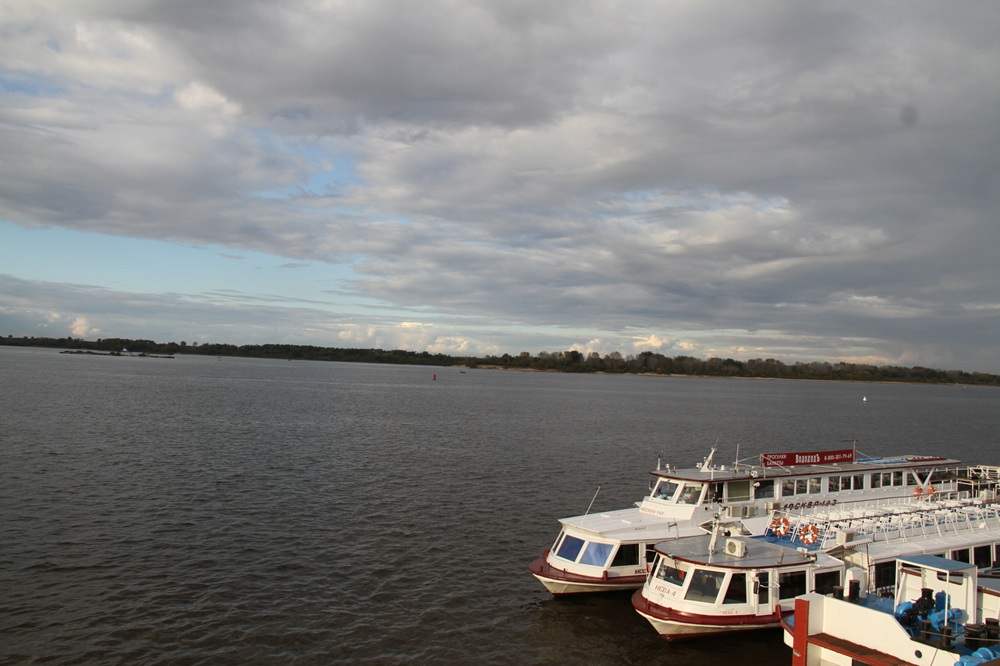
Volga river
That first morning was pleasantly mild, with a soft breeze carrying hints of autumn. After a short walk through a picturesque street, I took a bus to the iconic Fair Building, the venue of the World Youth Festival Assembly 2025. Held from September 17 to 21, the festival brought together youth, creativity, and collaboration, drawing more than two thousand representatives from over 120 countries. As evening descended, the city came alive with music and color for the opening ceremony. Local artists showcased the diverse hues of Russian culture, especially the traditions of the Nizhny Novgorod region. A special message from President Vladimir Putin, read by Deputy Prime Minister Dmitry Chernyshenko, added a sense of honor. Regional Governor Gleb Nikitin welcomed guests warmly, setting a dignified tone for the days ahead.
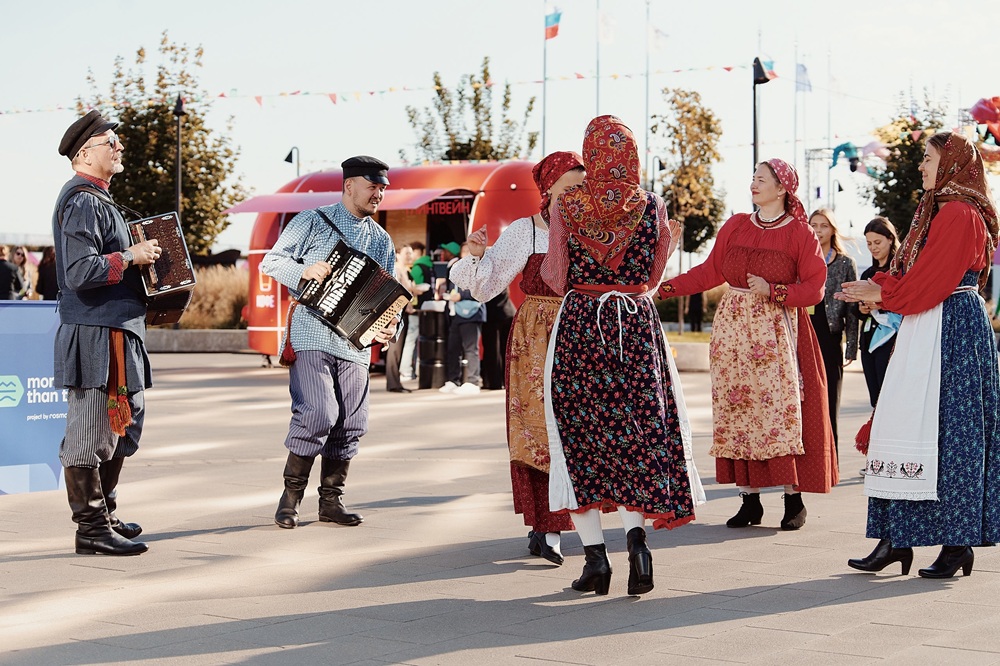
Local artists perform indigenous music and dance.
On my second day in Russia, I explored the city with friends Stefan Todorcevic from Serbia and Younis from Yemen, companions I had first met two months earlier at the Eurasia Global event in Orenburg. Our destination was the city’s crown jewel, the Kremlin. Using public transport, we arrived near the famous Chkalov Stairs, a landmark that instantly captivates with its graceful symmetry. Standing beside the Volga, we faced a breathtaking panorama, the shimmering waters below and the skyline rising proudly above. The Chkalov Stairs, built in the 1940s to commemorate the victory at Stalingrad, connect the riverfront to the upper city. It’s more than five hundred steps, arranged in the shape of the number eight, fold history, art and endurance into a single view.
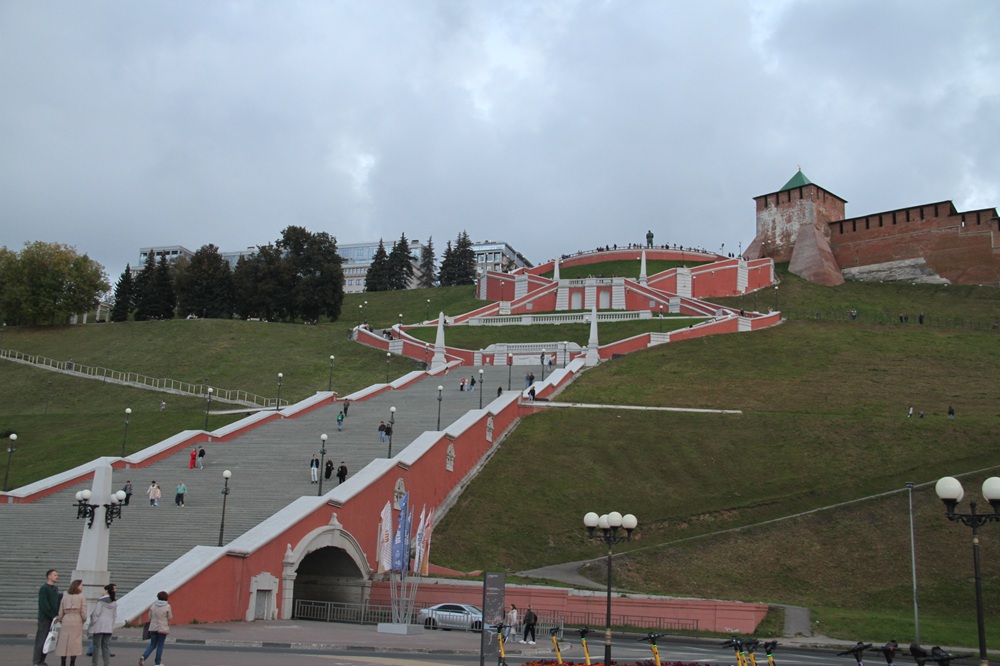
Chkalov Stairs
As we climbed, each turn revealed a new scene, the tranquil blue of the Volga behind us and ahead the historic buildings and golden domes of Nizhny Novgorod. At the top, the city spread before us like a map, the great Volga glistening in the morning light, a moment etched in memory. From there, we strolled toward the majestic Kremlin, following a scenic route overlooking the river. The breeze carried a sense of adventure. Along the way, we met Daniel, a friendly vlogger from Moscow who spoke fluent English. He joined us cheerfully, adding a lively spirit to our small expedition.
The Kremlin, built of striking red brick, rose like a timeless sentinel. With two kilometers of walls and thirteen turrets, it embodies the soul of the city. Set at the meeting of the Volga and Oka, the fortress was laid in the early sixteenth century and once guarded against the Khanate of Kazan. Centuries later it endured the alarms of World War II, and even now its walls seem to whisper of valor and endurance.
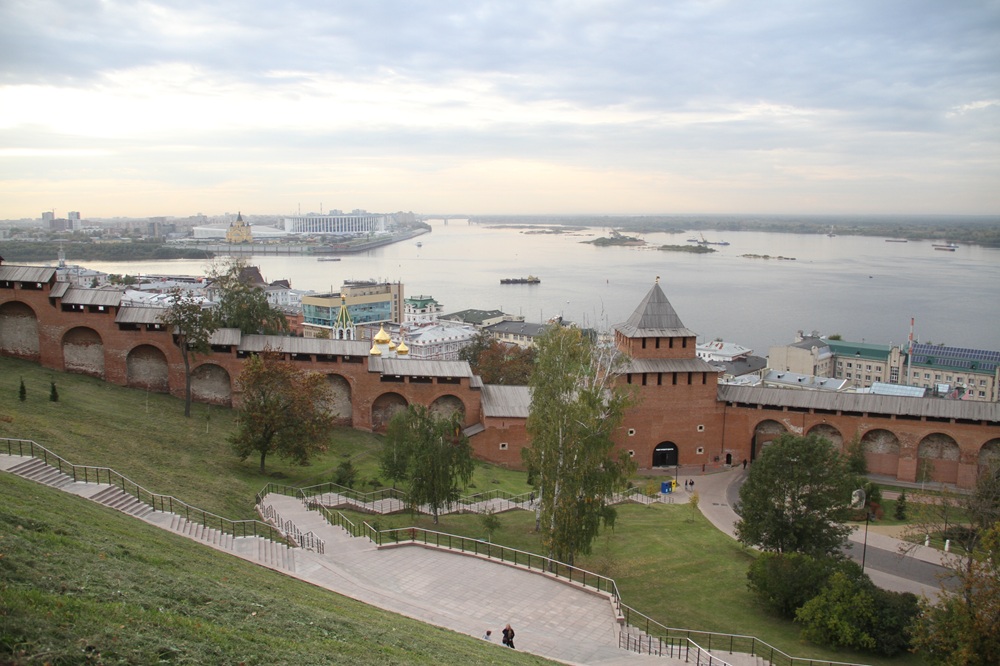
Kremlin
After about an hour, our Serbian and Yemeni friends decided to return, but Daniel and I stayed, drawn toward one more destination, the Monument to Maxim Gorky. As the golden hues of sunset spread across the city, we set out toward the monument, passing through a bustling bazaar where the Monument to Minin and Pozharsky stood at the crossroads, their bronze figures glowing in the fading light. Climbing toward the upper heights, we met two local young women, Dana and Anastasia, and a young lecturer from Azerbaijan, Anar Gadzhiyev, who had also come to attend the festival. After a half-hour walk, we reached the hilltop where the Monument to Maxim Gorky stood tall and thoughtful, facing the city. We gathered in a small circle and spoke about literature, travel and life, our laughter echoing into the twilight. Though strangers only hours earlier, we felt like old friends.
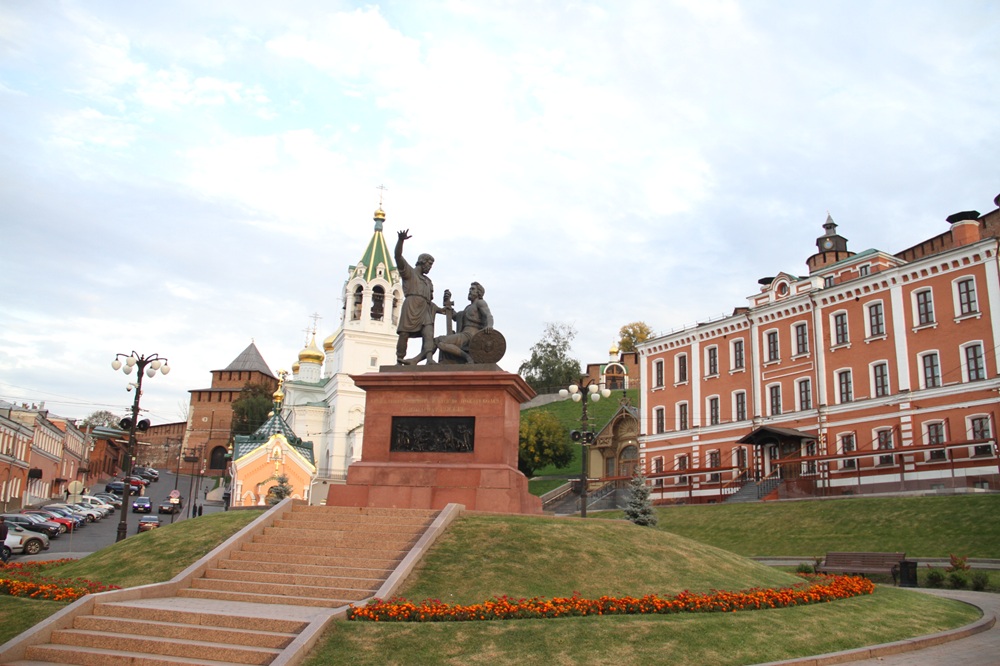
Monument of Minin and Pozharsky
It was my third morning in Russia. After an early breakfast at the Neimark Hotel, I set out once again for the Fair Building, where the day’s engagements awaited. There I met the Pakistani delegation led by Daniyal Hayat, the spirited and refined leader of Future Team Pakistan. Among the group were bright young participants, including Hussain, Ahmad and Mudassir Ashraf, along with inspiring women representatives. Over the next few days, the time spent with them grew into warm companionship. Watching their enthusiasm and patriotism in an international gathering filled us with pride, the vibrant face of Pakistan shining abroad.
On my fourth day in the historic city, Sasha, whom we had first met at the Eurasia Global event, and I decided to explore the legendary Volga River. After a half-hour journey, we reached its banks, where the broad water shimmered under the gentle morning sun. A leisurely walk along the embankment brought us to the pier, and we boarded a boat for a river cruise. As the vessel glided through calm waters, the city unfolded in a sweeping panorama. In the distance, the red-bricked Kremlin rose with its towers and walls, a witness to centuries of history. Beyond it, the elegant arc of the Chkalov Stairs descended toward the river, while the skyline stood like a meeting of old and new.
On the fifth day, my destination was the Maxim Gorky Apartment Museum, a place deeply tied to the city’s literary soul. Housed in a graceful two-story building from the mid-nineteenth century, its stone and wooden architecture radiates quiet elegance. The apartment served as the home of Maxim Gorky and his family from 1902 to 1904. His writing desk, books, photographs and personal belongings remain as they once were, where inspiration flowed freely. Within these walls, Gorky prepared early drafts of The Lower Depths, The Summer People and The Mother. Walking through the museum felt like entering Gorky’s world, a vivid portrait of creativity and endurance preserved within the rooms that nurtured his genius.
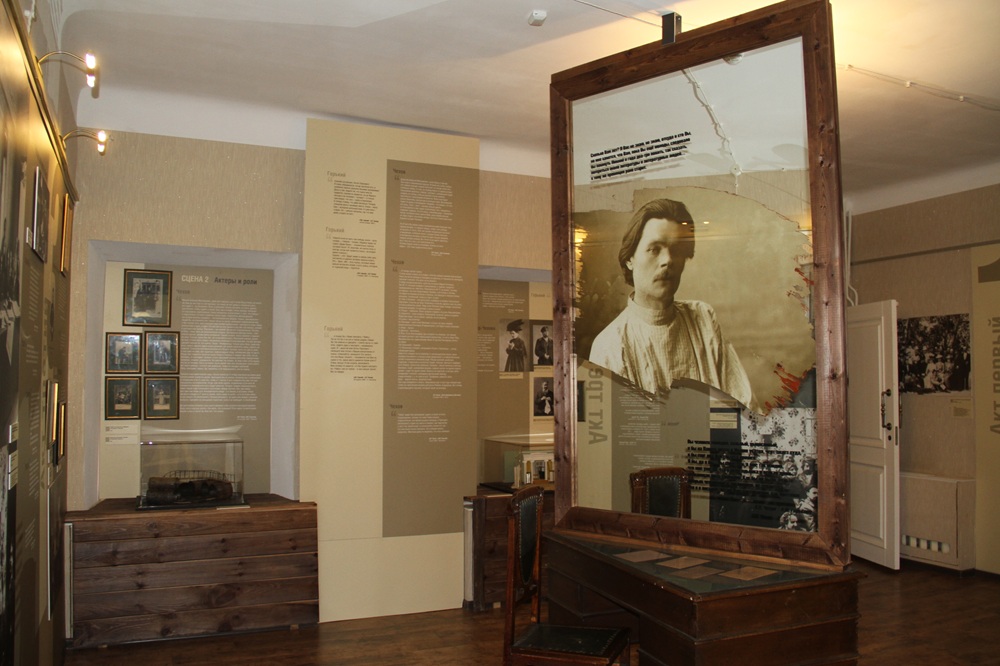
Maxim Gorky Apartment Museum
When I first set foot in this beautiful city, my heart carried a quiet wish that when I departed, I would take with me a treasure of memories, leaving faint traces on its cobbled streets and timeless architecture. I hoped the city itself would remember that a traveler from Pakistan had wandered here, deeply moved by its beauty and enduring charm. From the Monument to Minin and Pozharsky in the central square to the sweeping descent of the Chkalov Stairs, from the red-brick majesty of the Kremlin to lively Bolshaya Pokrovskaya Street, every step revealed a new story. The golden domes of the Alexander Nevsky Cathedral gleamed in the sunlight, while the Gorky Museum honored the literary spirit of the great writer. Evenings by the Volga and late-night strolls across the Kanavinsky Bridge added their colors to the canvas of memory. At every turn I paused to listen, to the whispers of ancient walls and the tales of streets that have witnessed centuries. I sought, too, the traces of Maxim Gorky, walking where he once drew inspiration from ordinary lives and fashioned from them literature that still moves the world.
You may also like: