Written by: Waseem Abbas
Posted on: November 14, 2025 |  | 中文
| 中文
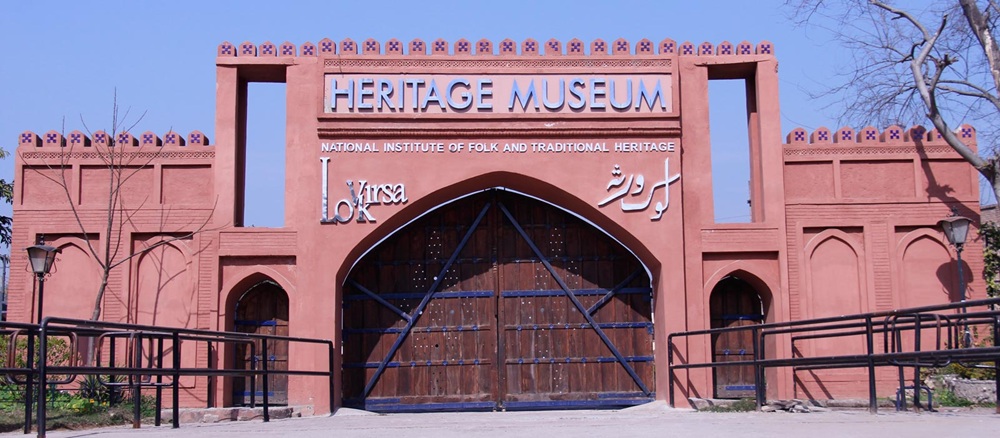
Lok Virsa's Heritage Museum
Lok Mela 2025 has kicked off with the theme of ‘Our Culture is Our Identity’ at the historic Lok Virsa Complex in Shakarparian, Islamabad. Lok Virsa has hosted the cultural Mela every year since 1981, bringing together artists, musicians and singers from across Pakistan. Lok Virsa, formally the National Institute of Folk & Traditional Heritage, was created in 1974, tasked with researching, documenting, preserving and promoting the folk and traditional heritage of Pakistan, including crafts, music, folk arts and intangible cultural traditions. Over the years, Lok Virsa has done a commendable job, not only through Lok Mela but also through other cultural events and programs throughout the year.
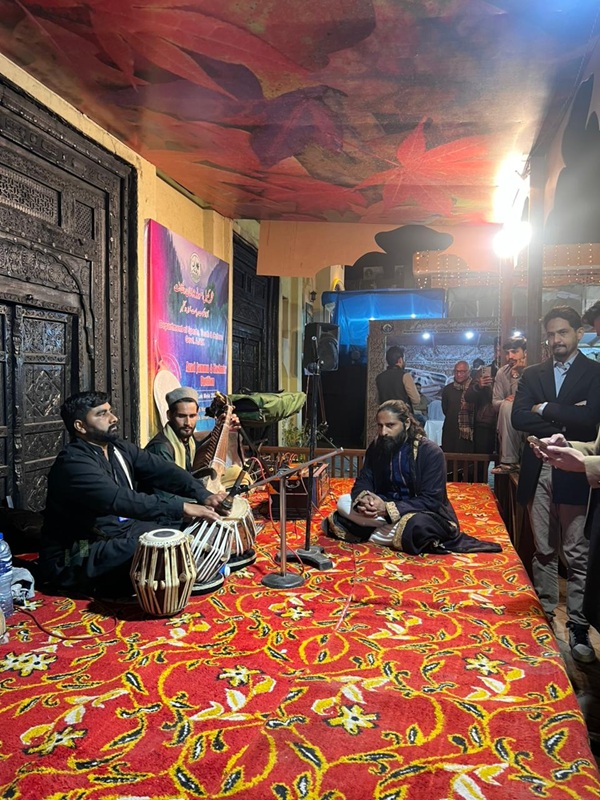
Musicians at Kashmir Pavilion, 2025.
Over time, the Lok Mela also became a symbol of the federation’s recognition of cultural diversity across provinces and regions, including Gilgit-Baltistan and Azad Jammu & Kashmir. Lok Mela was created as a flagship event of Lok Virsa, bringing together artisans, folk performers, and cultural pavilions from across Pakistan to showcase regional diversity and promote national cultural unity.
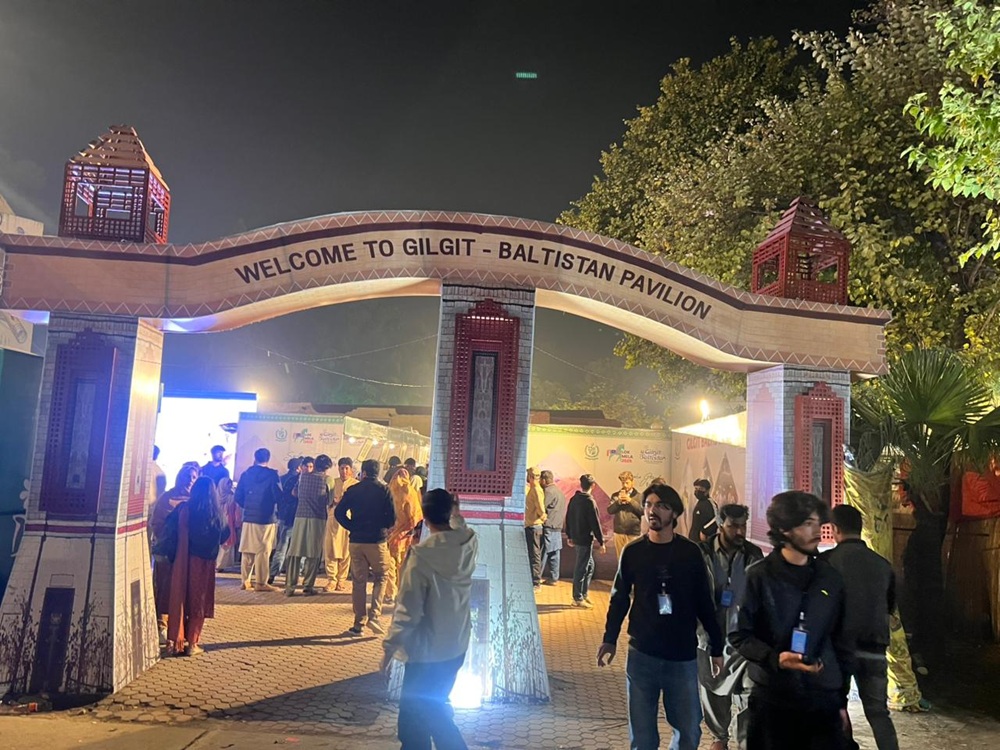
Gilgit Baltistan Pavilion, 2025
Lok Virsa had very humble beginnings, starting in a small house with a staff of just three people. In the early 1970s, Dr. Uxi Mufti was running Lok Tamasha, a popular PTV show that brought folk musicians from all corners of the country into people’s homes. During this period, he met the poet Faiz Ahmed Faiz, who was in Islamabad to help establish the National Council of the Arts. Dr. Mufti raised a concern: while the PNCAs supported performing arts, there was no space for folk arts or folklore. When Faiz asked who could take on this task, Dr. Mufti stepped forward, presenting a detailed proposal for a folk-art academy grounded in skill and research. Faiz approved it, and Dr. Mufti was given a small house where he set up the Folklore Research Center, laying the foundation for preserving Pakistan’s rich folk heritage. Under the auspices of his center, the first such festival was held in 1976, titled ‘Artisans at Work Festival’, on the premises of the Islamabad Club. Dr. Uxi, in an interview with Youlin in 2013, stated that the term “Mela” was added so that people would come in larger numbers, as attendance at folk events tended to be very low. Dr. Uxi also ensured that the Mela was not commercialized and that no exploitation of artisans took place, allowing them to set up their own stalls instead of going through middlemen. Years later, when the new head of PNCA complained that Dr. Uxi and his institute were exceeding the mandate of an organization intended purely for research purposes, Dr. Uxi met the then Minister for Culture and Education, Abdul Hafeez Pirzada, and requested that an independent institution with its own mandate be established. This led to the creation of the National Institute of Folk and Traditional Heritage, now known as Lok Virsa.
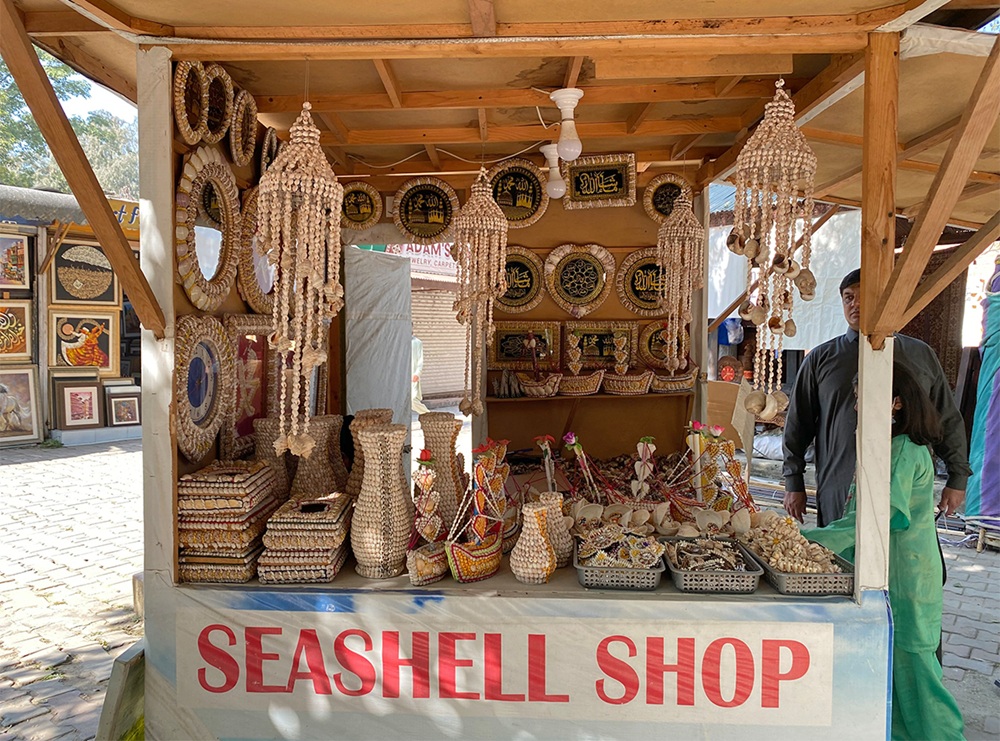
Seashell Shop at Lok Mela
The 2025 Lok Mela started on 7th November and will continue till 16th November at the Lok Virsa Complex, running from 10 am to 10 pm every day. Each night, the Mela features a musical night, with each province and federating unit given a day for its cultural musical event. Balochistan’s musical night was held on the 8th, Punjab’s on the 9th, Gilgit-Baltistan’s on the 12th, Kashmir’s on the 13th, Sindh’s on the 14th and Khyber Pakhtunkhwa’s on the 15th of November. Famous folk and popular singers and musicians from all regions perform traditional music and songs on these nights, all nominated by provincial cultural and heritage departments.
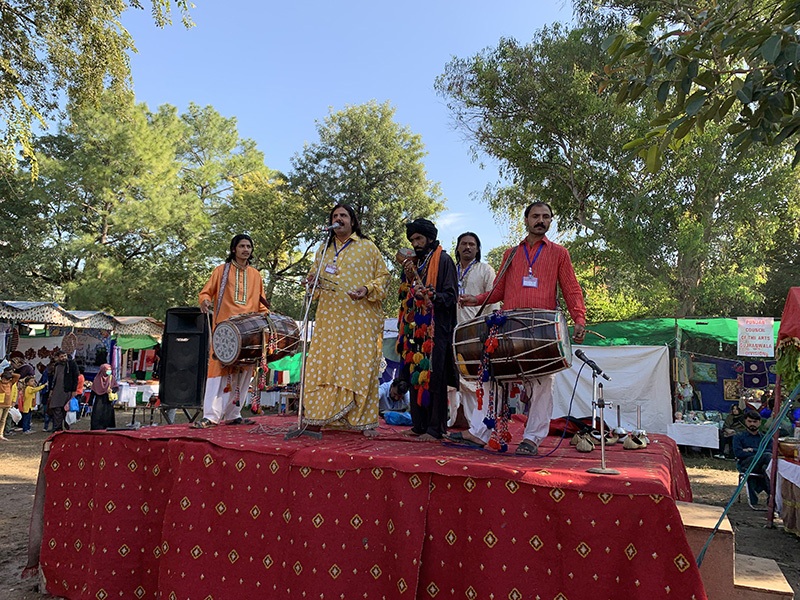
Performance at the Punjabi Pavilion in 2019.
As always, Lok Mela 2025 is thoughtfully organized into multiple pavilions, each dedicated to the rich cultural heritage of Pakistan’s provinces and regions. The Punjab and Khyber Pakhtunkhwa (KPK) pavilions continue to be crowd favorites, drawing visitors with their beloved traditional dishes, vibrant textiles and intricate handicrafts that feel both familiar and comforting. In contrast, the Sindh and Balochistan pavilions offer a more exploratory experience, inviting festival-goers to discover crafts, foods and stories that are less common in daily life, creating opportunities for genuine cultural exchange and appreciation. Each pavilion features occasional dance and music programs to entertain the audience.
The Azad Kashmir and Gilgit-Baltistan pavilions bring the highlands and valleys of northern Pakistan to the heart of Islamabad. Visitors can savor authentic local dishes, shop for distinctive souvenirs, and witness the skill of artisans whose traditions have been preserved over generations. Adding to the experience, the pavilions are set against stunning backdrops depicting the breathtaking landscapes of these regions, from the lush valleys of Kashmir to the majestic peaks and serene lakes of Gilgit-Baltistan, making every visit not just a journey through Pakistan’s crafts and cuisines, but also a visual celebration of its natural beauty. Traditional dishes like mantu, local soaps, dry fruits and embroidered crafts are readily available in the Gilgit-Baltistan pavilion.
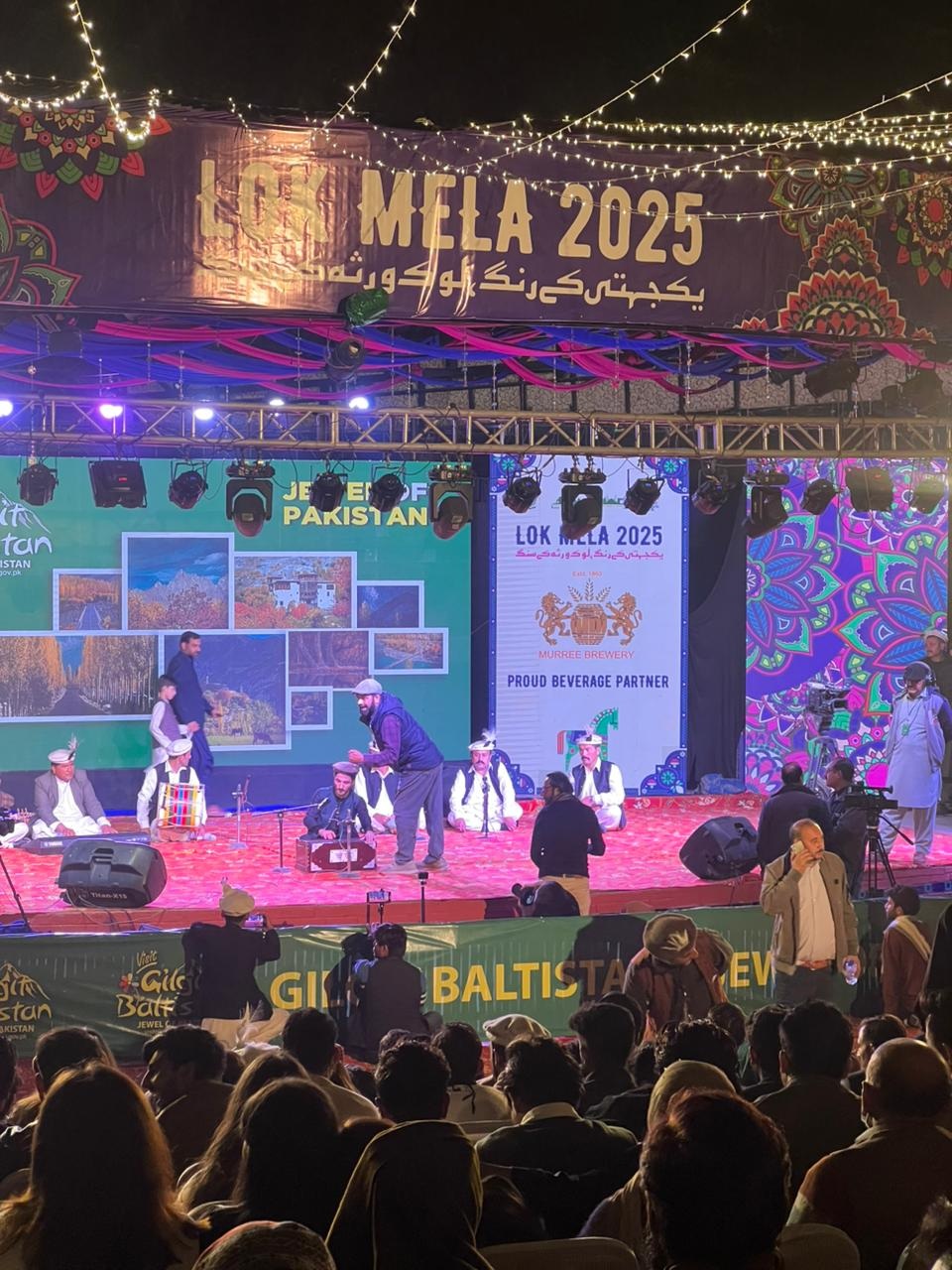
Musicians perform at Lok Mela 2025 on Gilgit Baltistan Musical Night.
Lok Mela carries forward the South Asian tradition of communal festivals that once united neighboring villages through performance, food, and shared celebration. Organized by Lok Virsa, it brings artisans from across Pakistan to Islamabad for a week of cultural exchange, where visitors and vendors alike learn about the country’s diverse traditions, fostering connection, inclusion, and mutual discovery in a modern setting.
Be sure to visit Lok Mela, strike up conversations with the vendors, and take the opportunity to discover the stories, traditions and craftsmanship of people from across Pakistan.
You may also like:
From the Horn of Africa to Bahria Town: Habesha Café Brings Centuries of Coffee Culture to Rawalpindi
(October 15, 2026)