Written by: Zulfiqar Ali Kalhoro
Posted on: February 16, 2026 |  | 中文
| 中文
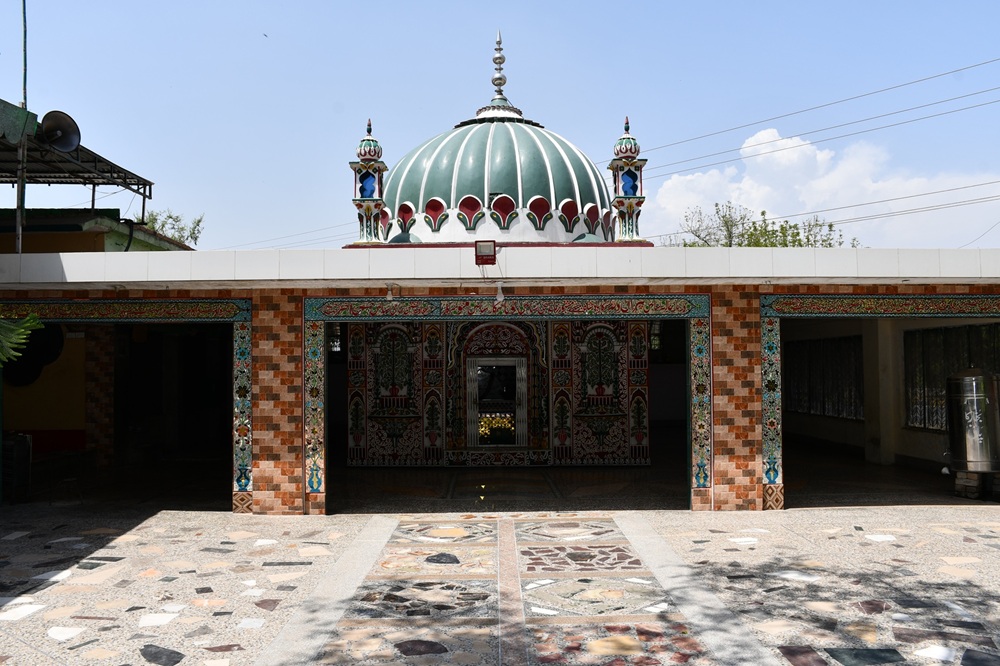
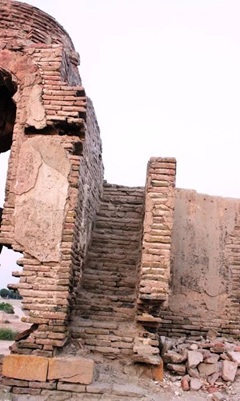
The shrine of Sain Piran Ditta and Sain Sakhi Bota Sarkar in Shakrial. (Picture credits to Zulfiqar Ali Kalhoro)
While traveling from Koral to Faizabad on the Islamabad Expressway, one notices a modest shrine on the left side of the road, just after Khanapul. This shrine belongs to the Naushahi saints. It is situated in the Shakrial area of Rawalpindi.
I have visited the shrine several times to know its history and the spiritual lineage of the buried saints. I met devotees and the shrine's custodian. While entering the shrine, one can read the names inscribed on the main entrance: Darbar Aliya Sain Piran Ditta and Sain Sakhi Bota Sarkar. Moreover, the name of the locality is also written Shakrial Islamabad. Administratively, it is not located in Islamabad but in Rawalpindi.
There are two graves inside the domed structure, which belong to Sain Piran Ditta Qadiri Qalandari Naushahi and Sain Sakhi Bota Qadiri Qalandari Naushahi. Beyond their names, little is known. There are no hagiographies documenting their lives, nor is there any written account tracing their genealogy.
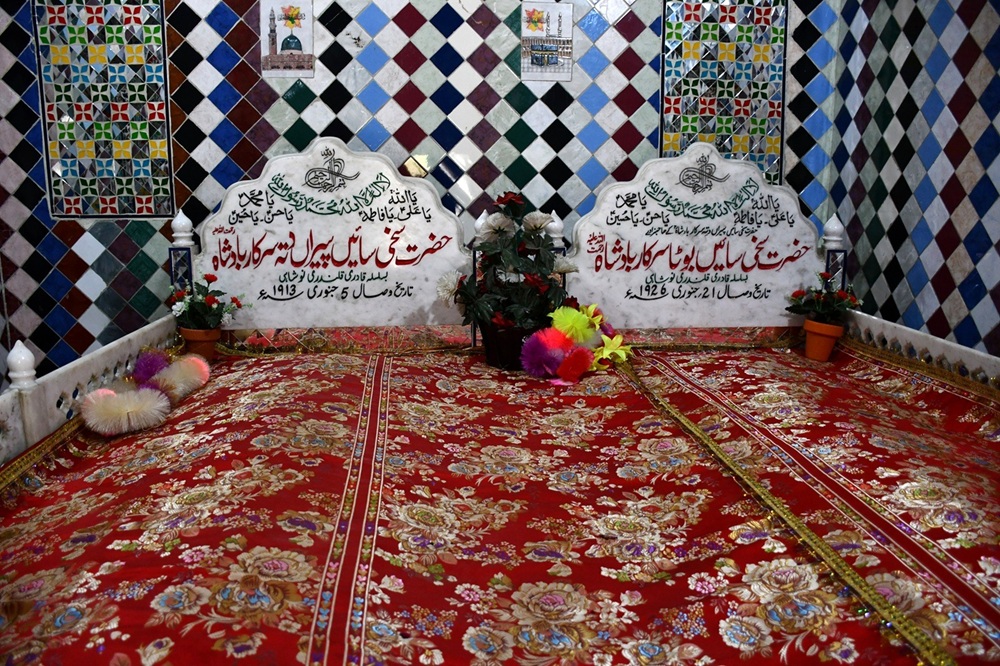
Graves of Sain Piran Ditta and Sain Sakhi Bota Sarkar (Picture credits to Zulfiqar Ali Kalhoro).
In an effort to reconstruct the shrine's past, I spoke with its custodian, Sain Hasan Akhtar in 2022. The custodian Sain Hasan Akhtar could not identify their place of origin or the specific spiritual master from whom Sain Sakhi Bota Qadiri Qalandari Naushahi and Sain Piran Ditta Qadiri Qalandari Naushahi received robes of initiation (khirqa). His account was brief but significant. According to him, both saints were disciples of Haji Muhammad Naushah Ganj Bakhsh, the founder of the Naushahiyya silsila, a sub-order of the Qadiriyya order.
This affiliation, asserted but not elaborated, opens a complex field of inquiry. It raises questions not only about historical accuracy, but about how Sufi lineages are claimed, remembered, and sometimes retrospectively assigned in popular religious culture. When chronology is introduced into the narrative, the claim becomes even more complicated. Haji Muhammad Naushah Ganj Bakhsh passed away in 1654, whereas Sain Piran Ditta Qadiri Qalandari Naushahi died in 1913 as per the inscription on his grave. The grave of Sain Sakhi Bota Qadiri Qalandri Naushahi bears the inscription that he died in 1926. This temporal distance of nearly three centuries makes it historically impossible for either saint to have received direct initiation from the founder of the Naushahiyya order himself.
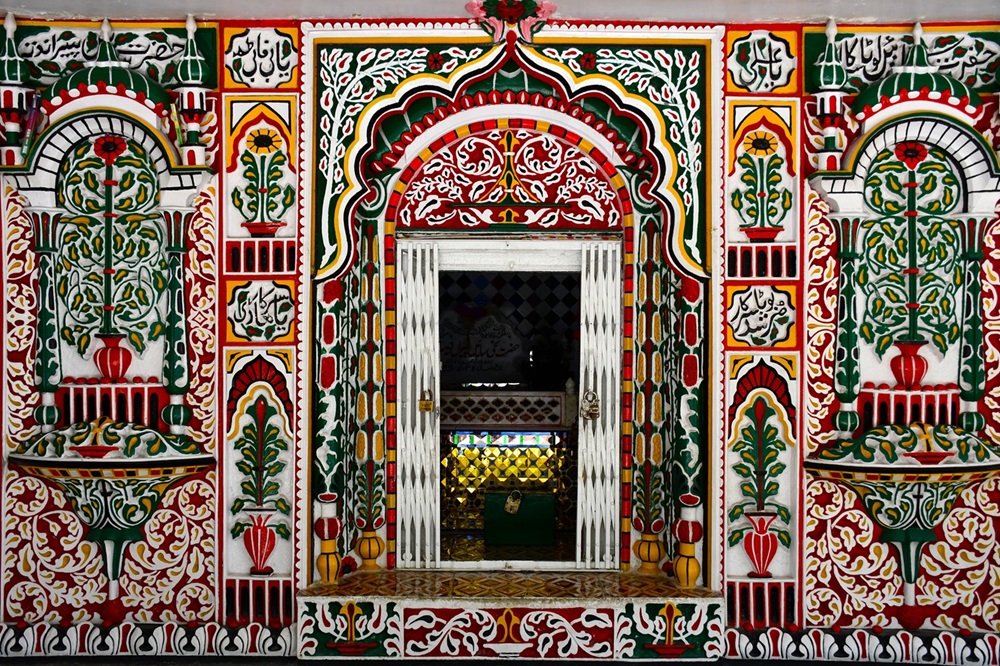
Closer view of the shrine of Sain Piran Ditta and Sain Sakhi Bota Sarkar. (Picture credits to Zulfiqar Ali Kalhoro)
Stories concerning the initiation of saints can be heard throughout the shrines in the twin cities. Caretakers and custodians share narratives that often pose intriguing challenges for researchers studying the shrines. In this context, it is essential to consider several additional factors when conducting a comprehensive study of the shrines. While the history of the shrine is important, it is equally important to examine the political economy of the shrines, too. There are several shrines in the Rawalpindi district belonging to the Naushahiyya silsila, and their spiritual connections are easily traceable. However, in the cases of Sain Sakhi Bota and Sain Piran Ditta, this is more challenging, as discussed above. The Naushahiyya order developed as a distinct spiritual lineage within the Qadiriyya Sufi order. Over time, its influence spread across parts of Punjab, Kashmir and other regions, resulting in a network of shrines; some well documented, others marginal and obscure. In theory, being affiliated with such an order implies a traceable chain of initiation, linking the disciple to the master and the master to the master, all the way back to the founder. In practice, however, many local shrines in the twin cities exist on the fringes of these textual and institutional histories.
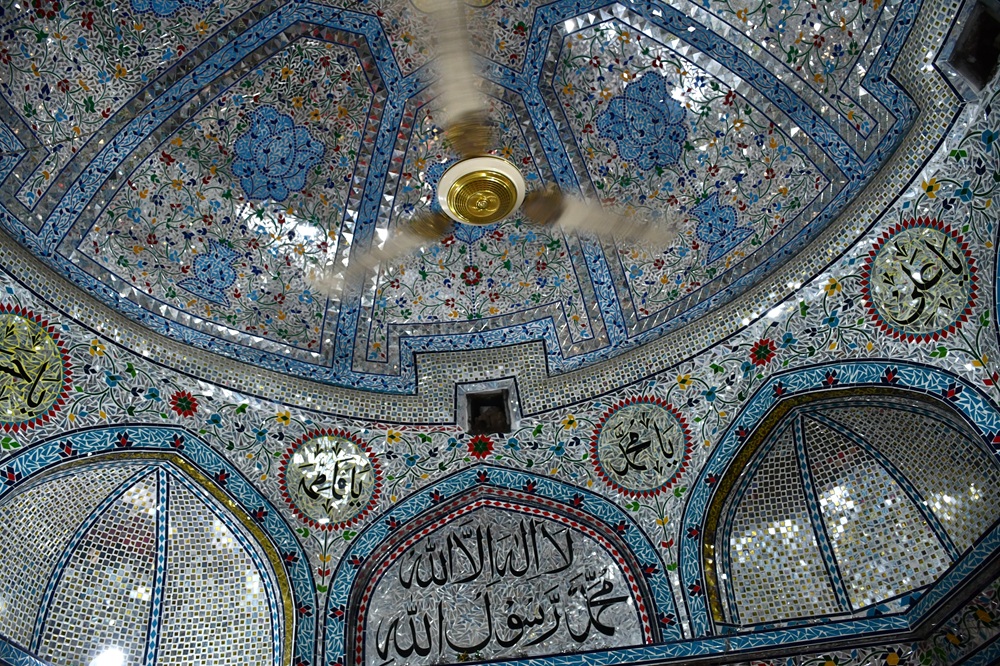
Interior view of the shrine (Picture credits to Zulfiqar Ali Kalhoro)
The shrine of Sain Sakhi Bota Qadiri Qalandari exemplifies this situation. Although local belief places him within the Naushahiyya silsila, there is no clear indication of who initiated him or how his spiritual authority was recognized during his lifetime. For researchers, the lack of clear historical records is not just a matter of missing information. It also shows a difference between official Sufi history and how people actually practice their faith. In many cases, what is written in books differs from what communities remember and believe. This difference between recorded history and lived experience makes such shrines both challenging and interesting to study. From an anthropological perspective, shrines like Sain Sakhi Bota Qadiri Qalandari Naushahi act as "living archives." Their importance does not depend on written records, official documents or inscriptions. Instead, their authority comes from the people who continue to visit, pray and perform rituals there. Stories of healing, blessings and spiritual comfort spread through word of mouth, strengthening belief over time. Even without a written history, such shrines remain meaningful because their legitimacy is based on lived experience. What matters is not documented lineage, but whether people feel that the shrine offers hope, relief and a sense of connection.
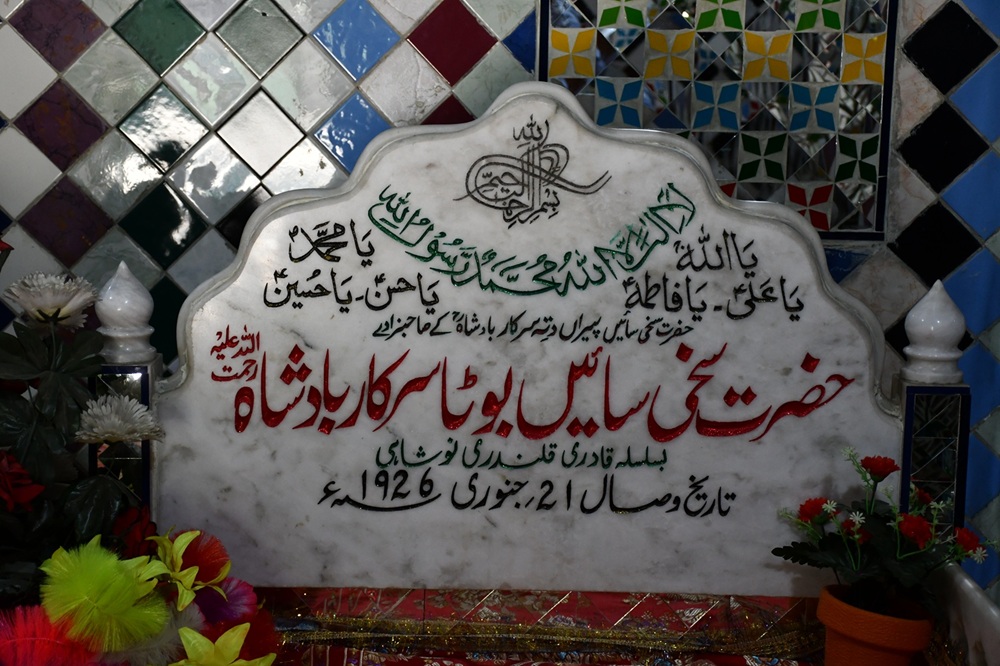
Sain Sakhi Bota Sarkar (Picture credits to Zulfiqar Ali Kalhoro)
In the twin cities of Rawalpindi and Islamabad, many shrines encounter similar issues regarding their spiritual significance. Some are clearly linked to major Sufi orders, while others exist in a gray area where multiple lineages intersect. As urbanization integrates older villages into expanding road networks and housing developments, the histories of these shrines often become fragmented. While the physical structures may endure, the stories that once gave them meaning often weaken or disappear.
Devotees come to the shrine of Sakhi Sain Bota Qadiri Qalandari and Sain Piran Ditta Qadiri Qalandari, hoping to find relief from certain illnesses, many of which are listed at the entrance. For them, the question is not simply whether the saint can medically cure these conditions. What matters more is how healing is understood within their cultural and spiritual world.
The writer is an Associate Professor and anthropologist at the Pakistan Institute of Development Economics (PIDE), Islamabad. He has authored 18 books on Pakistan's cultural heritage and anthropology. He tweets @kalhorozulfiqar. He may be contacted at zulfi04@hotmail.com
You may also like: