Written by: Hurmat Majid
Posted on: December 05, 2025 |  | 中文
| 中文
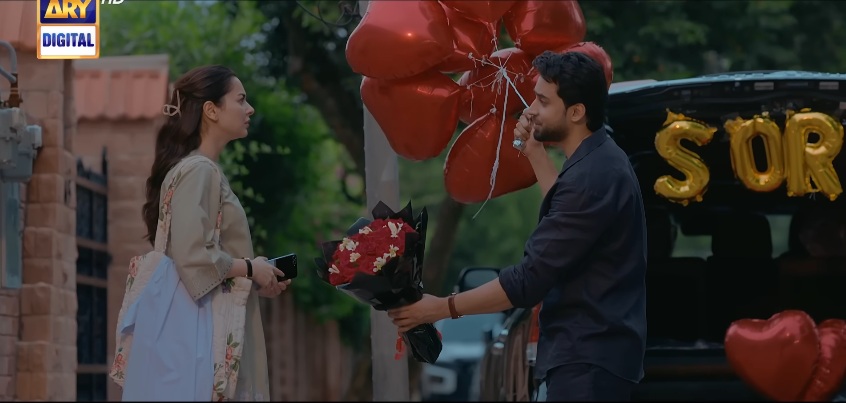
Hania Amir and Bilal Abbas Khan in Meri Zindagi Hai Tu
The great irony of Pakistani television today is that just when viewers believed the industry had collectively matured beyond its obsession with glamorized toxicity, along comes a drama like Meri Zindagi Hai Tu to remind everyone that old habits die hard. It arrives polished, pretty and packaged in the kind of production gloss that suggests modernity, yet what it truly offers is a return to an outdated storytelling formula that thrives on manipulation masquerading as love. In a drama landscape that was finally moving toward healthier narratives, this one feels like a deliberate rewind.
At first glance, Meri Zindagi Hai Tu presents itself as a familiar romance built on youthful longing and emotional conflict, but the cracks begin to show almost immediately. The story revolves around Rania, a young woman who believes in self-respect and personal boundaries, and Ahad, a man who believes those boundaries somehow do not apply to him. Their initial interactions are written to evoke tension, but instead the dynamic quickly settles into something far more troubling. Ahad misreads politeness as interest, silence as encouragement and explicit rejection as a minor obstacle to overcome. His persistence is framed as passionate dedication when in reality his behavior resembles obsession, entitlement and a complete inability to understand the word no.
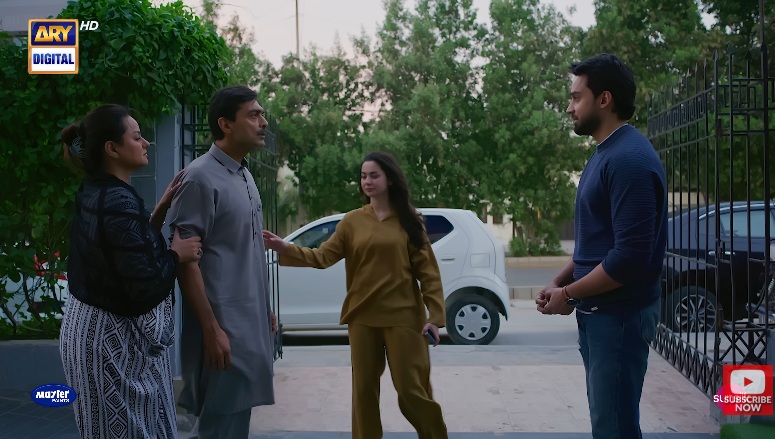
Javeria Abbasi, Aly Khan, Hania Aamir and Bilal Abbas
The plot progresses with Ahad constantly inserting himself into Rania’s life, using every opportunity to convince her that he can change, that he is becoming a better man for her, and that her discomfort is simply her inability to see his transformation. The drama attempts to romanticize this emotional pursuit as growth, but it becomes painfully clear that Ahad is less concerned with becoming a better person and more determined to become the version of himself he believes Rania might find acceptable. The distinction is critical. He is not evolving because he recognizes the moral value of change. He is transforming because he thinks it will earn him the woman he feels entitled to. His character arc, presented as self-improvement, is built on manipulation and self-obsession rather than emotional maturity.
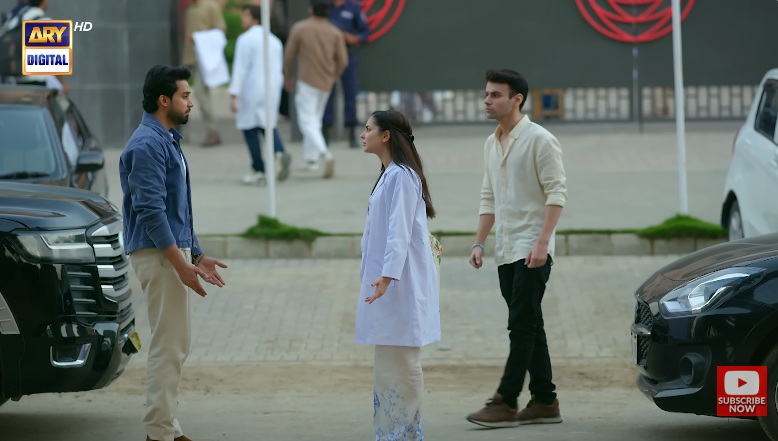
Bilal Abbas, Hania Aamir, and Atabiq Mohsin
Rania, on the other hand, is written with a frustrating lack of clarity. Instead of establishing firm boundaries and taking decisive action, she drifts between indignation and hesitant sympathy. One moment she is firm in her rejection, the next she appears conflicted, confused or oddly tolerant of behavior that should raise immediate concern. At times she responds with mixed signals, which the script uses as justification for Ahad’s continued interference, and at other moments she is so passive that the audience is left wondering why she has not already involved the authorities. Her reactions are inconsistent because the plot requires her to be conflicted in order to stretch the drama across episodes. As a result, her character appears less like a young woman making difficult choices and more like a pawn within a script determined to prolong its central toxic dynamic.

Meher Jaffri, Atabik Mohsin and Hania Aamir
If there is one thing Meri Zindagi Hai Tu accomplishes effectively, it is demonstrating just how much the Pakistani drama industry relies on presenting harmful patterns as entertainment. Instead of condemning Ahad’s behavior, the narrative reframes it as devotion. Instead of portraying Rania as someone who deserves protection and space, the drama treats her discomfort as part of a romantic chase. The real-world implications of such portrayals are deeply concerning. For years, Pakistani viewers criticized the glamorization of harassment and the idea that emotional pressure can be interpreted as passion. The industry seemed to have listened. Recent dramas celebrated mutual respect, communication and healthy relationships. With Meri Zindagi Hai Tu, that progress feels alarmingly reversed.
Yet what makes the regression even more glaring is the drama’s high production value. The cinematography is clean, the lighting is flattering, the editing is smooth and the music is atmospheric. These elements elevate the viewing experience on a technical level, but they also inadvertently amplify the discomfort. When toxicity is filmed beautifully, it becomes easier to digest. When obsession is wrapped in glossy close ups and romantic background scores, it becomes easier to misinterpret as intensity. The disconnect between the harmful storyline and the premium packaging gives the drama an unsettling duality. It looks modern but feels outdated. It sounds romantic but reads manipulative. It promises a love story but delivers a study in emotional dysfunction.
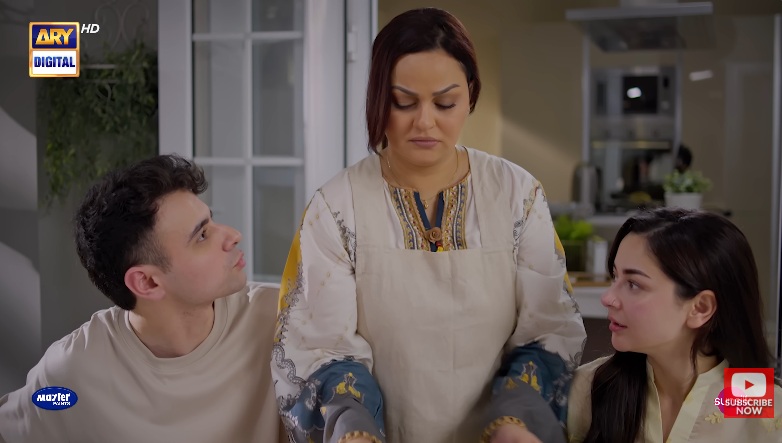
Atabik Mohsin, Javeria Abbasi and Hania Aamir
The performances, too, are strong enough to complicate the viewer experience. The male lead captures Ahad’s intensity with conviction, shifting seamlessly between brooding silence and emotional outbursts. The female lead portrays Rania with a softness that makes her inner conflict visible, even when the writing undermines her character logic. Side characters are performed capably, adding emotional weight to scenes that might otherwise feel repetitive. The problem is not the acting. The problem is how the acting ends up elevating a story that does not deserve elevation. When skilled performers inhabit poorly constructed characters, the portrayal becomes more convincing than the writing. The viewer may momentarily sympathize with Ahad despite recognizing his problematic behavior, or feel for Rania even when she makes choices that defy rational sense. Good acting makes bad writing feel more believable, and in a narrative like this, that believability becomes dangerous.
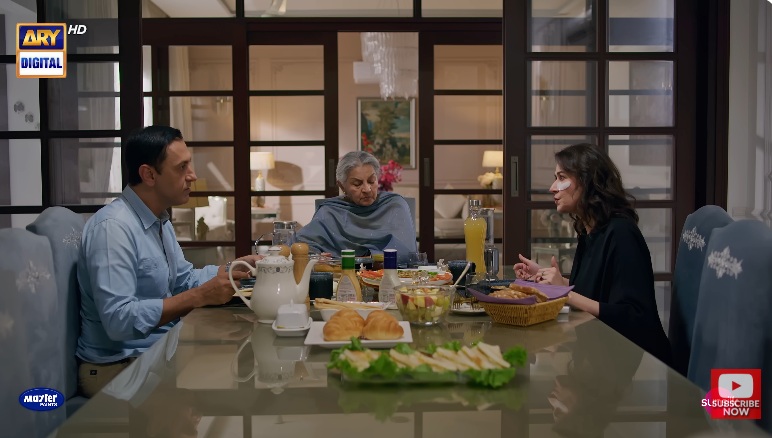
Adnan Jaffar, Shamim Hilaly and Arjumand Rahim
By the twentieth episode, the repetitive cycle of obsession, hesitation, emotional pressure and confused decision making becomes exhausting. The drama keeps promising resolution but never truly delivers it, because its entire identity revolves around sustaining toxicity rather than resolving it. Even when the plot introduces secondary conflicts and external pressures, these exist to push the central dynamic forward rather than challenge it. No matter how many times Ahad behaves inappropriately or how often Rania expresses discomfort, the story keeps pulling them back toward each other. It is a loop designed not to explore emotional depth but to prolong dysfunction.
The question this drama raises is not simply why such writing still exists but why major actors continue accepting roles that perpetuate these patterns. Actors today have more influence than ever. Their presence in a project can legitimize it, attract viewership and shape public perception. When influential performers participate in dramas that reinforce toxic romantic ideals, it signals to the industry that such content is still profitable and acceptable. It also signals to viewers that obsession can be excused, persistence can override boundaries and mixed signals can substitute for communication. At a time when Pakistani audiences are increasingly vocal about the responsibility of onscreen representation, Meri Zindagi Hai Tu feels like a step backward.
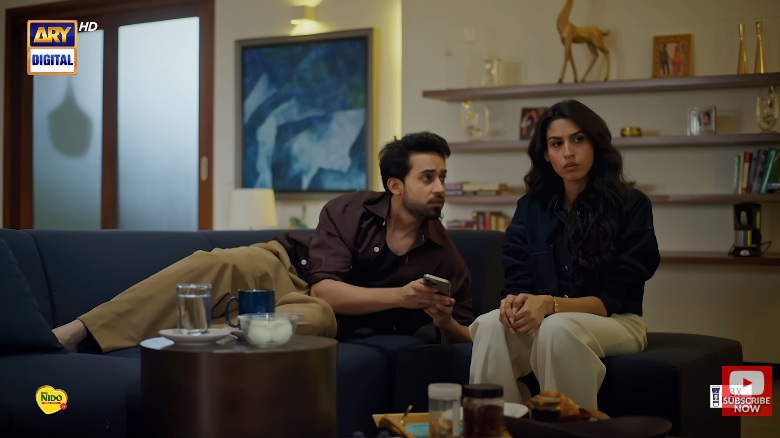
Bilal Abbas and Vardah Aziz
The final verdict is clear. Actors must become far more selective about the roles they choose and the narratives they help promote. Their voices matter, and their participation gives weight to the stories they inhabit. Viewers, too, carry influence. It is no longer enough to passively consume whatever the industry offers. Audiences must voice concerns, call out harmful portrayals and demand better writing. If Pakistani drama is to grow, toxicity cannot be celebrated under the guise of romance and obsession cannot be repackaged as passion. Meri Zindagi Hai Tu is a reminder of why holding creators accountable remains essenti
You may also like: