Written by: Saram Maqbool
Posted on: September 08, 2026 |  | 中文
| 中文
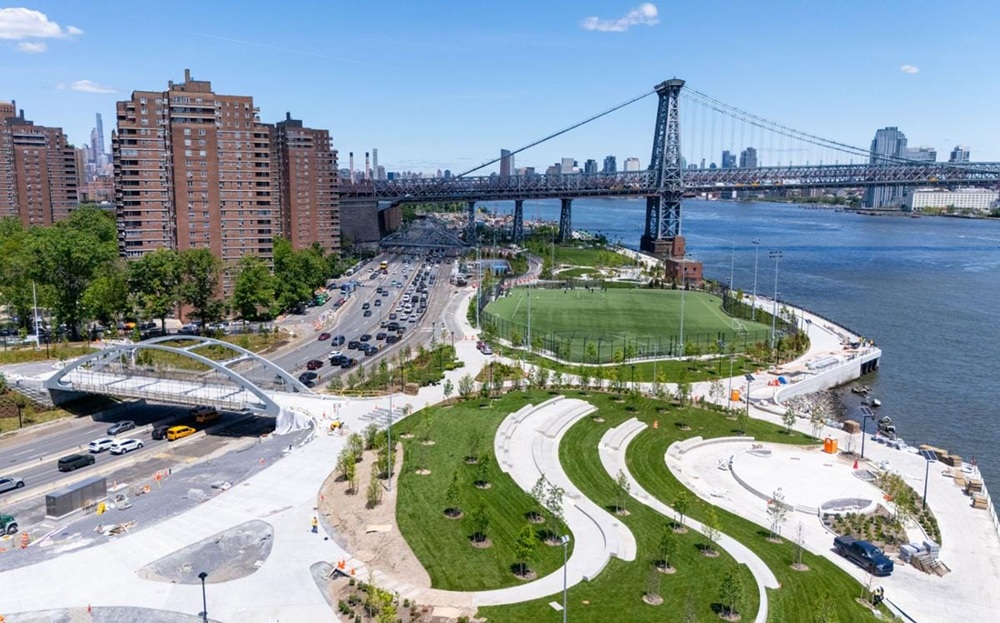
Phase 1 of the East Side Coastal Resiliency Project in New York City
I remember back in 2014 seeing a seemingly normal street in Boston and being told by my professor that it was an experimental, porous concrete they had used to build it. The idea was to collect rainwater underneath, in an attempt to harvest the resource that usually goes to waste. Seeing the recent devastation caused by heavy rainfall in Rawalpindi and Islamabad, and the frequent flooding that we see each year all across the country, I can't help but think about that short stretch of concrete, and all else that could be done here to alleviate this annual recurrence of loss and destruction.
Events like the recent rains are often described as natural disasters, but the consequences are shaped heavily by the built environment. Flooding is not a necessity that must follow after rain. When water meets impermeable roads, undersized drainage systems, and buildings that occupy natural drainage paths, a heavy spell of rain becomes an urban emergency. The question that architects and town planners now face is not how to keep water out of buildings, but rather how to best design buildings and cities that understand and respect where water wants to go.
The concept of the “sponge city” has become one of the most important ideas in contemporary climate-responsive urbanism. Instead of directing every drop of rain into a drain, sponge-city strategies allow water to be absorbed, temporarily stored, slowed, filtered, and gradually released. Green spaces, wetlands, rain gardens, permeable pavements, detention ponds, green roofs, and restored waterways become part of the city’s drainage infrastructure. The landscape itself becomes a form of flood protection.
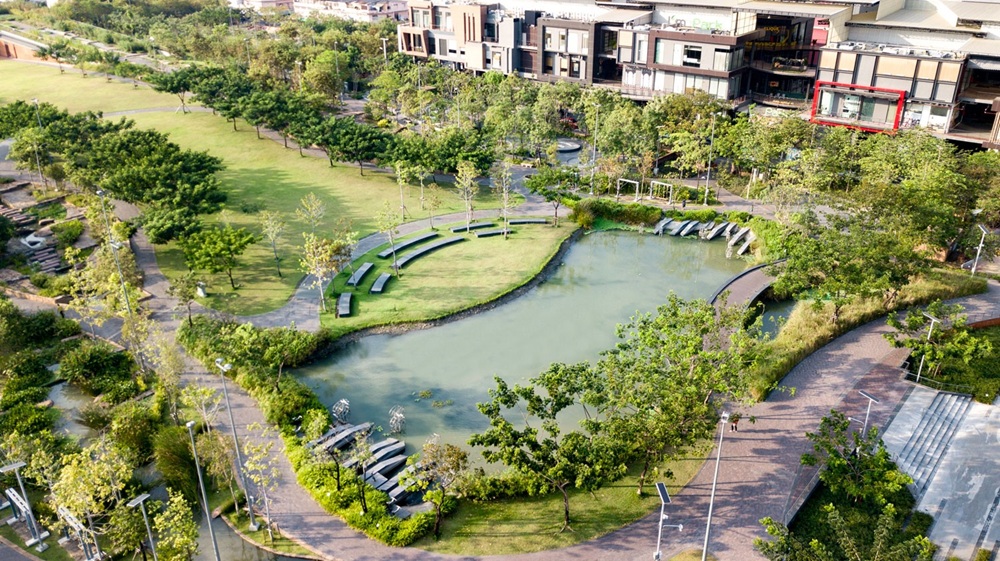
The Centenary Park at Chulalongkorn University in Bangkok Funnels Water Into a Retention Pond
A very good example of this is Rotterdam. The city was already living with the threat of river flooding and rising sea levels, so it combined traditional flood defenses with water-sensitive public spaces. Water squares, green infrastructure, flood-resistant buildings, and underground water storage are some of the strategies that have been successful. The Museum Park car park, for example, incorporates underground water storage capable of holding 10,000 cubic metres of water. Green roofs also help retain rainfall before it reaches the drainage system. This does not mean that Pakistan can or should simply copy Dutch engineering. Instead, Rotterdam’s example offers the much more fundamental lesson that flood management can become part of urban design. A public square can be designed to function as a recreational space during dry weather and a temporary water basin during extreme rainfall. A park can become a retention landscape. A street can be designed as a controlled drainage route rather than simply a surface for vehicles.
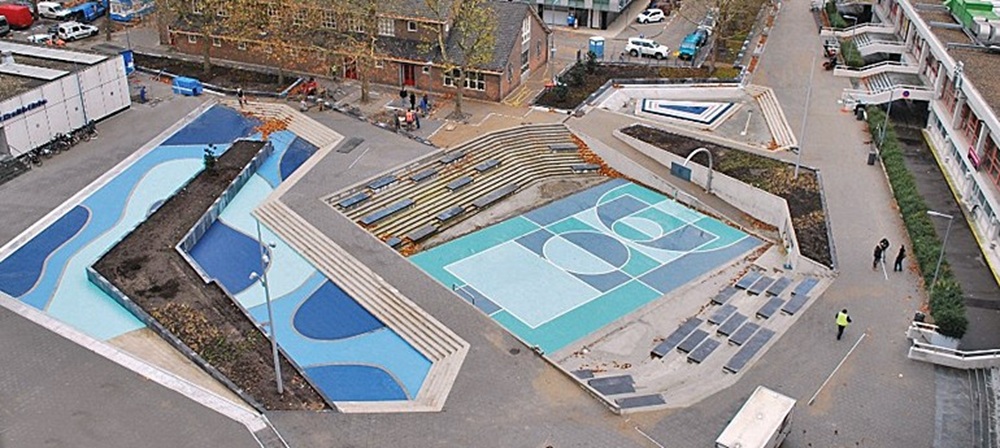
Benthemplein Water Square in Rotterdam has thoughtfully designed basins that act as public spaces when dry
Copenhagen offers another powerful example. After a catastrophic cloudburst in 2011 caused billions of dollars in damage, the city developed a comprehensive cloudburst management strategy. Instead of relying exclusively on larger pipes and underground infrastructure, Copenhagen began redesigning streets, parks, and public spaces to accommodate extreme rainfall. Landscapes were reshaped so that water could be temporarily stored and safely directed away from vulnerable areas. This approach has particular relevance to Islamabad and Rawalpindi. The two cities possess very different urban histories and topographies, but both are connected by complex natural drainage systems. Islamabad's relationship with the Margalla Hills means that large quantities of water can move rapidly from higher ground toward developed areas. Rawalpindi, meanwhile, has long faced flooding associated with Lai Nullah and its tributaries. The recent rainfall demonstrated what happens when intense precipitation meets dense development and constrained drainage capacity.
A Series of Pools Proposed in Hans Tavsens Park in Copenhagen to Ease Flooding
One of the first interventions should therefore happen before a building is designed. Architects and planners need to understand the hydrology of the site. Where does water naturally collect? Which direction does runoff travel? Where are the historic streams and drainage channels? What happens upstream during an extreme rainfall event? Instead of treating these features as obstacles to development, they should become generators of design. If we ask the right questions, it could significantly reshape how the two cities expand. Instead of mindless and uncontrolled expansion of concrete, steel, and glass wherever solid land is found, networks of permeable surfaces and drainage corridors could first be identified and incorporated into master plans.
At the building scale, relatively simple interventions can make an important difference. Roofs should be designed to capture and temporarily store rainwater rather than immediately discharging it onto streets. Rainwater harvesting tanks can reduce peak runoff while providing water for landscaping and other non-potable uses. Green roofs can further slow rainfall. Raised electrical equipment, waterproofed basements, and carefully designed thresholds can reduce damage when water does enter a building.
Floating Office in Rotterdam is like a huge boat that rises and falls with the water level
Pakistan also has an enormous reservoir of traditional knowledge that could be reconsidered. Historic architecture frequently responded to rain through courtyards, shaded verandas, elevated floors, thick walls and carefully shaped roofs. Traditional settlements often understood water as a resource rather than simply a nuisance. The contemporary challenge is to translate this intelligence into modern housing, commercial buildings and neighbourhoods rather than simply reproducing historical forms.
Perhaps the greatest mistake would be to imagine that one enormous drainage project can solve the problem. Flood resilience needs to operate at multiple scales. A roof slows water. A garden absorbs it. A street redirects it. A neighbourhood stores it. A restored stream carries it. A city-wide drainage network manages the remainder. Each intervention may appear modest, but together they can radically alter how a city responds to rainfall. Simply shifting the focus from designing cities as though water is the enemy that must be kept out to designing them as landscapes through which water must flow, the next generation of Pakistani architects and town planners may just be able to start making a real difference in the country’s relationship with heavy rainfall.
You may also like: