Written by: Saram Maqbool
Posted on: January 15, 2026 |  | 中文
| 中文

Architecture in Hunza is nestled into the mountains
I’ve always been conflicted about how I feel about constructing in the mountains. On the one hand, mountain architecture leads to isolation, peace, and views that are hard to achieve elsewhere, but on the other, it raises the issue of unchecked human intervention and presence in the most pristine parts of nature. Over the last century, architects have increasingly pushed construction into these extreme conditions, producing some of the most striking buildings of our time. But each intervention raises a persistent question: is mountain architecture a triumph of innovation, or an act of environmental hubris that mistakes technical prowess for wisdom?
Historically, mountain building emerged from necessity rather than desire. Alpine villages in Switzerland, Nepal, and northern Pakistan evolved through incremental adaptation. Thick stone walls, compact forms, steep roofs, and inward-facing layouts were responses to cold, wind, and snow loads. Architecture here was not expressive but rather defensive and communal. The vernacular chalets of the Alps or the terraced settlements of Hunza were less about views than survival. They blended into the terrain not by aesthetic choice, but because deviation carried risk.

Ancient architecture in the Dolomites mountain
Modern mountain architecture, however, often begins from a different impulse. Advances in engineering and materials have made it possible to build where it was once unthinkable. Concrete can now cantilever over ravines, steel can anchor into rock faces, and helicopters can deliver materials to otherwise inaccessible sites. This technical confidence has produced architectural icons that seem to defy gravity itself. Frank Lloyd Wright’s Fallingwater, though not high-altitude, established an early template for this ambition. Perched over a waterfall, the house dramatizes its relationship to the landscape, transforming nature into spectacle. It is a masterwork of innovation, but also an early signal of architecture’s growing appetite for domination.
Few contemporary projects embody this tension as vividly as the Bergisel Ski Jump by Zaha Hadid in Innsbruck. Rising from the Tyrolean mountains, the structure fuses infrastructure and monument into a single fluid form. It is undeniably innovative, reimagining a utilitarian sports facility as a sculptural landmark. Yet it also marks a shift in how mountains are perceived not as environments to be inhabited with restraint but as stages for visual drama. The architecture does not disappear into the mountain but rather proudly announces itself in contrast. Whether this is progress or excess depends on where one draws the ethical line between use and spectacle.
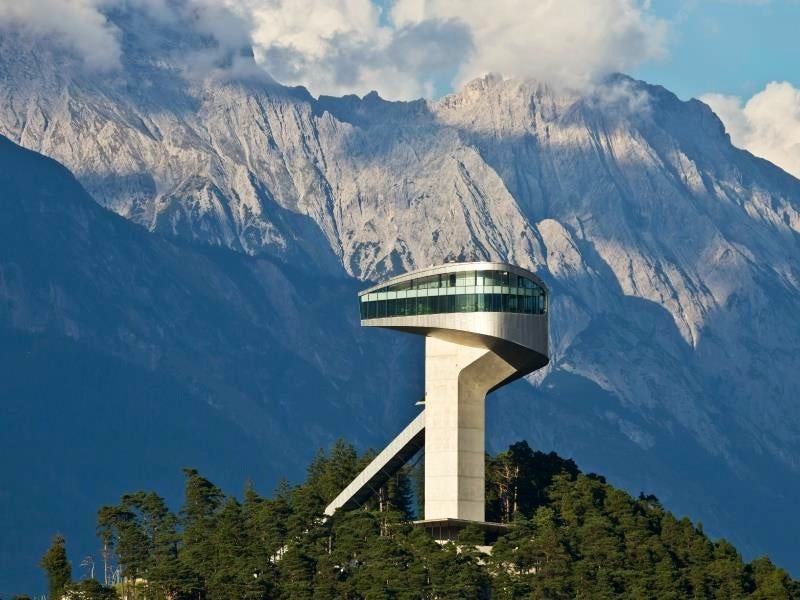
Bergisel Ski Jump by Zaha Hadid
That line becomes even more blurred in projects like luxury alpine resorts carved into remote slopes across the world. In places like the Dolomites or the Rockies, high-end hotels and private chalets increasingly occupy sensitive terrains, accessible only through extensive road-building and landscape modification. The resulting architecture is often marketed as “immersive” or “sustainable,” yet the environmental cost of construction, maintenance, and access infrastructure tells a more complex story. Innovation here lies not only in form, but in the narrative that frames intrusion as harmony.
There are, however, architects who approach mountain environments with a quieter ethic. Peter Zumthor’s Therme Vals in Switzerland is often cited as a benchmark for respectful intervention. Embedded into a hillside rather than placed upon it, the spa reads as a geological extension of the mountain itself. Local quartzite stone, layered like strata, grounds the building materially and conceptually. The architecture does not seek the panoramic dominance of a mountaintop view. Instead, it turns inward, enhancing the experience through darkness, weight, and controlled light. The project suggests that building on the edge can be an act of listening and appreciating rather than assertion and intrusion.
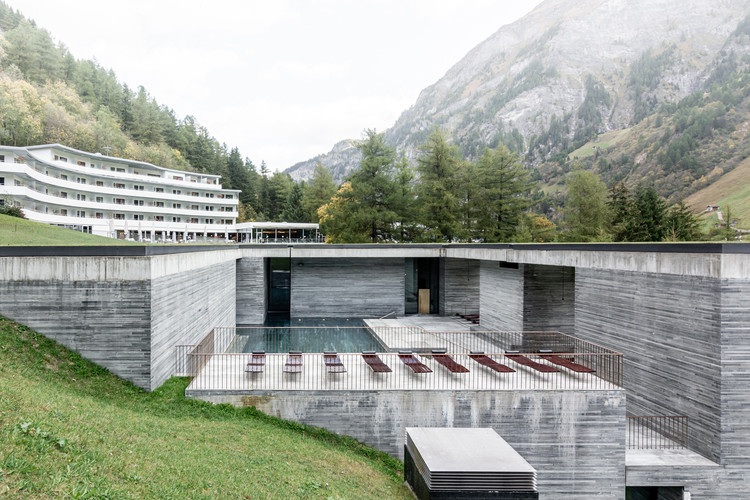
The Therme Vals by Peter Zumthor
A similar sensibility can be found in Wang Shu’s work in mountainous regions of China, where buildings often respond to terrain through fragmentation rather than singular gestures. By breaking mass into smaller volumes and following contour lines, the architecture reduces its visual and ecological impact. These projects accept the mountain’s authority, allowing it to dictate form rather than bending it to architectural will. Innovation here emerges through adaptation, not conquest.
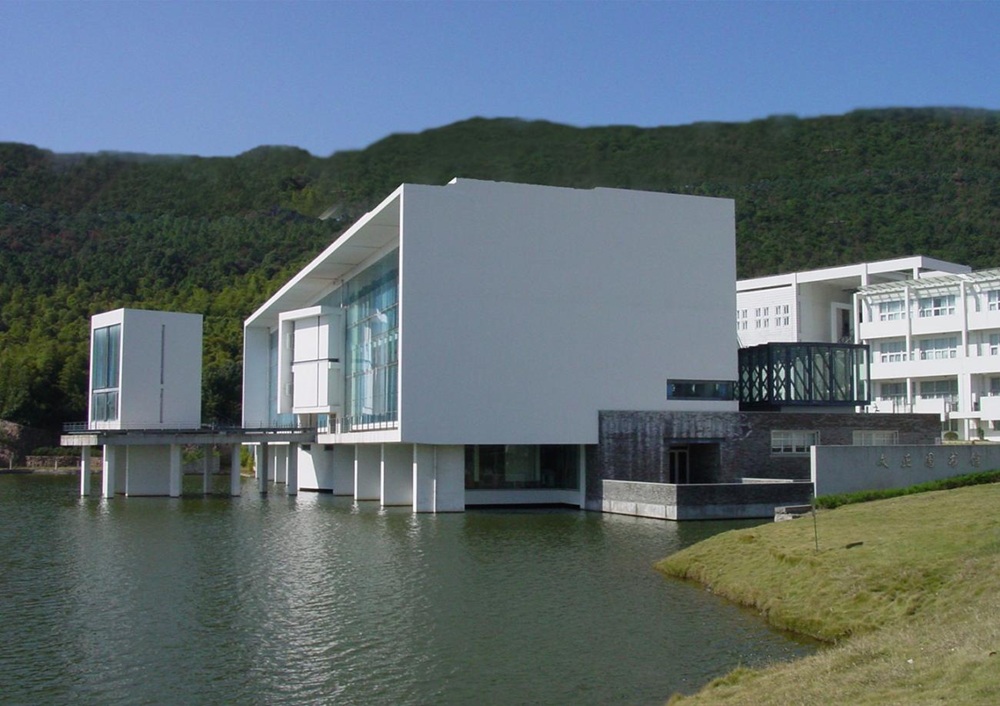
Wang Shu's Pritzker Prize winning Wenzheng College Library
Despite how arrogant and “loud” a lot of mountain architecture today can be, it would be reductive to dismiss all of it as environmental arrogance. In some cases, architecture plays a critical role in supporting sustainable habitation and research. High-altitude research stations, such as the Sphinx Observatory on Jungfraujoch, enable scientific study of climate and atmospheric change. These buildings are undeniably intrusive, yet their purpose aligns with understanding and protecting the very environments they occupy. Here, building on the edge becomes a tool for awareness.
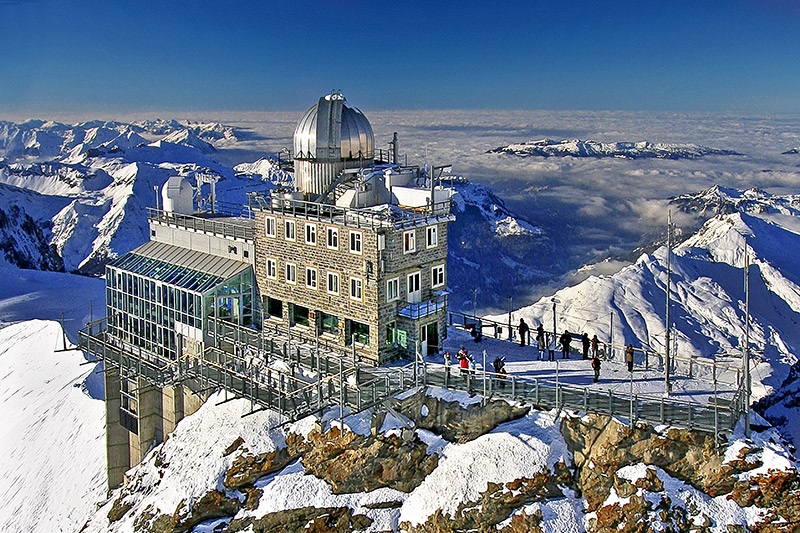
Sphinx Observatory in Jungfraujoch
Ultimately, the debate over mountain architecture is not about whether humans should build in extreme landscapes, but how and why they do so. Innovation becomes hubris when architecture prioritizes visual dominance over ecological humility, when it treats the mountain as an obstacle to overcome rather than a system to understand. Conversely, innovation becomes meaningful when it emerges from constraint, when design decisions are shaped by long-term environmental responsibility rather than short-term impact. Mountains do not need architecture to be meaningful. Their scale, silence, and indifference to human ambition are precisely what make them powerful. When architecture enters these landscapes, it should do so with an awareness of its own fragility. The most compelling mountain buildings are not those that conquer the edge, but those that acknowledge it.
You may also like: