Written by: Muhammad Suhayb
Posted on: March 27, 2026 |  | 中文
| 中文
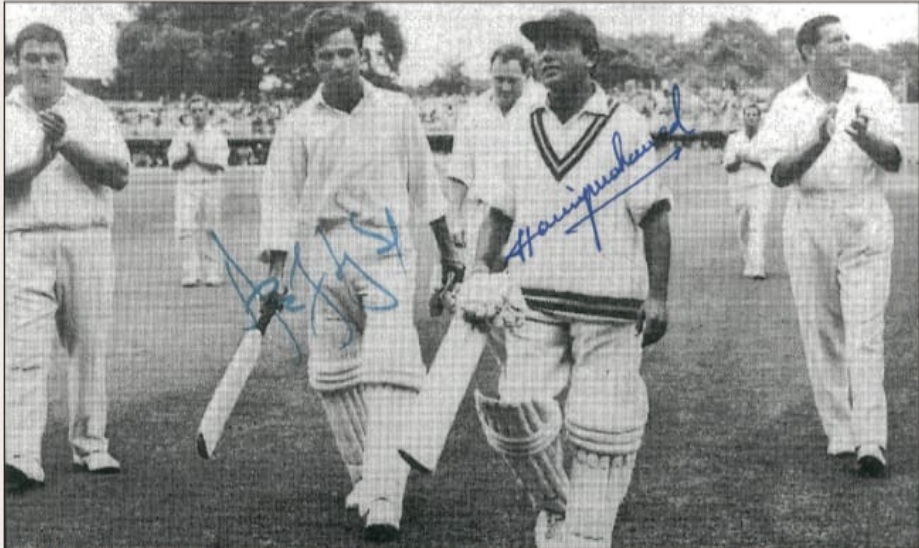
Hanif Muhammad and Asif Iqbal returned for tea during their partnership in the Lord's test, amid applause from the England players.
If you think you already know everything about Pakistan cricket - the victories, the defeats, the legends and the controversies - think again. Pakistan Cricket Chronicles 1948-2024 by Afzal Ahmed is more than just a book. It quietly brings you back to zero and then rebuilds your knowledge step by step. As you turn the pages, you realize how much history has been forgotten or overlooked. The book teaches without sounding heavy and informs without trying too hard. By the end, you feel both humbled and enlightened.
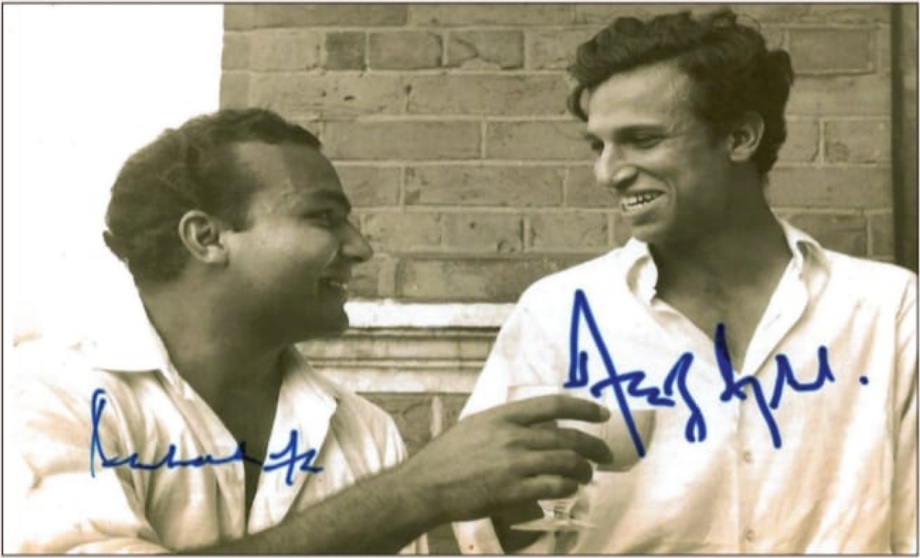
Asif Iqbal and Intikhab Alam smiling after their record ninth-wicket partnership of 190-runs in the Oval Test.
The 456-page book printed on glossy paper, is a huge tribute to Pakistan’s cricket history. Calling it simply a publication would not do it justice. It feels like a lifetime’s work, carefully put together and finally shared with the public. In many ways, it is an archive, a personal museum, and a heartfelt gift to Pakistan cricket.
Containing more than 1,000 illustrations, it is the most serious attempt ever made to document Pakistan’s cricket journey. Afzal Ahmed, a retired banker from Karachi, reportedly spent more than fifty years collecting the material used in this book. That level of dedication is rare, and it shows clearly in the final product.
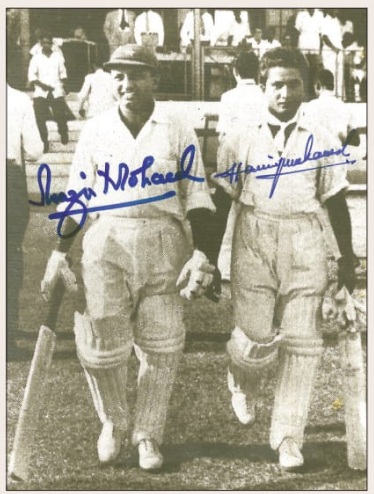
Brothers, Hanif and Wazir, scored over 1000 runs between them in a five-Match test series.
The collection includes rare match programmers, original brochures, signed team sheets, old photographs and newspaper cuttings. Many of these items were once hidden in private collections or stored away for decades. Bringing all of them together in one volume is a major achievement. For collectors, it is a treasure. For ordinary fans, it feels like being allowed to see something very special that was never publicly available before.
One of the strongest points of the book is its simple, chronological structure. The story moves season by season. Each year begins with a short overview of important matches and major events, both on and off the field. After that, readers are shown memorabilia from that particular year. Early souvenirs from Pakistan’s first matches, brochures from early Test series, and signed photographs add emotional value. The old, sepia-toned pictures from the 1950s and 1960s remind readers of a different era, when cricket was played with pride and simplicity. Going through the pages feels like walking through a cricket museum.
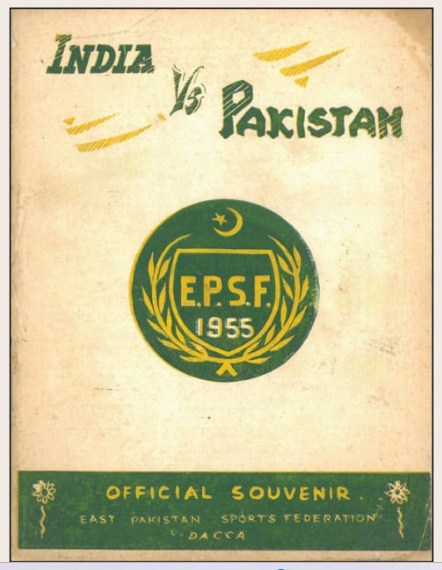
Official souvenir of the India vs Pakistan game, 1955.
The book is also full of interesting stories. It talks about the reunion between English cricketer Donald Carr and the Umpire Idris Baig years after the infamous ‘ragging’ incident in Peshawar of the mid-1950s, where Carr was the MCC captain. It shares the background of the well-known photograph of Hanif Mohammad and Nawab Pataudi taken in London when they represented a World XI against England XI while takes us to the day when Mushtaq Mohammad played as part of a World XI against Pakistan years after his Test debut. Interestingly, it even includes caricatures drawn by an unknown cartoonist Bal Thackeray, (later the founder of Shiv Sena) during Pakistan’s tour of India in 1960-61. These small touches add charm and personality to the collection.
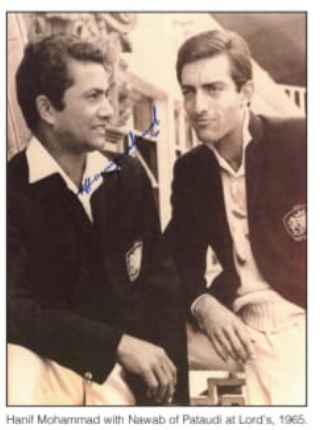
Hanif Muhammad with Nawab of Pataudi at Lord's in 1965.
However, as with most big projects, there are some weaknesses, first is the storytelling. While Afzal Ahmed’s passion is clear, the writing itself is sometimes plain and straightforward. Considering that he previously worked with writers like Peter Oborne and Richard Heller on books such as Wounded Tiger and White on Green, many readers expected stronger and more powerful narration. The book provides information, but it does not always capture the emotion, drama, or tension of historic moments. At times, it reads more like detailed captions than a flowing story. With the help of a professional writer or editor, the book could have become even stronger.
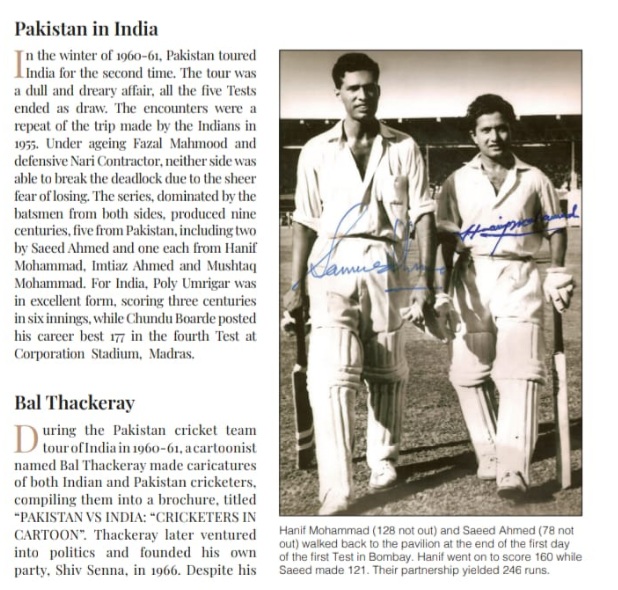
Hanif Muhammad and Saeed Ahmed against India in 1960-61.
The more serious issue is factual gaps and missing matches. For a book that aims to cover the period from 1948 to 2024, mistakes or missing details are disappointing. Cricket fans in Pakistan follow records closely, and even small errors can stand out. Some tours and matches from later years appear less detailed than the earlier decades.
In fact, while the effort up to the year 2000 feels thorough and carefully researched, the period after that seems less consistent. The earlier chapters feel complete and balanced. The later years, especially after the year 2000, seem shorter and at times less detailed. Since the book was released in late 2025, it gives the impression that the final sections may have been prepared in a hurry to meet the launch date. In a way, this uneven finish reflects Pakistan cricket itself: brilliant in parts, inconsistent in others. The passion is there, but the sharpness is not always the same.
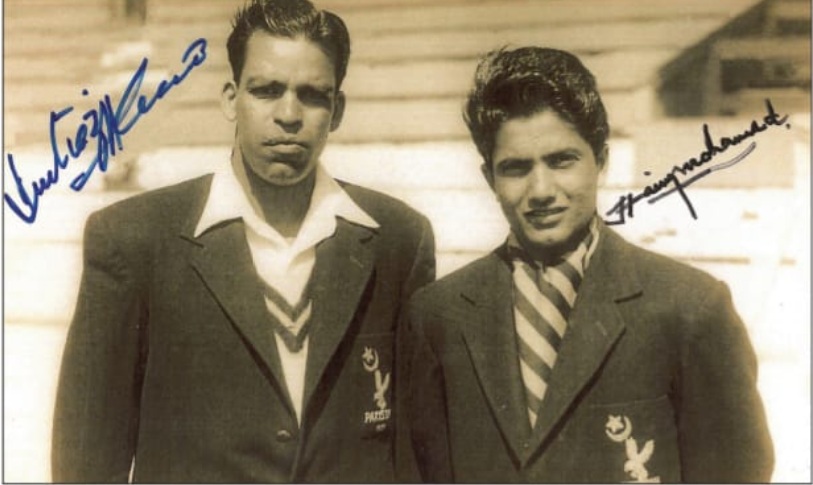
Hanif Muhammad and Imtiaz Ahmed during the England Tour.
These flaws do not take away from the importance of the book. Afzal Ahmed has preserved a large and valuable part of Pakistan’s cricket history. That alone deserves respect. One hopes that a second edition will correct the errors and include updates beyond 2024.
In the end, Pakistan Cricket Chronicles 1948-2024 is more of a collector’s treasure than a literary masterpiece. It is not perfect, but it is priceless in effort and intention. For lovers of Pakistan cricket, it is a book that will not gather dust on a shelf. It is one to revisit, again and again, to rediscover the long and emotional journey of cricket in Pakistan.
You may also like: