Written by: Fiza Husnain
Posted on: February 24, 2026 |  | 中文
| 中文
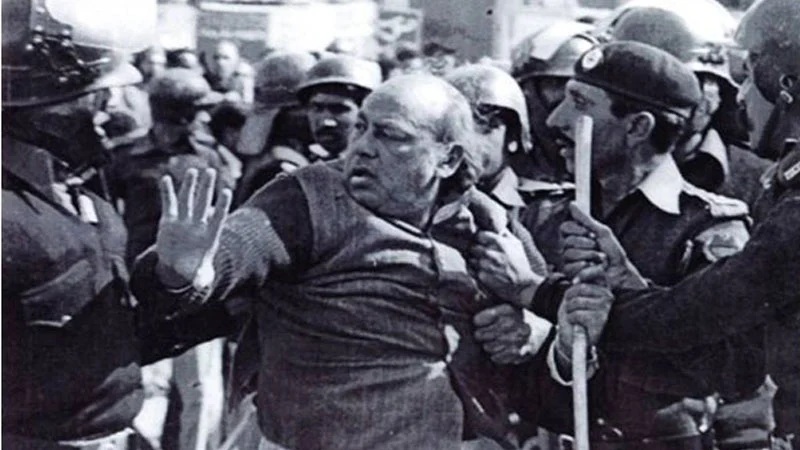
An historic photo of Jalib that depicts the oppression on creative resistance by poets and intellectuals.
In the literary landscape of South Asia, the most powerful voices of resistance often rose from behind iron bars. For poets like Faiz Ahmed Faiz, Habib Jalib and Kazi Nazrul Islam, confinement was not the spirit in chains; it was the womb of rebirth, a slow process of creation in the dark. The only difference is that there was no nourishment in that womb, but the fuel to burn the fire and burn it all to the ash. The prison became a sanctuary of reflection and rebellion. Their verses, composed in isolation, carried the tone of chains and the light of dawn, proving that even captivity can provide the very spirit needed to end the suffering. The isolation becomes a creative pursuit, bars become symbols, and chains become metaphors.
When the external world is confined to a few square feet of stone, the mind begins to expand beyond the given reality, creating another reality. This paradox defined Faiz Ahmed Faiz’s imprisonment after the 1951 Rawalpindi Conspiracy Case. It was in isolation that he produced two of his most profound collections, Dast-e-Saba and Zindan-Nama. In these works, Faiz blended the love, pain and political resistance into a single, seamless voice. Proving that a poet can be caged, not the poetics. In one of his poems, “zindan ki ek sham,” he describes the beauty of the nightfall, which negates the fact that he has actually been writing from his cell. His diction deliberately remains packed with metaphors of nature and freedom, trees, open skies, air that carries fragrance and the white warmth of moonlight.
Dil Se Paiham Khayal Kahta Hai
Itni Sheerin Hai Zindagi Is Pal
Zulm Ka Zahr Gholnay Wale Kaamran Ho Sakenge Aaj Na Kal
Jalwa-Gah-e-Visaal Ki Shamen Wo Bujhha Bhi Chuke Agar To Kya
Chand Ko Gul Karen To Hum Jaanen
My heart whispers to me, marveling at this very instant, how sweet life appears to be right now. The oppressor, who is up to poisoning every bit of love, will not succeed, not today, not even tomorrow. Even if we turn off all the lights where the lovers are supposed to meet, we will see if they can block out the moon and its light.
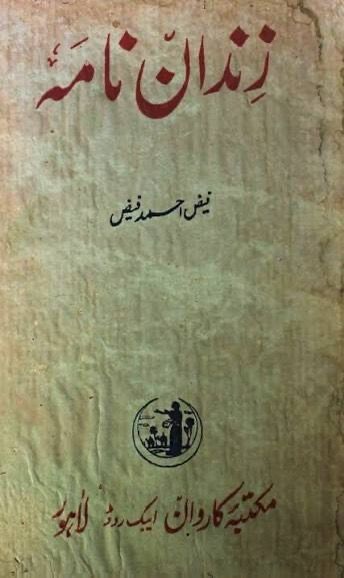
Zindan Nama by Faiz
That’s hope at the face of atrocities. The challenge to kill the moon itself to the oppressor. Only a poet of Faiz’s calibre could do it.
Apart from Faiz, Habib Jalib holds the definitive boldness that only some inherit, whose words roared against the injustices of dictatorship. He was imprisoned multiple times during the military regimes of Ayub Khan and Zia-ul-Haq, yet his poetry, his anthem “Dastur” shook the political landscape: “Main nahin manta, main nahin jaanta” (“I do not accept, I do not recognize”).
Tum nay loota hai sadyon hamaara sukoon,
Ab na hum per chalega tumhara fasoon,
Charaagar dardmandon ke bantey ho kyun?
Tum nahein charaagar,
Koi maane magar,
Main nahein maanta,
Main nahein jaanta.
For centuries you have pillaged peace that was our Your spell over us shall have no more power. Why do you pretend to be a healer of those lamenting in grief? You are no healer! Even though some may agree…I shall disagree! I shall not concede!
Deprived of pen and paper, Jalib composed and memorized verses in his cell, later reciting them to fellow prisoners. His poetry was not crafted for literary applause; it was a living cry of conscience, to shake the masses in the very core. For Jalib, confinement did not suppress creativity; it erupted like a volcano. His cell became the crucible where truth was refined, and each verse became a torch lighting the way for the oppressed.
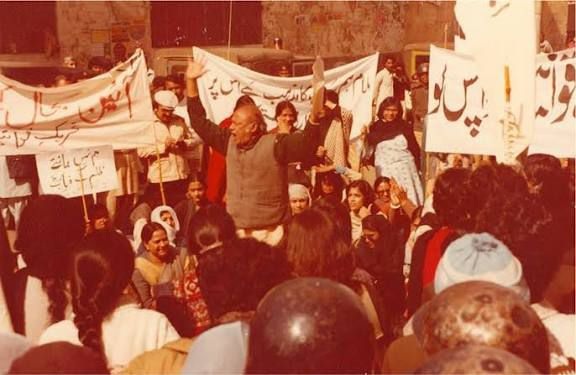
Habib Jalib heading a procession.
Across the eastern border, Kazi Nazrul Islam, the “Rebel Poet” of Bengal, turned imprisonment into a revolutionary calling. He was arrested for his anti-colonial writings. Nazrul’s voice thundered across the subcontinent with the poem:
“Karar Oi Louho Kopat” (“Destroy Those Iron Gates of Prison”):
“Break open the prison doors, O prisoners of the world, / The dawn of freedom is at hand!”
His diction remains apocalyptic, fire, lightning, divine wrath, but beneath the fury lies a deep humanism. In his earlier masterpiece “Bidrohi” (“The Rebel”), Nazrul had already declared, “I am the unholy, the untamed, unbound.” His imprisonment only deepened this defiance, transforming him from a poet of rebellion into a prophet of liberation. His verses transcended Bengal, resonating wherever chains clanked and voices were stifled.
For poets like Faiz and Nazrul, prison became a paradoxical sanctuary, where the spirit grew unbound. In isolation, Faiz discovered a new dimension of love, one that fused the mystical with the political. In Aaj bazar mein pa bajolaan chalo (“Let us walk in the whole city in chains”), love becomes an act of rebellion, writing of walking proudly in shackles, converting humiliation into heroism. His voice carried echoes of Sufi transcendence: “Chains are not my burden they are my ornaments.” Through such imagery, Faiz elevated suffering into sacred endurance. He used the very image of loss of freedom, the chains, was employed to reclaim freedom.
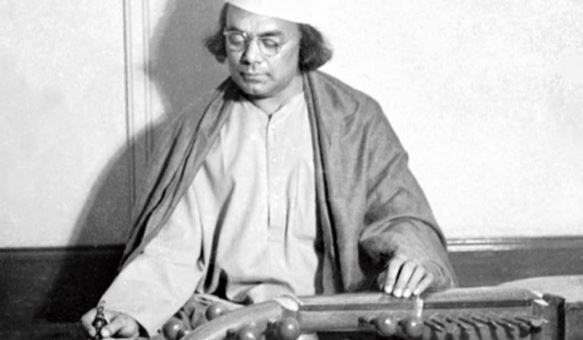
Kazi Nazrul Islam
Although divided by borders, the imprisoned poets of Pakistan, India, and Bangladesh shared a common spiritual vocabulary, daunting imagery and decent disdain towards oppression. Their metaphors of bars, darkness, chains, and dawn belonged to one shared struggle.
In India we see poets like Ram Prasad Bismil yearning for revolution and an encounter with the power.
“Sarfaroshi ki tamanna ab hamare dil mein hai”
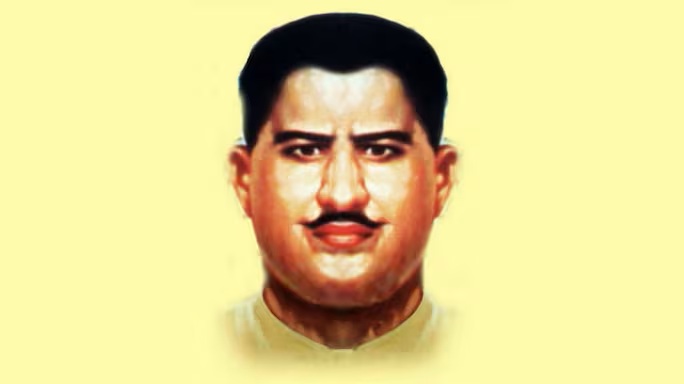
Ram Parsad Bismil
“The desire for sacrifice still beats in our hearts”), it echoes in words of Faiz’s “Bol ke lab azaad hain tere” “Speak, for your lips are free”) and Nazrul’s “Karar Oi Louho Kopat.” These verses, though born of different contexts, echoed a single truth: that the human spirit remains unconquered even when caged. Collectively, their poetry forms a tri-nation symphony of endurance, binding South Asia’s history of rebellion with the golden thread of art.
Censorship in colonial and authoritarian regimes forced poets to disguise defiance in allegory. Love became a metaphor for the homeland; beauty became a metaphor for justice. Faiz’s romantic poems often hid political meanings his beloved was not merely a woman but the motherland itself. Jalib’s sharp wit turned constitutional jargon into satire, while Nazrul’s mythic references to gods and warriors disguised anti-British sentiment. This coded poetry allowed resistance to flourish under oppression, creating a literary tradition of subtle defiance that survived where open protest could not.
Prison poetry is not decorative it is direct, rhythmic, and raw. Its power lies in simplicity. Jalib’s rhymes cut like steel; Faiz’s verses bleed tenderness; Nazrul’s stanzas explode with energy. Each forged a unique aesthetic of resistance: Jalib through populist rhythm, Faiz through lyrical melancholy, and Nazrul through fiery invocation. Yet, all three fused beauty with rebellion, showing that art could be both elegant and insurgent. Their language was not escapist it was emancipatory.
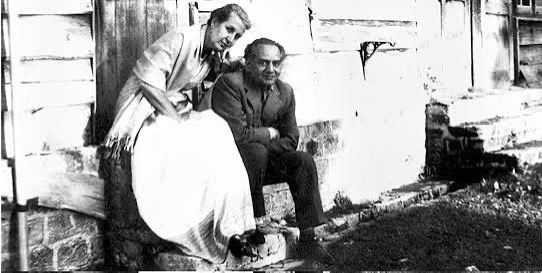
Faiz with his wife
What began as a poet’s personal lament soon became the people’s anthem. Faiz’s “Hum Dekhenge” still echoes in political rallies across Pakistan and India. Jalib’s “Dastur” remains a rallying cry for democracy. Nazrul’s songs became soundtracks for Bangladesh’s liberation movement in 1971. Their verses travelled from cell walls to public squares, transforming private agony into collective awakening. The prisoner’s loneliness became the nation’s voice.
In every age, the world tries to silence its truth-tellers, yet they continue to sing from their cells. The poets of South Asia transformed confinement into communion between body and soul, silence and speech, despair and hope. Their prison verses remind us that liberation begins not with broken locks, but with the unbroken voice. Songs of Captives is therefore more than a study of literary endurance it is the testament of the human will to rise, write and remain free, even when the body is bound.
You may also like: