Written by: Rana Kanwal
Posted on: August 15, 2025 |  | 中文
| 中文
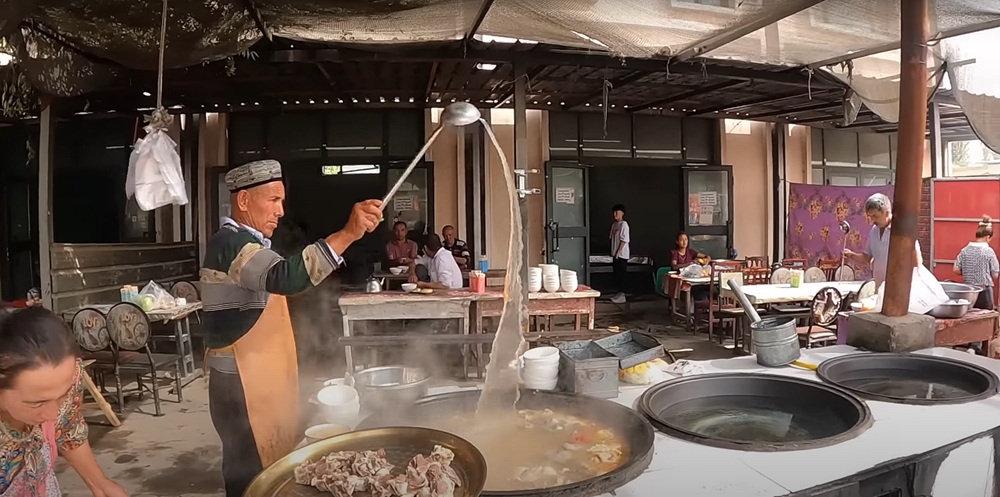
A roadside hotel in Kashgar, China
There’s something about the smell of food cooking on the streets that always pulls me in. You can be lost in thought, rushing somewhere important, and then a breeze carries a smoky, spicy aroma straight to your nose, it is game over. Suddenly, your feet slow down, your eyes start scanning for the source, and you know you’re about to make an unplanned food stop.
In Pakistan, especially Karachi, this isn’t a rare occurrence, it’s daily life. The streets hum with life, and food stalls are the heartbeats of every corner. Karachi doesn’t believe in silent hunger; it feeds you loudly, with sizzling pans, clattering utensils, and vendors calling out orders like auctioneers. Street food here isn’t just food, it’s emotion, memory and comfort rolled into a bun kebab or poured into a steaming bowl of nihari.
I’ve always believed that if you really want to know a city, you skip the fancy restaurants with polished menus and immaculate tablecloths. Instead, you head to the roadside dhabas, the hidden stalls tucked in alleys, and the carts that draw crowds of impatient customers. That’s where the city shows you its real flavor. Karachi proves this every single time.
Take Burns Road, for example. At night, it’s pure madness, horns blaring, pedestrians squeezing past motorbikes, and the sound of oil crackling like fireworks. But in that chaos is magic. The bun kebabs here are small miracles: soft buns toasted on a greasy tawa, filled with spicy meat patties, topped with tangy chutney and sliced onions. They’re messy, you’ll need both hands and a napkin, but they taste like home.
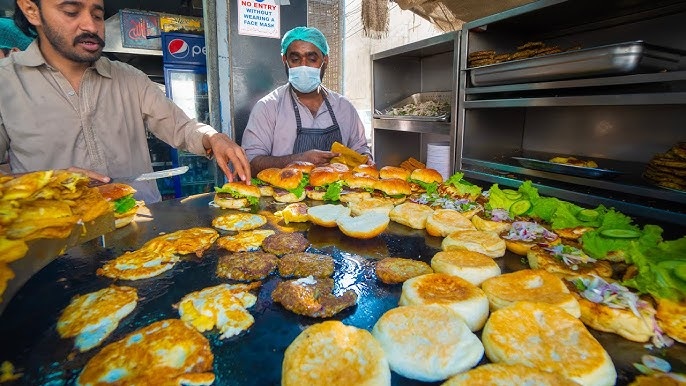
Bun Kebab in Karachi
Then there’s Saddar, where you find chaat that’s so perfectly balanced, sweet, sour, spicy, crunchy, that you end up licking your fingers in public without shame. The man who makes it has been there for decades; he knows every regular by name and always tosses in an extra spoonful of imli for his favorites.
But Karachi is just the beginning of this journey. Head north, and you’ll see how food changes with every city but somehow keeps the same spirit. Lahore wakes up to nihari that’s been slow cooked overnight. It’s rich, thick, and served with freshly baked naan that practically melts in your mouth. Eating it early in the morning feels like an event; the whole city seems to gather in little shops, hunched over bowls, blowing on hot spoons of spiced meat.
Peshawar slows the pace. Street food here feels less like a quick snack and more like a communal ritual. Chapli kebabs are the star large, flat patties of minced meat fried to crispy perfection. You sit on wooden benches, tear pieces of naan, and dip them into chutney while talking politics or cricket with whoever happens to sit beside you. Vendors serve endless cups of green tea, and time seems to stretch in a way it never does in Karachi.
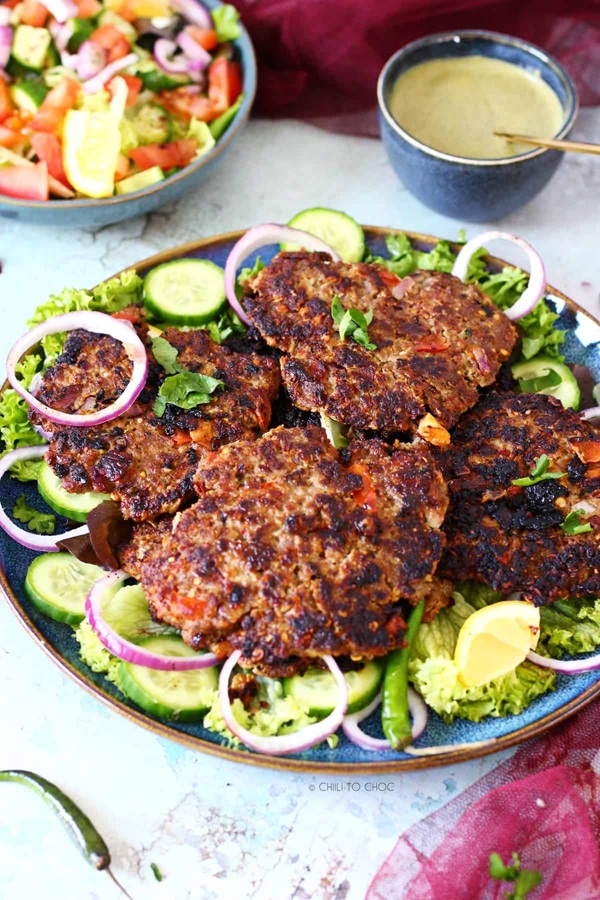
Peshawar's Beef Chapli Kebab
In Rawalpindi, you can’t miss the Gol Gappay stalls. The vendors move like performers in a circus, cracking puris, filling them with tangy water and chickpeas, handing them out rapid fire. The customers barely have time to chew before they’re handed another one. There’s laughter, coughing from the spice, and strangers exchanging smiles as they stand shoulder-to-shoulder, enjoying a shared addiction to these crunchy little bombs of flavor.
The farther north you go, the quieter it gets. In Gilgit and Hunza, the food feels like the mountains themselves: simple, fresh and unhurried. There are apricots sun dried on rooftops, yak meat stews that warm you after cold winds, and noodles hand-pulled by cooks who slap dough on wooden tables with rhythmic thuds. It’s less about spice and more about the purity of ingredients. You taste the clean water from mountain streams, the sweetness of glacier-fed fruit, and bread baked in stone ovens that smells like earth and smoke.
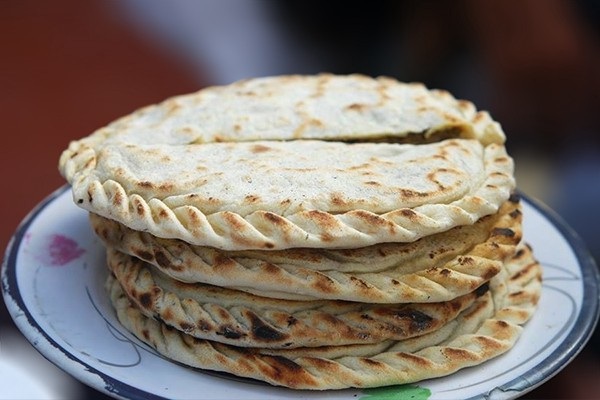
Chapshuro, a traditional dish in Gilgit Baltistan
And then, if you keep going, crossing borders and following the old Silk Road, you reach Kashgar, a city in China’s Xinjiang region. Despite being in another country, the street food here feels like meeting a long lost relative. The night markets come alive with music, chatter, and the hiss of grilling skewers. You see lamb being cooked over open flames, dusted with cumin and chili flakes. You watch as chefs stretch laghman noodles by hand, their movements so fast and precise you wonder how they don’t tie the dough into knots. Samsas golden, triangular pastries bake inside clay ovens, filling the air with a buttery, meaty aroma that instantly reminds you of samosas back home.
Strolling through Kashgar’s markets, I couldn’t stop thinking of Karachi’s Empress Market. The bargaining, the noise, even the way bread is displayed in tall stacks—it’s like a cousin of the chaos we know so well. And it’s no coincidence. For centuries, traders carried not only silk and spices along this route but also recipes, cooking styles, and ingredients. You can taste history here; it’s written into every skewer and every bowl of noodles.
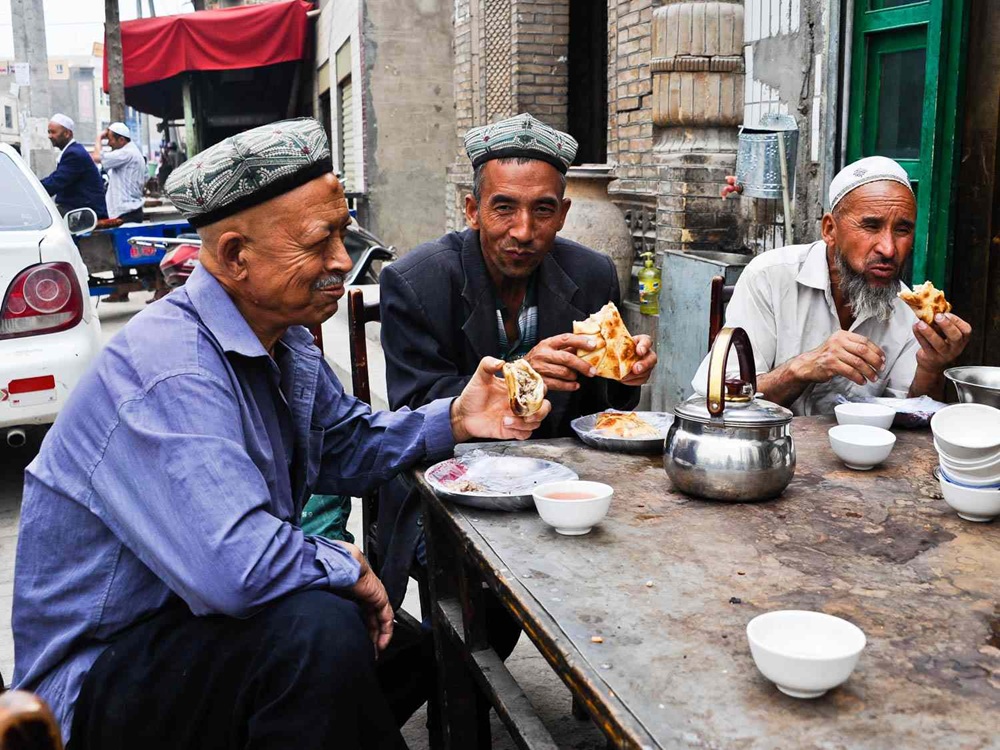
But it’s not just similarity that strikes you it’s also the differences that make you pause. Kashgar’s stalls, though busy, feel cleaner and more organized than most of our own. Vendors stick to fair prices; they don’t try to overcharge you just because you look foreign. In Karachi, we often accept dusty stalls and chaotic hygiene because the flavor is unbeatable. Still, you can’t help but think: why not both? Why can’t we have Karachi’s wild, fiery spirit combined with Kashgar’s order and cleanliness? A little support and infrastructure could make that dream real.
Yet, despite all criticism, street food remains one of Pakistan’s greatest treasures. It’s democratic rich or poor, old or young, everyone eats on the street. It’s fast, affordable, and deeply personal. The bun kebab guy remembers how much chutney you like. The chaiwala knows if you take sugar or not. On rough days, nothing lifts my mood like grabbing nihari at 2 a.m. or sharing a greasy roll paratha with friends while sitting on the hood of a parked car.
These vendors aren’t just cooks; they’re storytellers. Many are families who’ve been in the same spot for decades, passing down recipes like heirlooms. Some started with nothing more than a cart and hope, surviving political strikes, economic crashes, even floods. Every plate they serve has pieces of that story baked in. You taste resilience, sacrifice and survival with every bite.
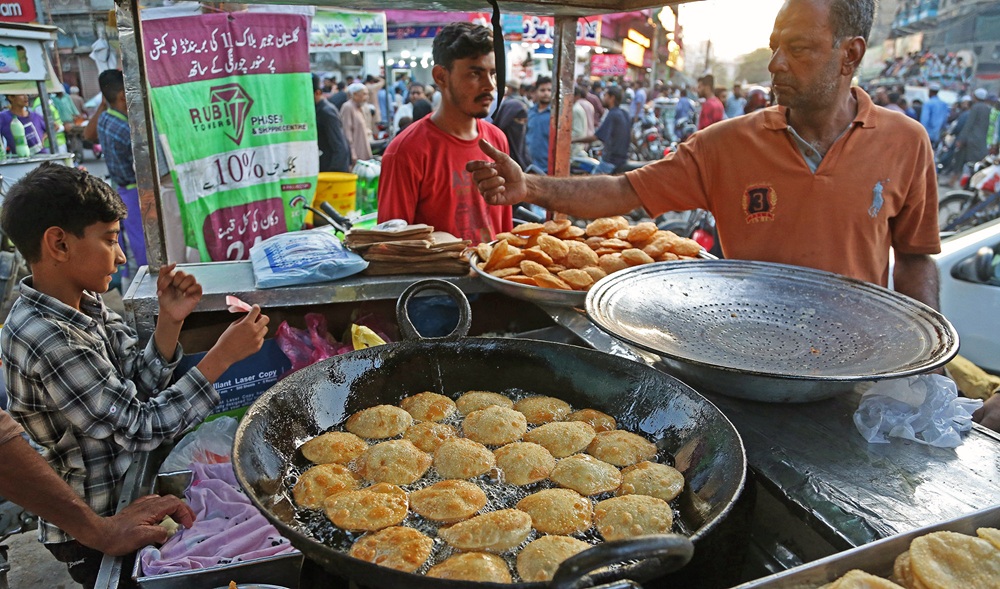
A busy food street in Karachi
Food has a strange power to connect people. Sitting in Kashgar, tearing into a spicy lamb skewer, I felt like I was in Peshawar. Drinking green tea in Hunza felt like a quiet cousin to jasmine tea served in a Kashgar teahouse. Borders, languages, politics all of it fades when you share food. That’s when you see how much we really have in common.
I can’t stop imagining what could happen if we blended the best of these food cultures. Imagine Karachi’s fearless spice mixing with Kashgar’s organized markets. Imagine Chinese laghman noodles topped with Pakistani-style chili oil. It’s a fusion that would honor our shared past while creating something new and exciting for the future.
At its core, street food is never just about eating. It’s about gathering stories, building community and celebrating identity. From the noisy, colorful chaos of Karachi to the glowing, fragrant night markets of Kashgar, every sizzling kebab, every puffed piece of bread, every steaming bowl of noodles says the same thing: we’re all connected.
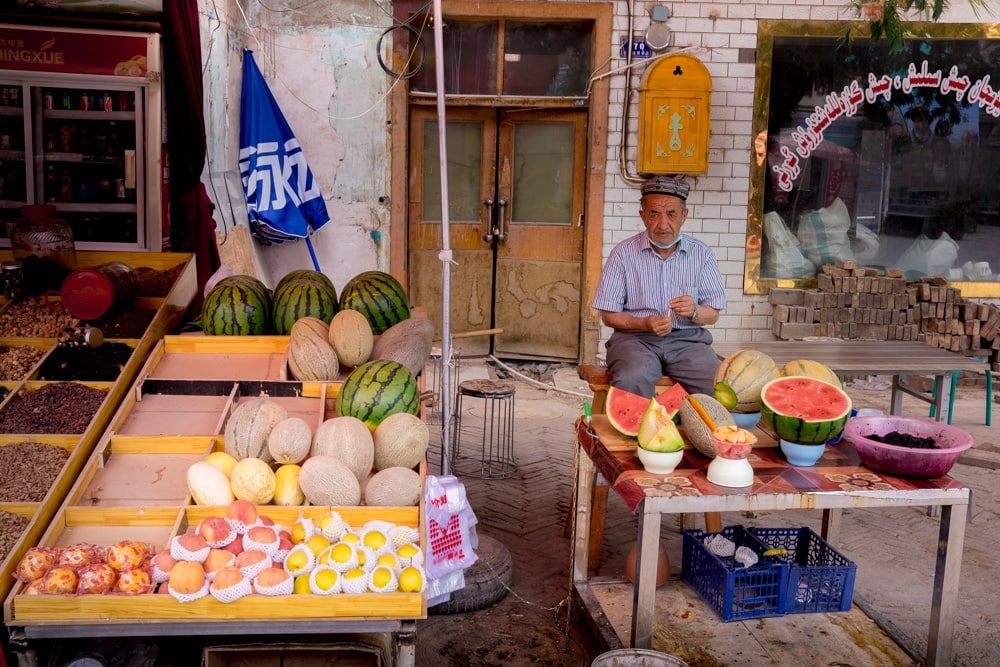
A fruit stall in Kasghar
So next time you pass a food cart, don’t just walk by. Stop. Watch the cook’s hands as they flip kebabs or knead dough. Listen to the laughter around you, the clang of metal pans, the rhythm of life happening right there on the street. Take a bite, close your eyes, and let the flavors tell you their story.
From Karachi to Kashgar, the streets are alive, and they’re waiting to feed you not just food, but memories, histories and connections that run deeper than borders. And in that shared love for street food, maybe we can find a little more understanding of each other, one mouthful at a time.
You may also like: