Written by: Hurmat Majid
Posted on: October 01, 2025 | 
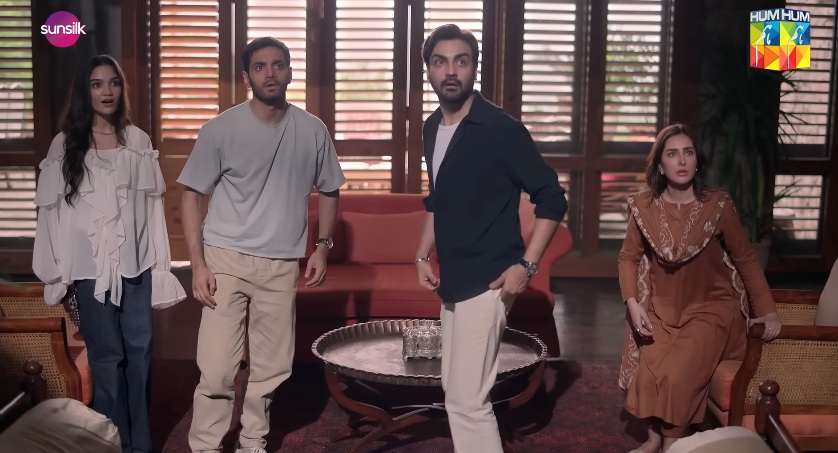
Laiba Khan, Wahaj Ali, Arsalan Naseer and Sidra Niazi in Jin Ki Shadi Unki Shadi
On a television landscape saturated with family melodramas, moral lessons, and predictable love stories, HUM TV has chosen to gamble with something unusual. Jinn Ki Shadi Unki Shadi arrives as a bold experiment that blends horror, comedy and romance into one unpredictable ride. From its very first promo, the drama promised a gothic story wrapped in humor and heightened by a fantastical romance between a human and a supernatural being. Whether viewers find it gripping or ridiculous, one thing is certain: it refuses to be ignored.
At its core, the premise is both simple and tantalizing. A poetry-loving young man, played by Wahaj Ali, lives in his family’s ancestral haveli, a mansion cloaked in secrets and shadows. His verses, recited with quiet passion, draw the attention of a female jinn, played by Sehar Khan. Enchanted by his words, she begins to intrude upon his life. From there, the story unfolds in a tone that swings between haunting corridors and comic interruptions, leaving audiences both curious and amused.
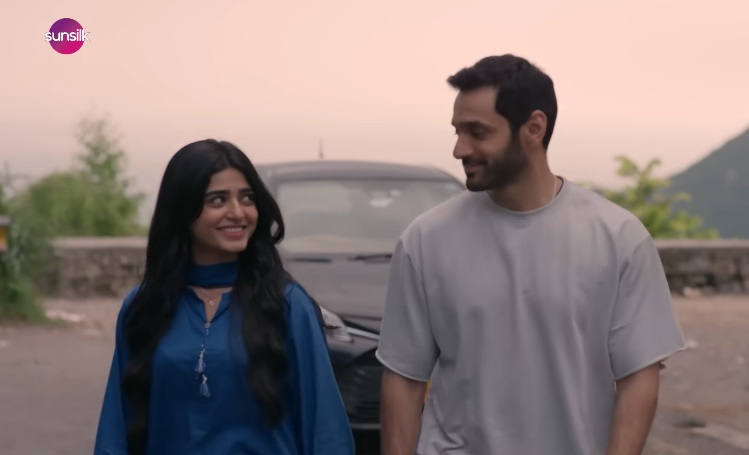
Sehar Khan and Wahaj Ali in Jin Ki Shadi Unki Shadi
The opening weeks of the drama establish this foundation with deliberate pacing. The ancestral haveli is introduced as a character in its own right, an eerie structure filled with whispers, shadows, and a sense of foreboding that contrasts with the humor woven into the daily routines of its eccentric residents. Slowly, the atmosphere thickens: lamps flicker, doors creak and the sealed room at the heart of the mansion becomes a constant, ominous presence. Against this backdrop, the jinn begins to make herself felt, first as an unseen listener drawn to Ali’s poetry and then more overtly as her fascination with him deepens. Comedy is sprinkled throughout, mostly through the antics of family members whose exaggerated fears and bumbling schemes prevent the tone from becoming too heavy. Alongside this, the romance nudges forward, drawing Ali and the jinn into a strange, delicate bond that keeps viewers intrigued. The drama also delivers its most talked-about moment in a visual effects sequence where a character exhales black smoke and splits into another form. Ambitious yet divisive, this scene went viral on social media, with some praising the attempt at cinematic flair and others dismissing it as unintentionally comical. As the supernatural elements take stronger hold of the narrative, the romance and the mystery of the haveli remain intertwined, ensuring that curiosity about where the story is heading never wanes.
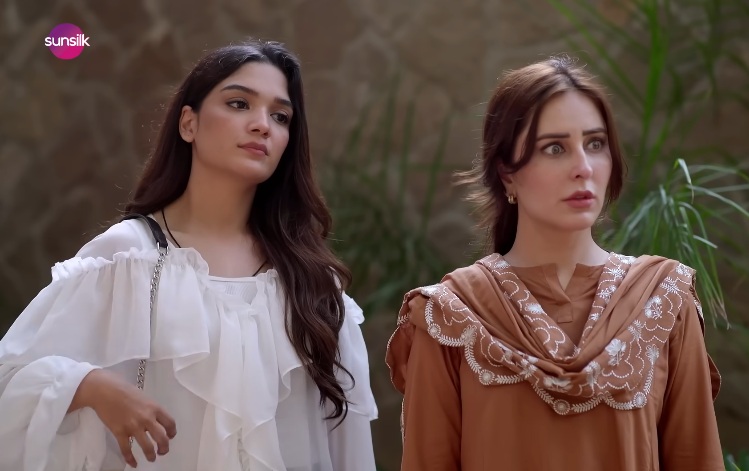
Romaisa Khan and Sidra Niazi
The cast is central to this experiment’s impact. Wahaj Ali, as Ali, plays a gentle, poetry-obsessed dreamer whose sincerity makes it believable that even a jinn might fall for him. He brings emotional subtlety to his performance, anchoring the drama even when the surrounding spectacle risks tipping into absurdity. Sehar Khan, as the unnamed jinn, faces the challenge of portraying both menace and vulnerability. She excels in her quieter, more watchful moments, and while some of her more melodramatic sequences suffer under heavy effects, she manages to preserve the dignity of her character. Together, Wahaj and Sehar’s chemistry feels genuine and unforced, and their pairing is one of the show’s strongest assets.
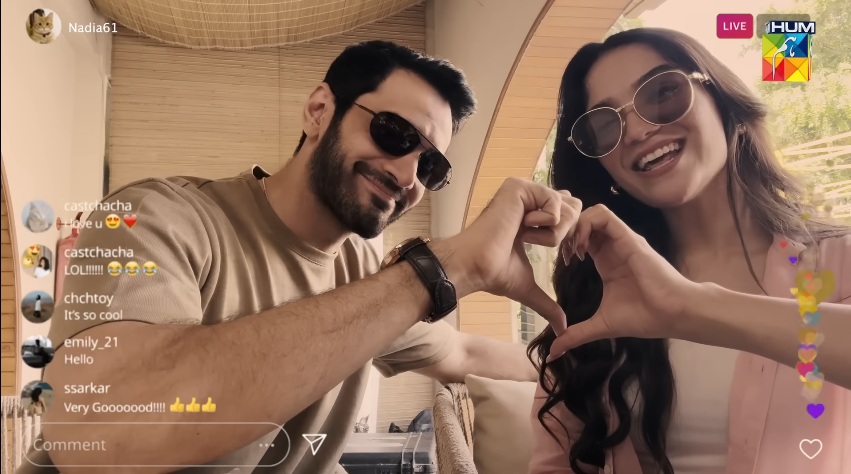
Laiba Khan and Wahaj Ali
The supporting cast injects personality and humor. Irfan Motiwala, as Chacha, provides broad comic relief, with his exaggerated expressions and viral “possessed dance” sequence becoming a talking point in their own right. Nadia Afgan delivers her signature comedic timing with ease, while Sidra Niazi brings a steady gravitas to her role. Romaisa Khan adds youthful energy, and Syed Jibran and others round out the ensemble with solid if sometimes uneven performances. While not every supporting role lands perfectly, the mix of seriousness and silliness captures the tonal experimentation that defines the drama.
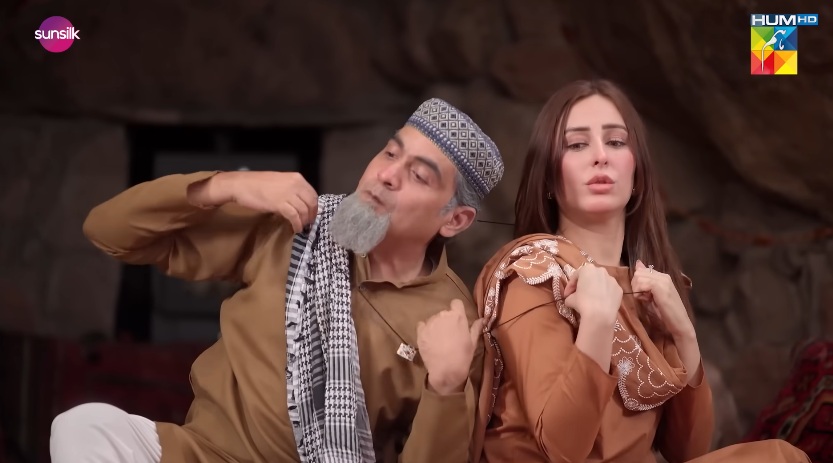
Irfan Motiwala and Sidra Niazi
Direction plays an equally important role. Saife Hasan, a seasoned director, leans into the gothic atmosphere with dimly lit corridors, lingering shots of the sealed door, and soundscapes that heighten suspense. At the same time, he does not shy away from slapstick humor, inserting moments of exaggerated comedy to keep audiences entertained. This balancing act is not always successful; at times a tense build-up is undercut by a joke that lands too broadly. Yet the ambition is undeniable. Hasan also shows discipline in pacing. The first two episodes resist rushing into spectacle, laying careful groundwork before unleashing more overt supernatural displays by the fifth and sixth episodes.
The production, led by Momina Duraid Productions, reflects an investment larger than the average serial. The haveli set is atmospheric, the costumes balance tradition with fantastical touches, and the lighting design emphasizes mood. Yet the most striking element, the visual effects, proves to be both the production’s boldest move and its biggest liability. The viral black-smoke sequence, intended as a moment of shock and awe, instead split the audience in two. Some admired the attempt to elevate television with cinematic ambition, while others derided it as cheap CGI that tipped into unintentional comedy. Ironically, the very ambition meant to elevate the drama became its most controversial talking point.
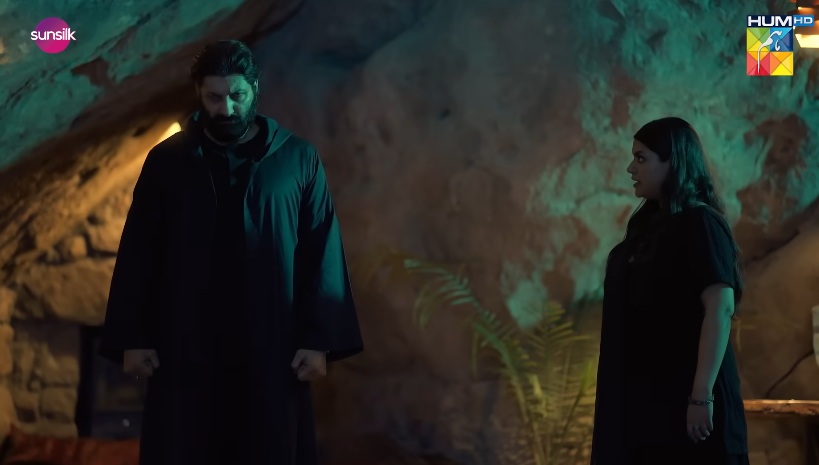
Syed Jibran and Tamkanat Mansoor
Public opinion has been as divided as the smoke itself. On one side, viewers applaud the novelty of a horror-comedy-romance hybrid and appreciate that HUM TV is willing to break formula. Wahaj Ali and Sehar Khan’s pairing is consistently praised, with fans lauding their chemistry as a refreshing change from more conventional romantic setups. Many commend the network for trying something new in an industry where repetition is often the safest bet. On the other side, detractors criticize the uneven tone, the awkward pacing of the early episodes, and most vocally, the questionable VFX ()*. Social media has turned the viral scene into memes and reels, sparking debates over whether the show is a groundbreaking risk or simply a misstep.
And yet, perhaps that is precisely the point. Few dramas manage to dominate public conversation in this way. Jinn Ki Shadi Unki Shadi has not faded quietly into the background; it has become a cultural talking point, spawning jokes, memes, debates and anticipation for each new episode. In that sense, it has achieved something even its critics cannot deny: relevance.
Ultimately, Jinn Ki Shadi Unki Shadi is a flawed but fascinating experiment. It is messy in places, its effects occasionally tip into parody, and its tonal balancing act is not always successful. But it is also bold, inventive, and willing to risk failure in pursuit of something new. Wahaj Ali and Sehar Khan’s performances provide the sincerity needed to ground the romance, while Saife Hasan’s direction ensures that the atmosphere never collapses completely, even when the effects falter.
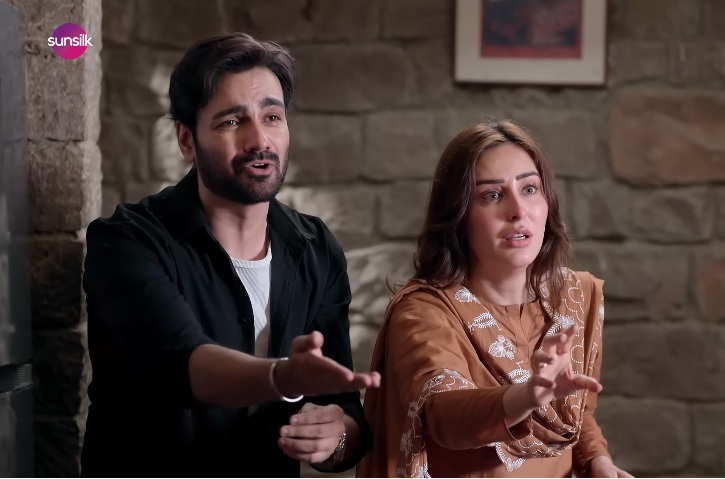
Sidra Niazi and Arsalan Naseer
In an industry often criticized for playing it safe, this drama deserves credit for daring to push boundaries. Whether it becomes a cult favorite celebrated for its audacity or a cautionary tale about genre mixing will depend on how future episodes unfold. For now, it stands as a reminder that Pakistani television can still surprise us. It may not be flawless, but it is memorable, and in a crowded market, that is its own form of victory.
Verdict: 3.5 out of 5. Uneven, occasionally absurd, but ultimately engaging, with flashes of brilliance wrapped in smoke.
You may also like: