Written by: Hurmat Majid
Posted on: September 16, 2026 | 
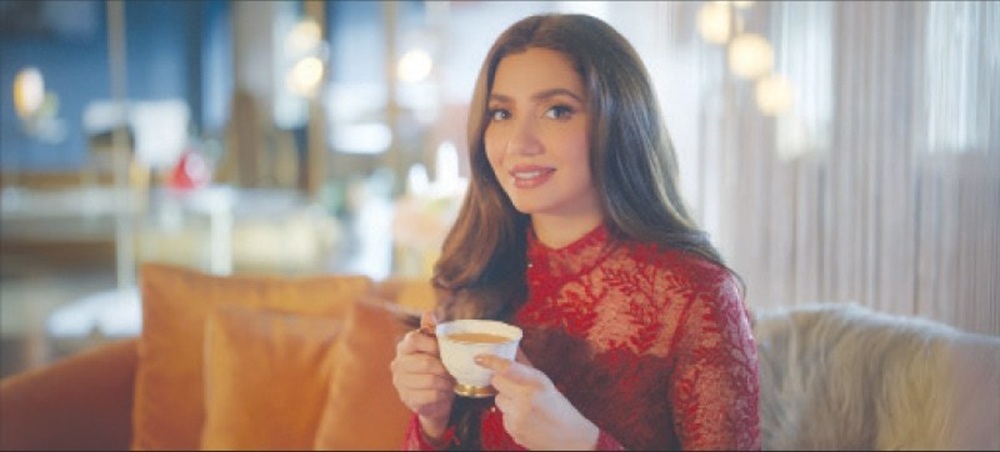
Mahira Khan holding a teacup
There is a line that has been said, in one form or another, so many times on Pakistani television that it has become almost invisible.
“Aap fresh ho jayein, main chai le kar aati hoon.”
Someone comes home from work. Someone offers chai. Someone is tired. Someone makes chai.
Two young people are developing feelings for each other. They sit over chai. A girl wants to demonstrate that she cares about a boy. She offers him chai. A family has guests. Chai. A rishta arrives. Chai.
A husband walks through the front door. Before he has had the opportunity to remove his shoes, his wife is asking whether he would like chai.
At some point, the question is no longer whether Pakistanis drink a lot of tea. Of course we do. The more interesting question is: why do Pakistani drama characters seem incapable of speaking to each other without offering it? The answer has very little to do with tea. It has to do with dialogue.
More specifically, it has to do with what happens when writers stop asking what this particular character would say in this particular moment and instead begin reaching for a familiar catalogue of pre-approved television interactions.
And somewhere inside that catalogue sits chai.
In 2024, veteran actor Laila Wasti articulated a frustration that audiences had already spent years joking about.
Speaking about the state of contemporary Pakistani dramas, she criticised the kind of dialogue she did not want to perform, specifically naming the line:
“Aap fresh ho jayein. Main chai le kar aati hoon.” Her objection was not to tea itself. It was to the artificiality of the sentence and the fact that it had become one of those lines that Pakistani television repeats so often that writers appear to have stopped questioning whether anyone actually speaks this way. Wasti reportedly pointed out that people do not talk like this at home in real life and questioned dialogue that felt meaningless and mechanically inserted into scripts. That observation matters because it comes from inside the industry.
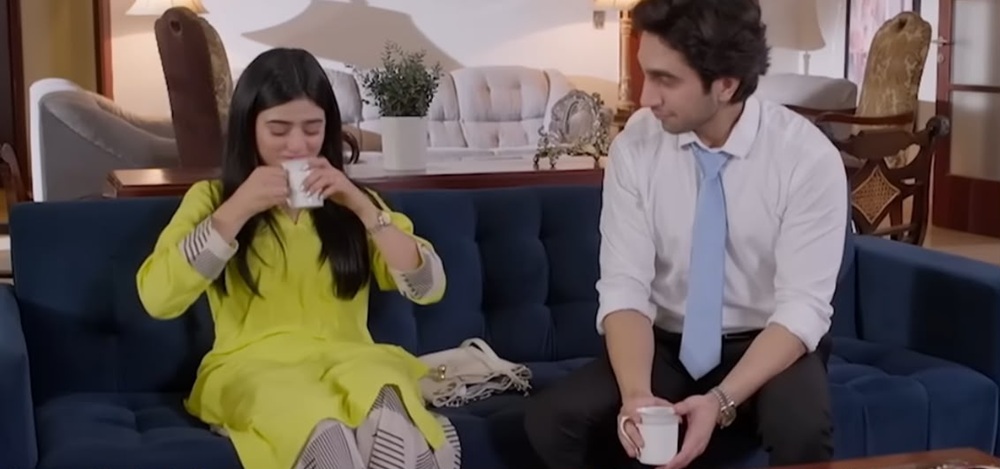
Sehar Khan and Hamza Sohail in Fairytale
It is one thing for audiences to complain about repetitive dialogue. It is another for an actor with decades of experience to identify a specific sentence as emblematic of the problem. Wasti’s “Aap fresh ho jayein” is not merely one bad line. It has become a symbol of an entire way of writing television.
The sentence does not emerge from a character. It does not necessarily reveal anything about her personality. It does not tell us what she wants. It does not create conflict. It does not deepen the relationship between the people in the room. It simply performs a function.
Man enters home. Woman performs care. Chai appears. Scene established. The dialogue could belong to almost anyone. And that is precisely the problem.
Actor Faryal Mehmood has expressed a remarkably similar frustration. In an interview with Dawn, Mehmood spoke about the kinds of roles she no longer wanted to play, explaining that she could not return to portraying the woman whose defining contribution to a scene is: “Aap haath dho lein, main chai bana ke laati hoon.” She acknowledged that this kind of character “sells well” but made it clear that it was not creatively satisfying for her.
Again, this is not an attack on domesticity, hospitality or tea. The problem is reduction.
When a female character’s presence is repeatedly communicated through serving food, making tea and waiting for a man to return home, she begins to exist less as a person and more as a television function.
Her dialogue becomes logistical. Have you eaten? Should I make tea? Would you like chai? Fresh ho jaiye. Dinner is ready.
The audience may know what she serves before they know what she thinks. This is where the chai problem intersects with one of the oldest criticisms of Pakistani television: the flattening of women into recognisable domestic roles.
A woman does not necessarily have to be rebellious, professionally ambitious or dramatically unconventional in order to be interesting. A housewife can be one of the most complex characters in fiction.
But complexity requires specificity. What does she notice that others do not? What makes her laugh? What does she resent? What does she want that she cannot say aloud? How does she speak when she is comfortable? How does she speak when she is afraid?
If the answer to most of these questions is replaced with “main chai bana doon?”, then the problem is not that the woman is domestic. The problem is that she has not been written as a person.
By 2020, the line had already become an internet joke. A viral social-media post featured in Diva Magazine perfectly captured the cultural recognition surrounding the trope: “I have a joke about women in Pakistani dramas, but pehle aap fresh ho jaen, mai chai ley ke ati hoon.”
The joke requires no explanation. That is what makes it such a powerful piece of criticism. Everyone already knows the reference.
The humour comes from the fact that a supposedly ordinary line has been repeated so frequently that it has become instantly identifiable as Pakistani drama dialogue.
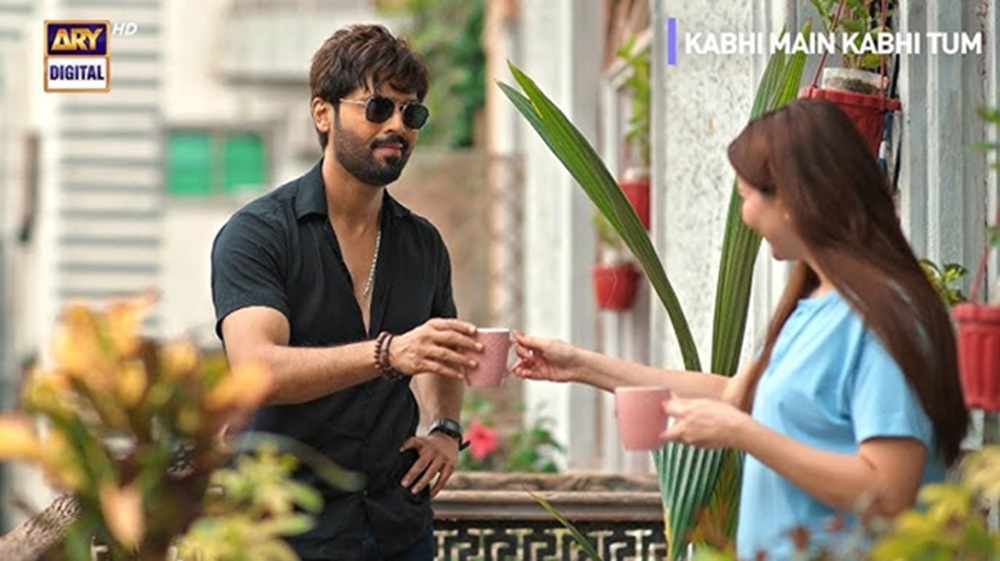
Fahad Mustafa and Hania Aamir in Kabhi Main Kabhi Tum
The same collection of jokes also mocked the apparent ability of chai to solve every conceivable human problem: tiredness, headaches, conversation, romance and boredom.
Someone is tired? Make good chai. Someone has a headache? Give them chai. People are sitting in the lawn? They should drink chai. At first glance, these jokes are simply funny observations about a tea-drinking culture. But underneath them is a more serious point.
Chai has become a shortcut.
Instead of constructing an interaction, writers can use tea to create one. Two characters need to spend time together? Give them chai. A woman needs to demonstrate affection? Let her make chai. A romantic interaction needs a soft opening? Have someone offer chai. A household needs to look warm and familiar? Put chai on the table.
Tea becomes a kind of screenwriting Swiss Army knife: a single device capable of establishing hospitality, romance, domesticity, class and feminine care. The more functions it performs, the more often it appears. And eventually, the audience begins to see the machinery.
More recently, Pakistani drama viewers have begun discussing the chai trope directly. In a Reddit discussion about chai in Pakistani dramas, viewers observed how frequently tea is mentioned and used in flirtatious interactions, with one user expressing amusement at how often cousins and romantic interests appear to flirt over a cup of tea and asking writers to “find a new concept.”
Other commenters pointed out how frequently variations of “mere liye chai bana ke lao” recur in particular dramas and how female characters repeatedly express affection by offering tea to male characters.
The important thing about these conversations is that viewers are no longer merely noticing individual scenes.
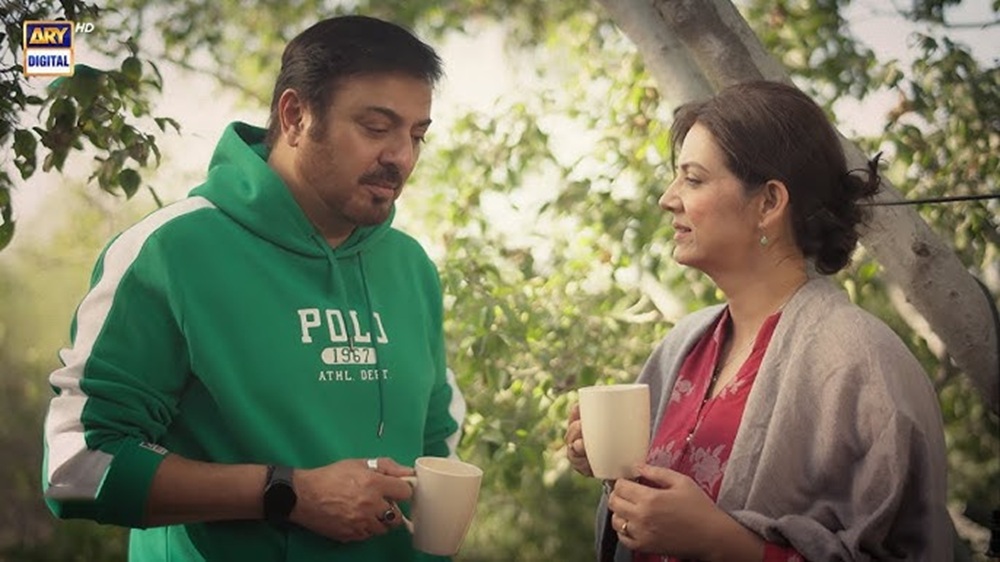
Nouman Ijaz and Savera Nadeem in Perwarish
They are recognising a pattern. Girl likes boy → she offers chai. Boy comes home → chai. Two people need a scene together → chai. Woman needs dialogue → chai.
Once audiences begin watching a formula rather than a story, the formula becomes impossible to hide. And perhaps that is the greatest danger of cookie-cutter writing. Repetition does not merely bore audiences. It makes them aware of the writer.
The viewer stops thinking, What will this character do next? Instead, they think, Ah. This is the scene where she offers him tea. The illusion is broken.
The trope has also become a way for audiences to joke about how Pakistani dramas signal class.
Social-media discussions highlighted by entertainment websites have mocked the apparent vocabulary of television hierarchy: Middle-class daughter: “Abu, main aap ke liye chai bana kar laati hoon.” More affluent daughter: “Daddy, main aap ko coffee pilati hoon.” Ultra-rich household: the domestic worker brings green tea.
The joke may exaggerate reality, but exaggeration works because it recognises a familiar pattern. Pakistani dramas often rely on a limited collection of visual and linguistic shortcuts to establish who people are. Rich people have certain homes, certain clothes and increasingly, apparently, certain beverages.
Middle-class domesticity comes with chai. Modernity comes with coffee. Luxury arrives with green tea, often served by someone else.
None of these codes is inherently problematic. All television uses shorthand. The problem begins when shorthand replaces observation. A writer no longer has to understand how a particular family behaves if a set, a costume and a cup of coffee can instantly communicate “upper class.” A writer no longer has to develop the subtle ways two characters fall in love if one can simply keep offering the other chai.
The result is efficient. But efficiency is not the same thing as writing.
Imagine removing the names from ten scenes from ten different Pakistani dramas. Could you identify who is speaking? Or could the same dialogue be transferred from one household to another without changing anything? That is the real test. Good dialogue carries fingerprints.
A character’s education, upbringing, humour, emotional state, ambitions and relationships should shape the way they speak.
One woman might express affection by asking whether someone has eaten. Another might send a sarcastic message instead of making tea. Another might quietly sit beside someone without saying anything. Another might deliberately refuse to perform care because she is angry. Another may make tea obsessively because it is genuinely part of her personality and emotional language.
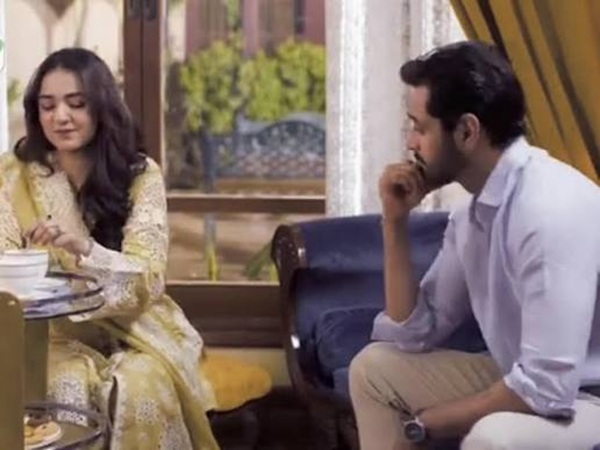
Yumna Zaidi and Wahaj Khan with Chai
The difference is not the presence or absence of chai. The difference is whether the character creates the dialogue or the dialogue creates the character.
Too often in Pakistani television, characters appear to be assembled from familiar dialogue components.
The angry man. The sacrificial mother. The suspicious mother-in-law. The rich, emotionally unavailable husband. The innocent heroine. And somewhere nearby, someone is making tea.
That is why the chai line has become such an effective symbol. It represents the moment when specificity disappears.
Pakistani television is capable of extraordinary dialogue. The country’s dramatic tradition includes writers and plays whose characters spoke with rhythm, humour, intelligence and regional specificity. Pakistani audiences can immediately recognise the difference between dialogue that has been observed from life and dialogue that has been manufactured from previous dramas.
The answer, therefore, is not to ban the words “chai bana doon?” Pakistanis drink chai. Families offer chai. Friends meet over chai. People fall in love over chai. There is nothing unrealistic about tea.
What feels unrealistic is when every relationship expresses itself through exactly the same cup. The chai problem is ultimately a character problem. It is a writing problem.
It is what happens when familiarity becomes a substitute for authenticity. And perhaps the next time a writer sits down to construct a scene between two people, the most useful question is not: “How can I get these characters talking?” The answer should not automatically be chai.
The better question is: “Who are these people, and what would only they say?” Because until Pakistani dramas begin answering that question more often, the characters will continue to enter different houses, live different lives, wear different clothes and tell different stories— but somehow, eventually, they will all say the same thing.
“Aap fresh ho jayein. Main chai le kar aati hoon.”
You may also like: