Written by: Hurmat Majid
Posted on: August 29, 2025 |  | 中文
| 中文
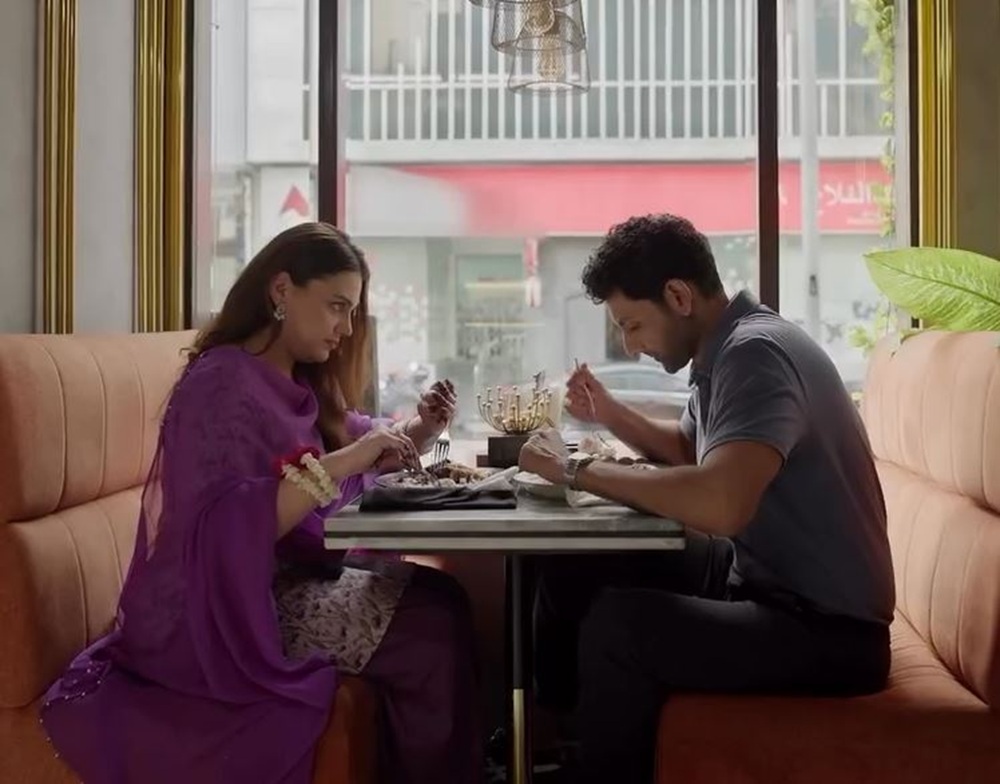
Mohib Miraz and Zara Noor Abbas
Pakistani television has always thrived on family sagas, but too often they lean on recycled melodrama rather than inventiveness. Ek Jhooti Kahani, however, arrives with a different proposition. It is not just another tale of in-laws and domestic skirmishes. Written by Amna Mufti and directed by Shehrazade Sheikh, the drama builds itself around the deceptively simple idea of a staged marriage and then stretches it into a lively comedy of manners where grief, ambition and stubborn sibling bonds collide. At its heart are two actors with genuine star power, Mohib Mirza as Irfan and Zara Noor Abbas as Bushra, who bring weight and mischief to roles that could easily have collapsed into caricature. From its opening episodes, the series positions itself as both a playful escape and a pointed observation about what lies people tell to survive the chaos of home.
Irfan’s life has been torn apart by the death of his parents, leaving him in charge of five sisters whose unruly behavior makes his home impossible to manage. His inheritance may have secured him financial stability, but his sisters guard the household like a fortress, chasing away anyone who tries to settle into the role of domestic help, potential sister-in-law, or authority figure. Irfan longs for order, and in his mind, marriage seems to be the most practical way to bring structure into the house. The problem, of course, is that the sisters are not willing to allow anyone to interfere.
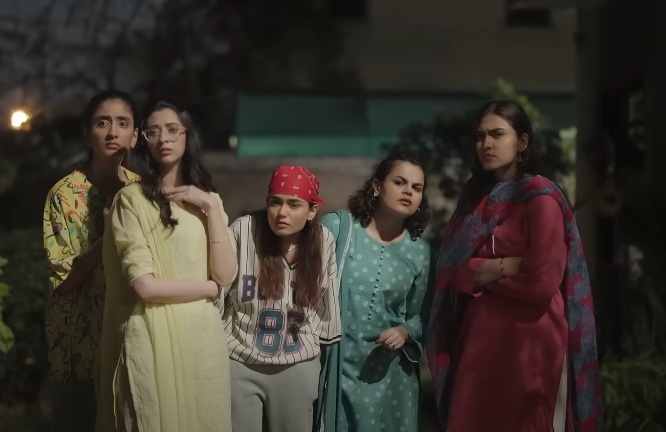
The five sisters
The only person who seems to survive in this household is Habib Sahab, played with delightful restraint by Muhammad Ahmed. Once a loyal assistant to the siblings’ late father, he has now become an all-purpose caretaker and the only man the sisters tolerate. Yet even Habib Sahab finds his life unexpectedly turned upside down when he marries a woman played by Uzma Hassan. Her character has escaped the cruelty of her daughter-in-law and sought refuge in a new marriage. Believing she has married a dignified caretaker, she quickly realizes that her new husband is enslaved to endless housework. Her refusal to shoulder these burdens creates another layer of conflict, painting the picture of a household that resists change at every level.
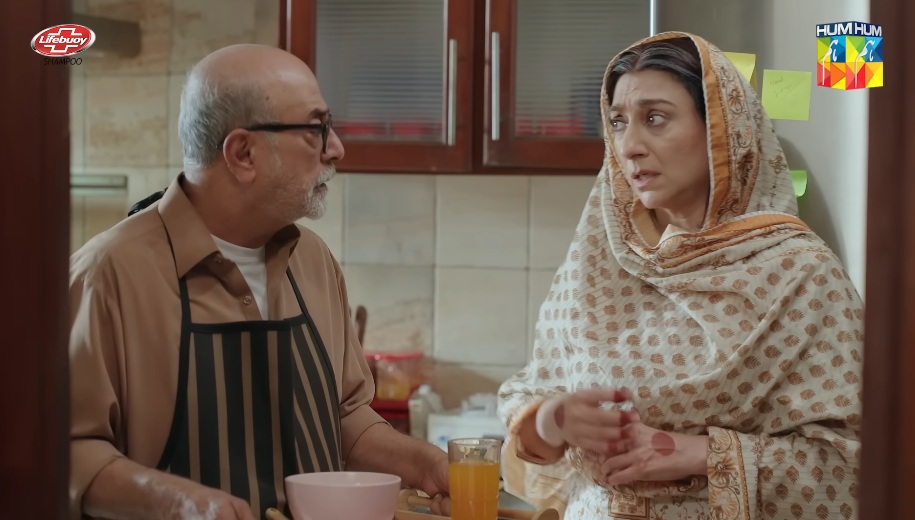
Muhammad Ahmed and Uzma Hasan
Parallel to this is the arc of Bushra, played by Zara Noor Abbas, who dreams of becoming an actor despite her father’s refusal to support her ambitions. Her hunger for recognition and education drives her to manipulate situations to her advantage, even if it means bending moral boundaries. At one point, she ropes in a shallow gym enthusiast, played by Taimoor, persuading him to agree to marriage in exchange for her admission to acting school. The scheme collapses when he fails to mention her educational aspirations to her father, leaving her desperate for another opportunity. It is this desperation that leads her to Irfan, who sees in her an unusual solution to his domestic problems.
Irfan hatches a plan: Bushra will act as his runaway bride, a character who could provide the toughness his sisters need. What follows is a layered performance within a performance, as Bushra treats the assignment not as real life but as an elaborate stage production. She refers to Irfan’s household as her set, his sisters as fellow cast members, and her role as one more part to play. While amusing at first, the repeated use of this conceit becomes clumsy at times, revealing gaps in the script where clarity and consistency could have tightened the narrative.
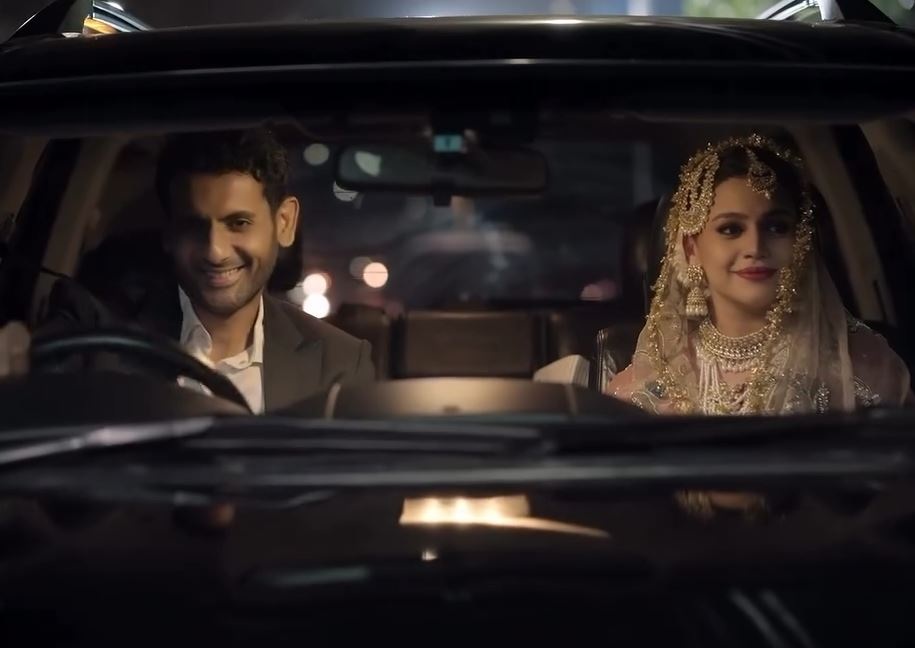
Zara looks extremely ethereal as a bride.
The premise of Ek Jhooti Kahani is undeniably engaging. On paper, it reads like a comedy of errors filled with mistaken identities, theatrical role-playing, and social satire. The performances of Mohib Mirza and Zara Noor Abbas keep the energy alive, with Mirza grounding Irfan’s grief and frustration in sincerity while Abbas infuses Bushra with restless charm and defiance. Muhammad Ahmed once again proves his versatility, turning what could have been a minor supporting role into a nuanced portrayal of a man caught between duty, manipulation and unexpected affection. Uzma Hassan brings sharp timing to her role, balancing pathos with humor as a woman who refuses to let one misfortune replace another.
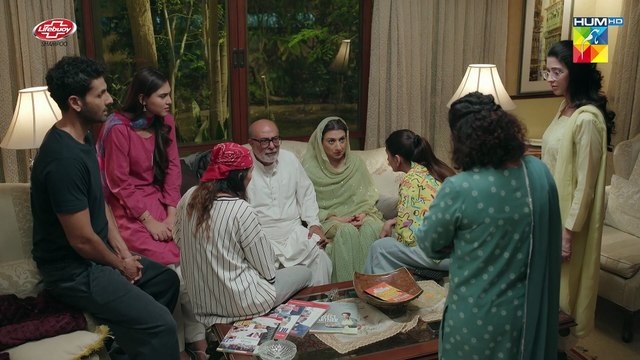
Mohammad Ahmed and Uzma Baig have come together beautifully.
Where the drama falters is in its supporting cast, especially the five sisters whose exaggerated antics begin to feel repetitive. Their resistance to any change in the household is a central theme, but the lack of a distinctive character development makes them blur together rather than stand out as individuals. This weakness becomes glaring because so much of the story depends on their presence as obstacles. Stronger casting or more careful direction might have turned them into memorable characters instead of stock figures.
The direction by Shehrazade Sheikh keeps the pace lively, but attention to detail is uneven. Certain scenes betray a lack of polish, such as Bushra stepping out of a coffee shop in full bridal attire while remarking that her makeup artist did a good job. It is the kind of slip that pulls the viewer out of the world of the story, reminding us that this is a production rather than a carefully constructed narrative. Similarly, dialogue occasionally circles back on information the audience already knows, diluting tension and undermining the otherwise clever writing of Amna Mufti.
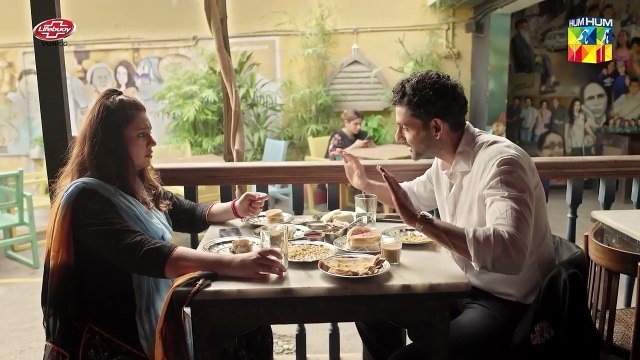
The story is predictable but one never watches comedy for the storyline.
Despite these flaws, there is much to appreciate in how the drama attempts to carve out space for comedy in a landscape oversaturated with grim morality tales and formulaic love stories. The weekly dose of lighthearted chaos feels refreshing, and the commitment of the lead actors elevates the material. What might have been a forgettable farce instead carries flashes of brilliance that hint at what could have been achieved with sharper execution.
In the end, Ek Jhooti Kahani succeeds as entertainment but falls short of excellence. Its ambition is admirable, and its central conceit has the potential to challenge the tired tropes of domestic dramas. With stronger direction, more consistent attention to detail and a supporting cast that matched the strength of its leads, it could easily have set a new standard for televised comedy. As it stands, it remains a welcome distraction in the weekly lineup, a reminder that even in its imperfections, Pakistani television is experimenting, evolving, and searching for ways to tell stories that are both familiar and daringly new.
You may also like: