Written by: Muhammad Bilal Ramzan
Posted on: March 26, 2026 |  | 中文
| 中文
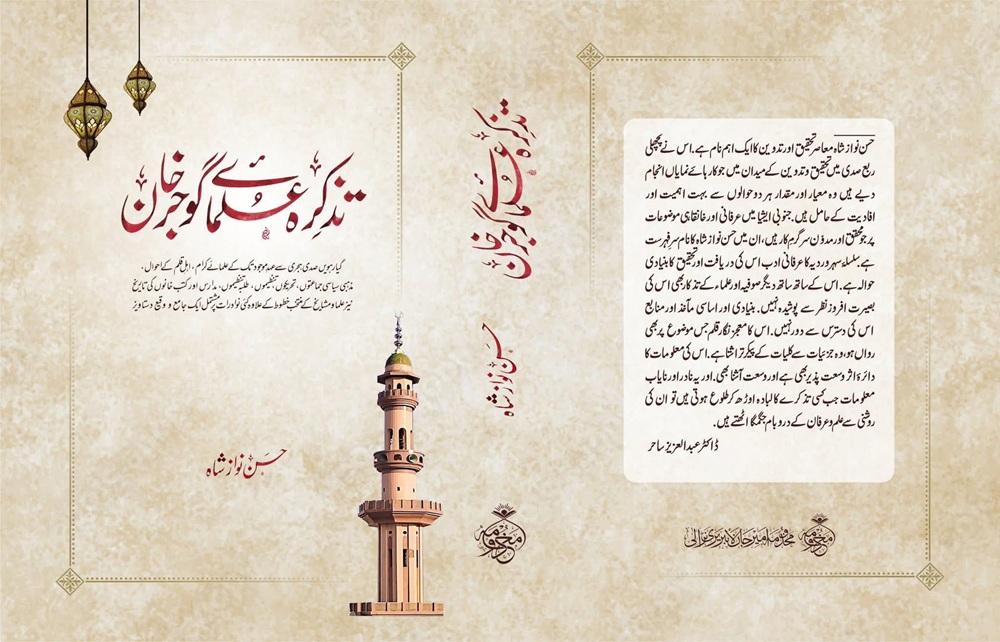
Front and back side of Tazkirah-e-Ulamāy Gujarkhan by Hasan Nawaz Shah
In Pakistan, intellectual history is usually told through the stories of major cities. The work of smaller regions, their scholars, teachers and institutions, often remains scattered in private libraries, family memories, old papers and sometimes only on gravestones. When such histories are not written down, they slowly fade. Tazkirah-e-Ulamāy Gujarkhan is an attempt to prevent that fading.
Hasan Nawaz Shah spent nearly twenty years working on this book. It was not put together from a handful of published sources. It required travelling across the villages of Pothohar, meeting families of deceased scholars, consulting madrasa records, examining personal letters and handwritten notes, and confirming dates where possible through inscriptions and archival traces. The effort behind the volume is visible in its detail. Much of this material might not have survived without that persistence.
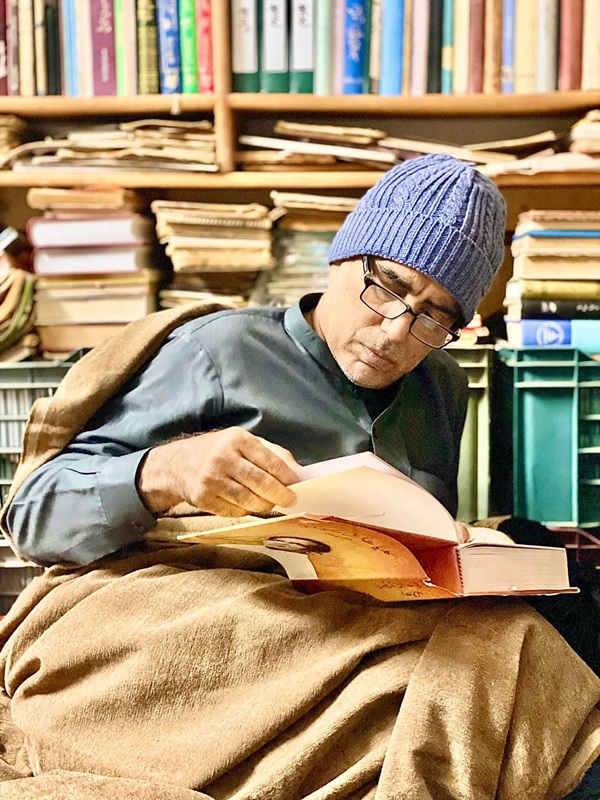
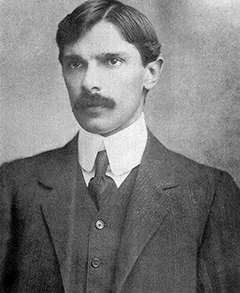
Hasan Nawaz Shah, the author of Tazkirah-e-Ulamāy Gujarkhan
Published by the Makhdoma Amir-Jan Library, this volume is the thirty-second book issued under that banner. The library itself, based in Narali near Gujarkhan, is widely regarded as one of the largest personal libraries in the region. It houses thousands of books, rare manuscripts, handwritten documents and old magazines across multiple languages. That archival culture forms the backbone of this publication.
The book runs to around 540 pages and is divided into twelve chapters. It covers almost four centuries of religious and intellectual presence in the region, beginning before Partition and continuing to the present. Each entry records names, dates, affiliations and contributions. The work reflects the true character of Gujarkhan as a tehsil shaped by its many villages and localities. Scholars from across the area are included, and the selection is based on contribution rather than geography. Those documented were engaged in teaching, writing, institutional leadership or participation in religious and social organizations. In doing so, the volume captures the collective scholarly life of the tehsil and reflects a broader South Asian reality, where religious authority and intellectual transmission have often grown through dispersed networks rather than centralized urban institutions.
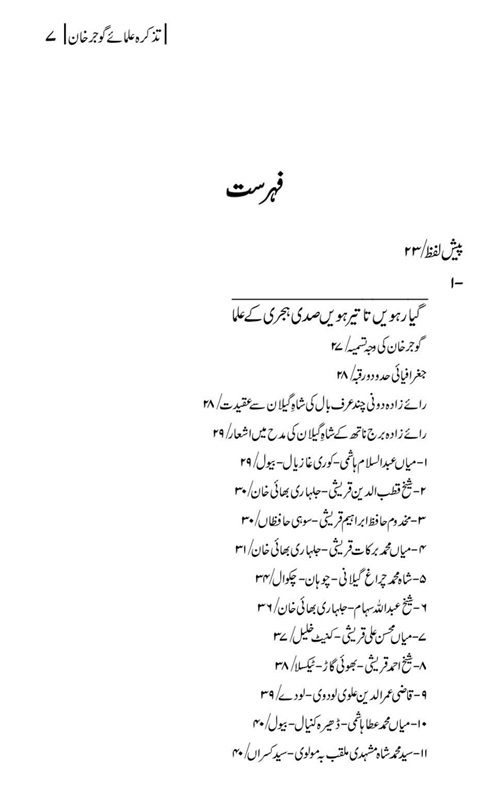
The list of chapters in the book
One of the book’s strengths is its range. Scholars from different schools of thought appear without polemical framing. Entries are arranged according to year of death, which allows readers to move gradually through generations and see how one period connects to another. References and footnotes are provided with care. The tone is respectful but restrained. The work reads like someone trying to leave behind a dependable record. The reference sections alone tell a story of their own. The sheer density of the documentation is staggering; some chapters alone contain nearly three hundred footnotes, transforming the citations into a parallel narrative of fieldwork and verification. They reflect interviews, archival traces, cross-checking of dates, and detailed engagement with prior material.
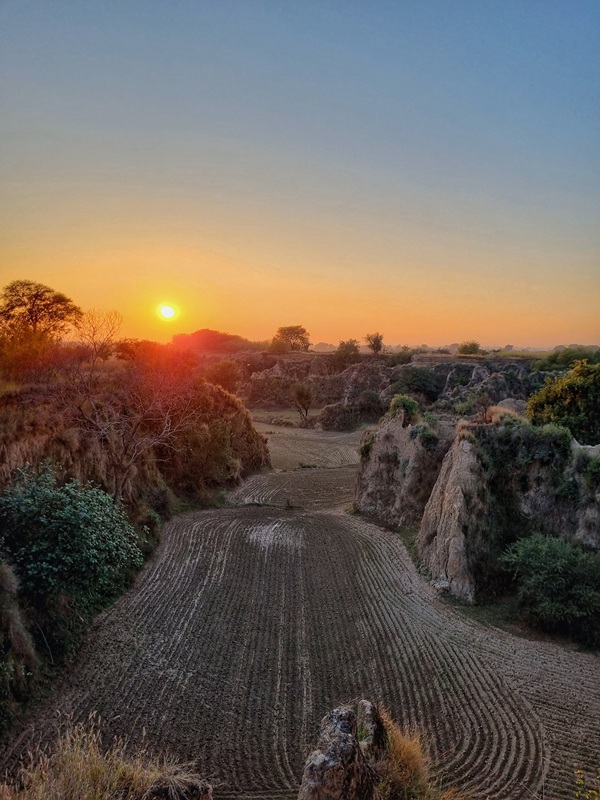
Gujar Khan
The volume also documents madaris, religious organizations, literary activity and movements that influenced the area. Through these sections, Gujarkhan begins to appear less like a small administrative unit and more like part of a larger intellectual landscape that includes Rawalpindi and the wider Pothohar region. The scholars mentioned here were not isolated figures. Many were linked to broader debates and educational networks that extended beyond their immediate localities.
One of the more valuable sections is the chapter devoted to rare documents. Letters preserved in private collections are reproduced and explained. Some involve well-known religious personalities. Material of this kind often remains inaccessible, stored in personal archives and known only to a few. Bringing it into print makes it available for future researchers and changes its place in the historical record.
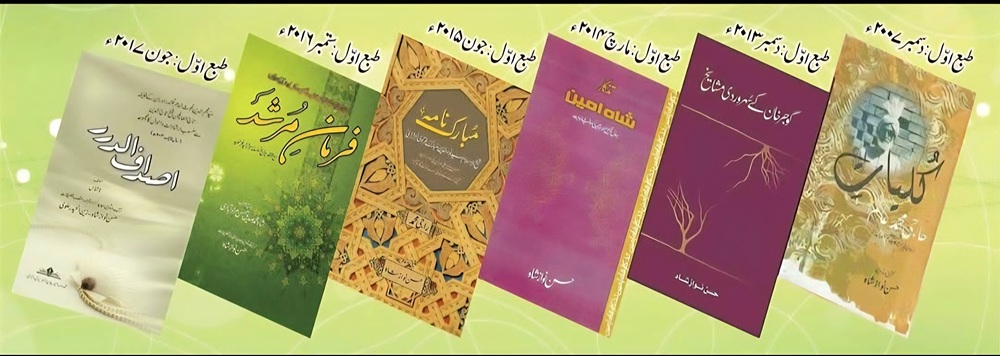
Hasan Nawaz Shah's books
Reading the book, I was repeatedly struck by the depth of detail, particularly in the footnotes. They do more than cite sources; they hint at the journeys behind the text. I have had the privilege of witnessing some of that labour firsthand, and on a few occasions even accompanying Hasan Nawaz Shah during his visits. I remember going back to the same village because a small detail needed confirmation. I remember standing in old graveyards while inscriptions were read again in the fading light. Dates were checked carefully against weathered stone. Families were approached more than once so that a lineage or affiliation could be properly understood. Some of that effort is visible in the letters section as well, where private correspondence has been carefully traced and contextualized. Each page, quietly, carries evidence of movement, verification and patience.
The seriousness of this undertaking becomes clearer when one considers Hasan Nawaz Shah’s own intellectual background. He has long been known among researchers and book collectors for his engagement with manuscripts and rare editions. His personal library contains thousands of volumes in Arabic, Persian, Urdu, Punjabi and other languages, along with handwritten material and unpublished texts. The book also reflects the author’s intellectual temperament. His grounding in Sufi tradition seems to inform the way the material is handled. The scholars documented here are not treated as distant icons. They appear as teachers within communities, as people whose influence shaped everyday religious life. The book quietly preserves lines of learning from teacher to student and from one institution to another. In a region like Pothohar, where spiritual and educational networks have long shaped society, that continuity carries meaning.
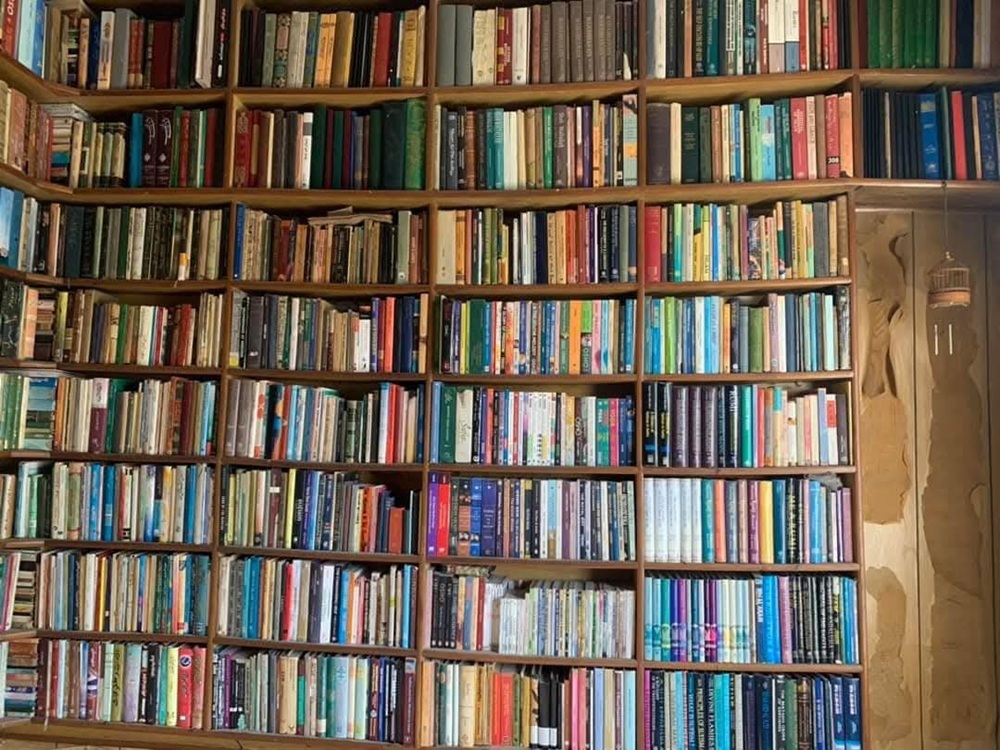
The library
The importance of this work therefore extends beyond Gujarkhan. Pothohar has played a significant role in the cultural and religious history of northern Punjab, yet much of its intellectual record remains underrepresented in national writing. For scholars of South Asian Islam, compilations such as this provide essential groundwork. They show how scholarship functioned outside major urban centers and how authority developed in smaller towns and villages. That wider relevance gives the book significance beyond its immediate geography.
If one observation may be offered, it is that a work of this scale inevitably carries the weight of its own ambition. The author himself acknowledges in the concluding pages that compilations of this nature are never beyond error and that future corrections or additions remain both possible and necessary. Such an admission reflects intellectual honesty rather than weakness. In a project that gathers centuries of dispersed material, absolute finality is neither realistic nor desirable. What matters is that a foundation has been laid, one that future researchers can refine and build upon.
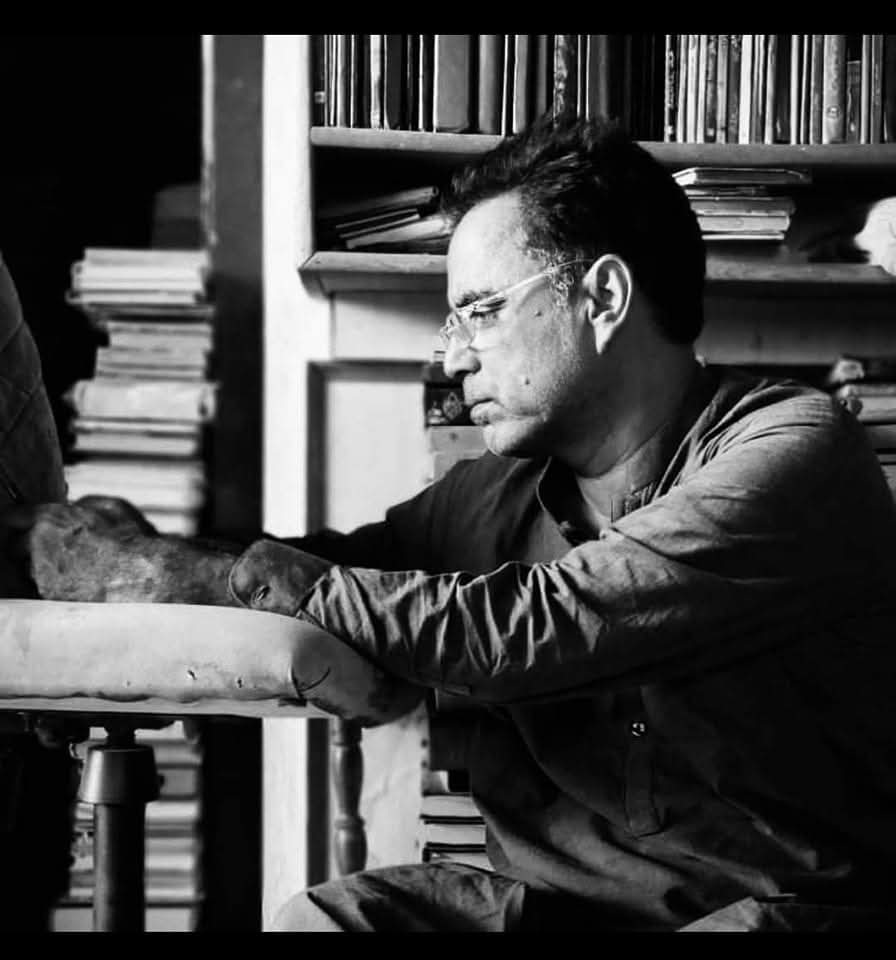
Hasan Nawaz Shah, the author
In short, Tazkirah-e-Ulamāy Gujarkhan performs a simple but important task. It gathers scattered memory and gives it form. It ensures that several centuries of scholarly presence in one part of northern Punjab are no longer dependent on fragile recollection alone. In preserving its scholars, the region preserves part of its intellectual identity. That alone makes the book worthy of attention beyond its local readership.
You may also like: