Written by: Haroon Shuaib
Posted on: October 09, 2025 |  | 中文
| 中文
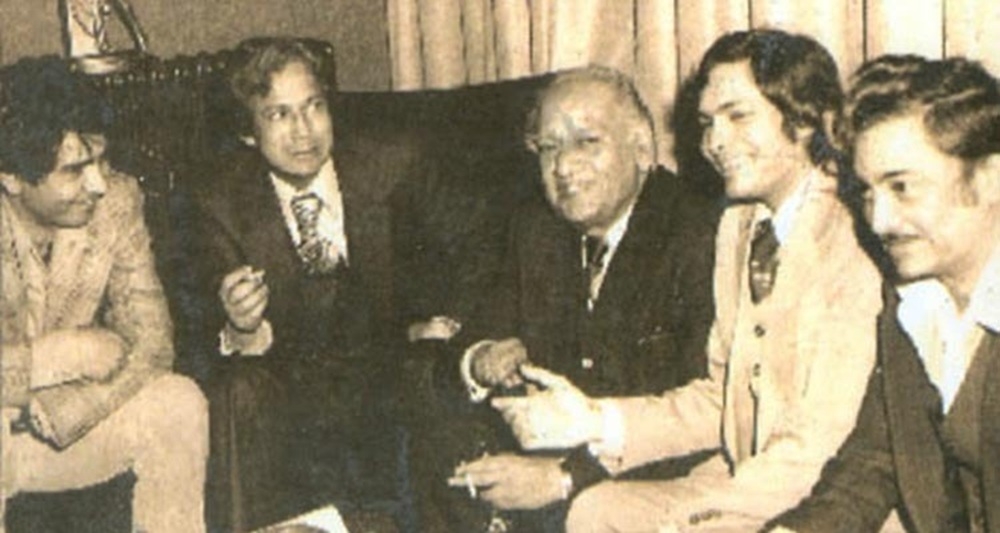
Actor Kamal Ahmed Rizvi (second from left) with Faiz Ahmed Faiz (third from left)
Ishrat Jahan Rizvi's Khoya Hoa Aadmi (The Lost Man) is an unconventional and unique biography of her husband, Kamal Ahmed Rizvi, the brilliant man behind Alif Noon, one of the country's most celebrated sitcoms. More than just an actor, Kamal was a polymath, a playwright, satirist, director, translator, editor and painter. Authored by his wife, this book offers a rare, insider's view not only of his personal and professional life but also of how the media, literary, and cultural landscapes of a new country came together. His wit, charm, and brilliance continue to inspire generations.
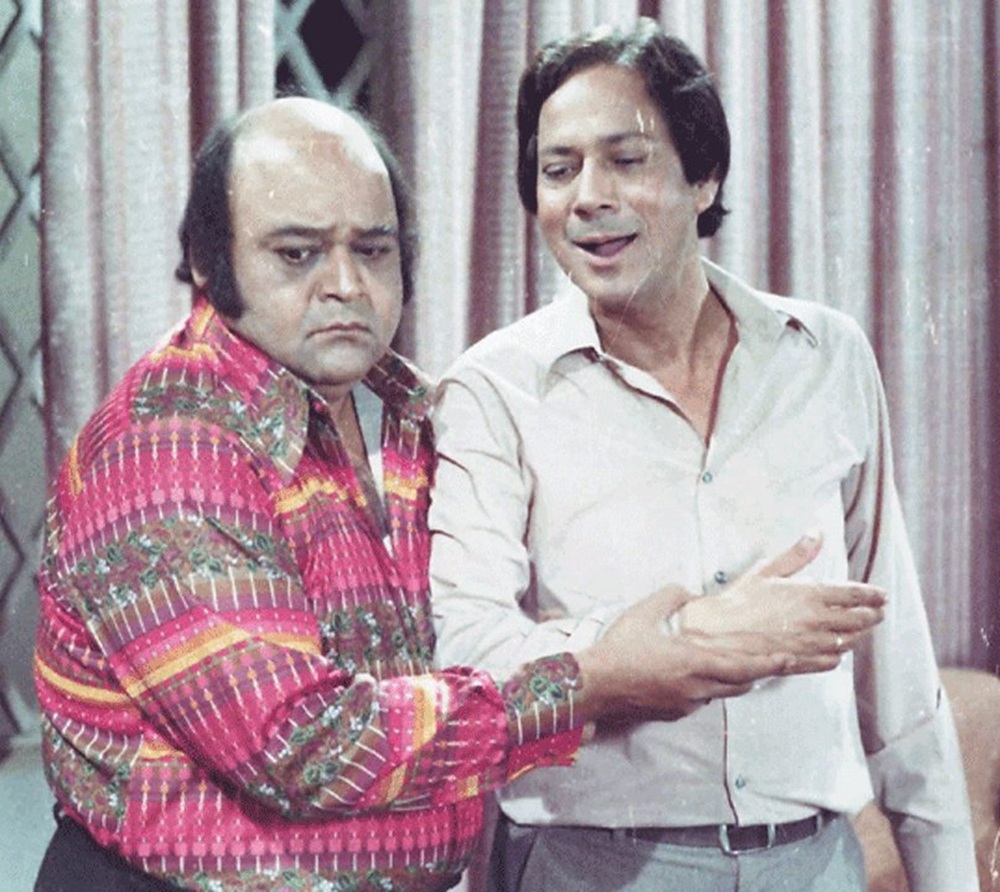
Rafi Khawar and Kamal Ahmed Rizvi in Alif Noon
Kamal Ahmed Rizvi was born into an affluent family of farmers in Gaya, Bihar, in 1930. This ancient city is a profoundly sacred place for both Hindus and Buddhists alike. Mentioned in the great epics, the Ramayana and the Mahabharata, Gaya is where Rama, with Sita and Lakshmana, offered gifts to his father, Dasharatha. It is also the region of Bodh Gaya, the site where the Buddha is said to have attained enlightenment. When Kamal was just three, the world fractured with the passing of his mother. His father, a long-serving, well-to-do veteran of the police department, chose to remarry quickly. This swift choice was an offense Kamal never forgot or forgave, hardening his heart against both his father and his stepmother.
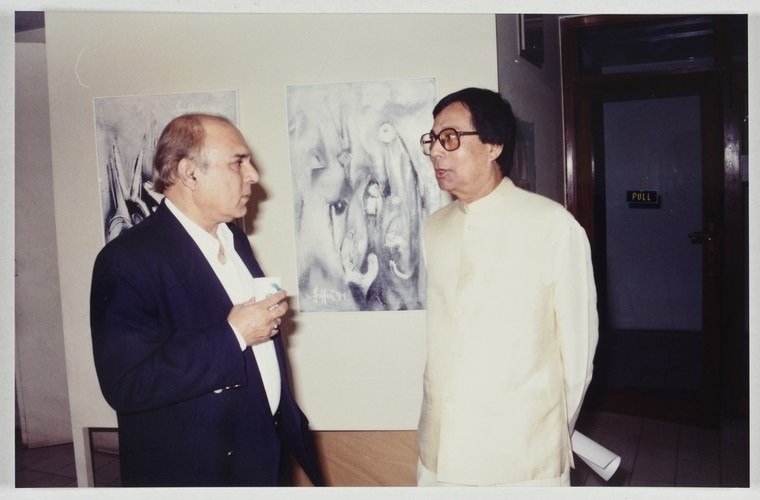
Kamal Ahmed Rizvi with the renowned Pakistani painter and art collector Wahab Jaffer.
Barely coming to terms with the reality of how his world had changed around him, Kamal had to face another equally life-changing transition. In 1947, after the birth of Pakistan, he decided to migrate to Karachi. Kamal had started his new life in the Arambagh area of a city that dramatically transformed from a relatively small, multi-ethnic port city to a rapidly expanding metropolis and the first capital of Pakistan.
It was in Karachi that Kamal was introduced to the Communist Party of Pakistan and the Progressive Writers’ Movement. Soon he started spending time with writers such as Ibrahim Jalees, Mumtaz Hussain, Shaukat Siddiqui and Riaz Rufi before moving to Lahore to meet his idol, the renowned short story writer Saadat Hasan Manto with whom he spent a lot of precious time in the early 1950s. It was these intellectual giants and the tempestuous times that shaped Kamal’s personality and his ideals that he lived by till his last breath on 17 December 2015 at the age of 85.
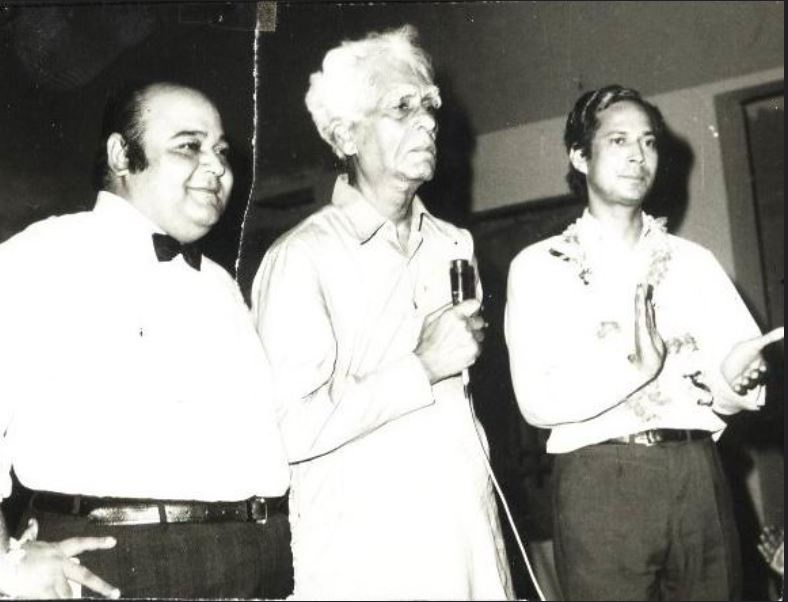
A rare photograph of Kamal Ahmed Rizvi and Rafi Khawar with Z. A. Bukhari (1979).
The title of Ishrat Jahan’s book, The Lost Man, immediately signals the biographer’s intent to move beyond the footlights of theater and television sets and the public acclaim that followed Kamal all his living years. Ishrat Jahan Rizvi, as the most intimate observer of his life, is uniquely positioned to interpret the paradox of her husband: a man who could construct sophisticated worlds on stage but remained perpetually unsettled within his own reality.
Her narrative voice is distinctively empathetic and unsparingly honest, allowing the reader to witness the artist’s turbulent relationship with domesticity, his three marriages, financial hardship, and the often-brutal limitations of Pakistan’s artistic landscape. Despite all the challenges that come as part and parcel of sharing life with a creative genius, considered the founding father of theatre in Pakistan, and his idiosyncrasies.
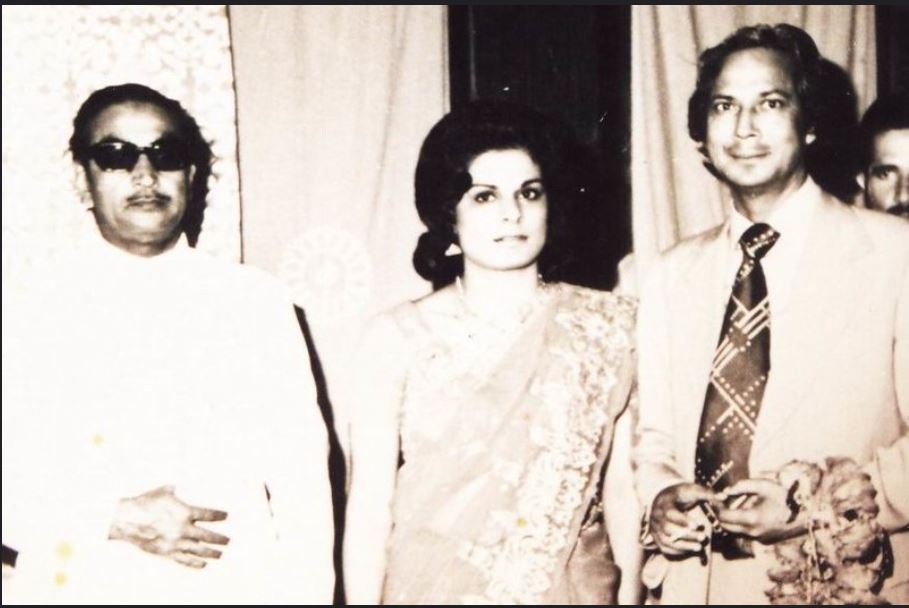
R to L_ Kamal Ahmed Rizvi, his second wife Ameena Abdullah with Hakeem Saeed.
A central theme of Khoya Hoa Aadmi is the cost of artistic integrity. The book chronicles Kamal Ahmed Rizvi’s refusal to compromise his vision, a stubbornness that often translated into professional friction and economic insecurity. Rizvi masterfully connects her husband’s personal frustrations to the broader cultural and institutional failings of the time, painting a vivid picture of the intellectual struggle in post-Partition Pakistan. She subtly argues that her husband was ‘lost’ not just internally, but also lost to a society that struggled to contain or fully appreciate the depth of his contribution.
In its structure and tone, Khoya Hoa Aadmi reads more like a memoir of a shared life than a distanced historical account. Ishrat Jahan Rizvi manages to celebrate his legacy without canonizing the man, acknowledging his flaws as essential elements of his genius. The book serves as a profound meditation on the complexities of love, companionship and the enduring challenge of living with an artist. Ultimately, while Kamal Ahmed Rizvi may have been the ‘lost man,’ his wife’s biography ensures that his memory, both artistic and personal, remains beautifully and unequivocally found.
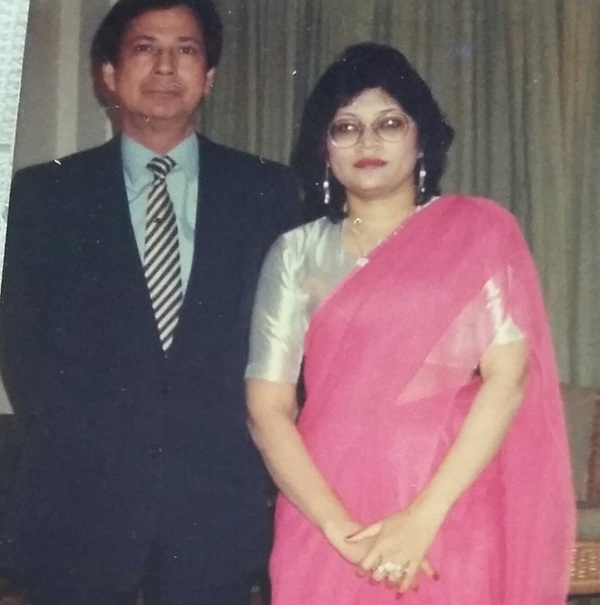
Kamal Ahmed Rizvi and Ishrat Jahan Rizvi
Ishrat Jahan Rizvi sums up the life she shared with Kamal in the last paragraph beautifully. “This companionship of thirty-one years had many moments of tenderness and conflict. These thirty-one years passed so swiftly that it did not even register. If I reflect back to count what I gained and lost in those three decades than I see that I was able to gain love of someone who yearned for love all his life. He wanted to hide his love from me but was unable to do so. He had no option but to love. This was the very same emotion that kept me in its trance all my life and I could never step out of its orbit.”
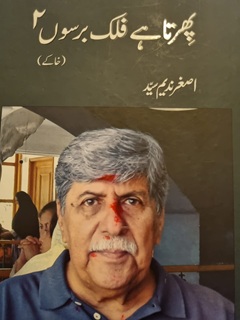
Khoya Hoa Aadmi has been published in a beautiful hard cover by Mushtaq Book Corner and is available through Maktab e Urdu, the online branch of MBC which deals with Urdu books on literature, religion, science and general subjects. A little over 600 pages, the book also contains some really important archival photos from Kamal Ahmed Rizvi’s personal and public lives. The book also has a section where leading Pakistani writers and intellectuals have contributed their thoughts on Kamal. They include names such as Bano Qudsia, Anwar Maqsood, A Hameed, Dr. Farman Fatehpuri, Mustansar Hussain Tarrar, Intizar Hussain and many others.
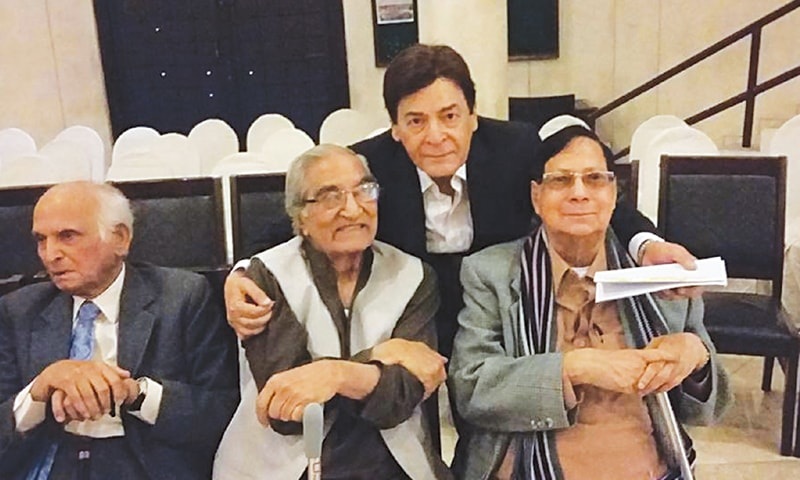
From L to R Novelist Intizar Husain, playwright Munnu Bhai, actor Qavi Khan and Kamal Ahmed Rizvi.
The biography’s core strength lies in its subjective approach. Ishrat Jahan Rizvi draws heavily on personal correspondence, shared memories, and the quiet moments behind the scenes, effectively humanizing the legend. She deftly explores the dichotomy between Kamal Ahmed Rizvi the public intellectual, the brilliant, philosophical and acerbic playwright and Kamal the private individual, prone to melancholy, professional dissatisfaction and an almost childlike impracticality regarding the mundane. This tension is the emotional engine of the book, illustrating that for certain creative souls, the very act of engaging with reality feels like a form of displacement.
You may also like: