Written by: Hurmat Majid
Posted on: February 11, 2026 |  | 中文
| 中文
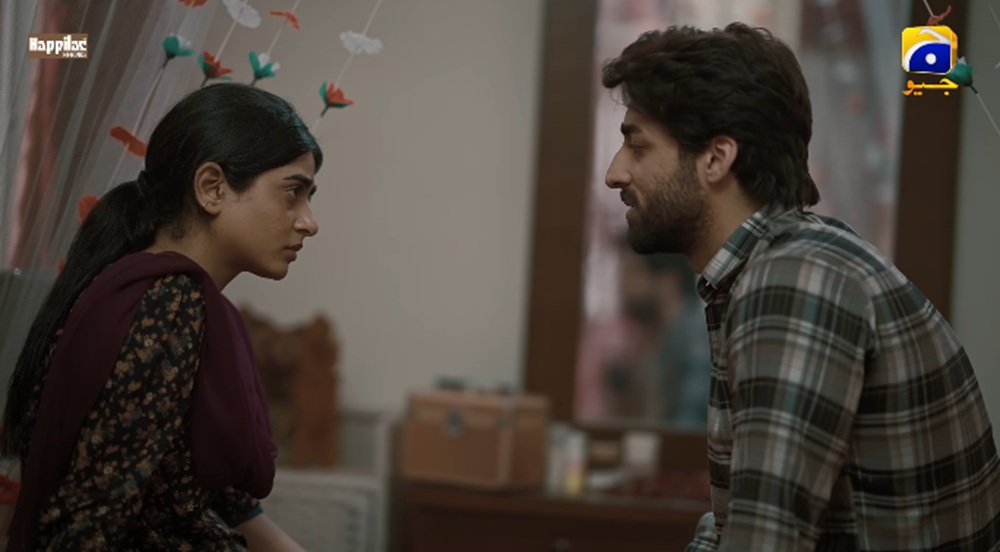
Nameer Khan and Sehar Khan in Aik Aur Pakeeza
There is a particular kind of urgency that surrounds socially conscious television in Pakistan, an urgency born not out of novelty but necessity. Aik Aur Pakeezah arrives carrying that weight, and unlike many issue-based dramas that confuse sensationalism for relevance, it approaches its subject with clarity and restraint. Produced by Kashf Foundation and aired on Geo TV, the drama takes on cyber-crime, non-consensual recording, and public shaming, themes that feel painfully current in a country where women are unsafe not only in physical spaces but increasingly in digital ones as well.
The premise is deceptively simple. An unmarried couple planning to get married is forcefully recorded without consent and the video is circulated, setting off a chain reaction that devastates lives. What Aik Aur Pakeezah understands from the outset is that the real violence does not end with the act itself. It multiplies through family reactions, social judgement, institutional silence, and the refusal to ask the most basic question: what actually happened?
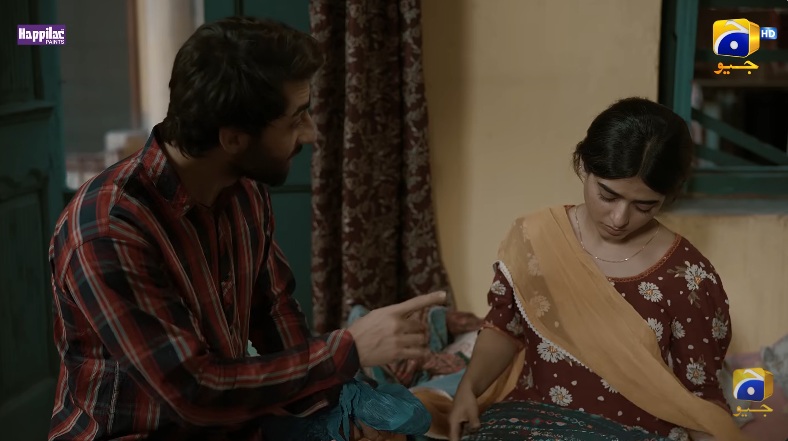
Nameer Khan and Sehar Khan
The storytelling benefits greatly from its non-linear structure. The timeline moves back and forth between before and after the leak, allowing the audience to piece together not just events but emotional consequences. This approach does not confuse the narrative. Instead, it deepens it. We are not forced into a single moral moment. We are invited to observe how quickly lives fracture, how memories become evidence, and how perception replaces truth. The use of flashbacks helps underline how ordinary relationships and small permissions are retrospectively weaponized once scandal enters the picture.
At the centre of the story is Pakeezah, played by Sehar Khan with remarkable control. Her performance never veers into theatrics, which is crucial for a character whose trauma is internalized, silenced and constantly misread. Pakeezah is not written as a symbol but as a person, and Sehar Khan honours that choice by allowing discomfort, fear, and resignation to exist simultaneously. Her trauma feels real because it is not performed for sympathy. It is endured.
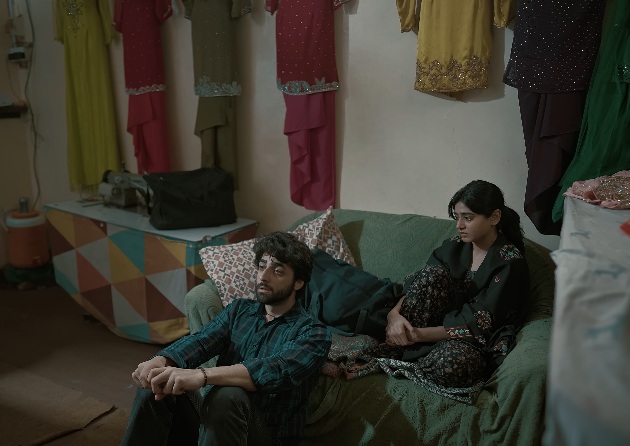
Nameer Khan and Sehar Khan in Aik Aur Pakeeza
Nameer Khan as Faraz complements this beautifully. Faraz is not portrayed as a saviour or a villain but as a young man crushed under circumstances he neither created nor can escape. His life has been shaped by pressure long before the scandal, and the drama is careful to show how class, family expectations, and emotional neglect intersect to leave him with few good options. Nameer Khan plays him with quiet dignity, making Faraz sympathetic without romanticizing his helplessness.
What truly elevates Aik Aur Pakeezah is its portrayal of family, particularly Pakeezah’s parents. Noor-ul-Hassan as the father delivers one of the most unsettling performances on Pakistani television in recent years precisely because he is not written as a monster. He knows the law. He understands that making such a video is punishable. He is aware, on some level, that his daughter was pressured and wronged. And yet he behaves as though the fault lies squarely with her, because she was alone in a room with a boy by her own choice.
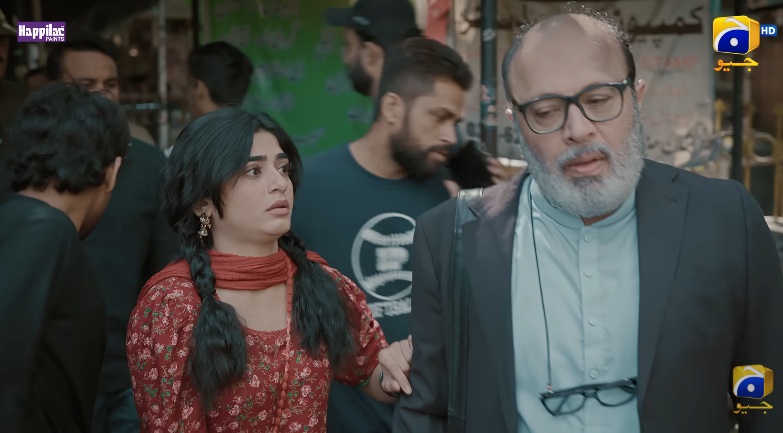
Sehar Khan and Noor ul Hasan
What is most damning is not his anger but his silence. He never sits his daughter down to ask what happened. He never gives her the confidence to say she was coerced. As a court employee, he should have been the first to say my daughter has been wronged and I will file a case against those responsible. He should have been the one restraining his sons, insisting on reason, and joining forces with Faraz’s family to seek justice. Instead, he lets Pakeezah exist like a ghost in her own home for three months before marrying her off, as if marriage were a form of erasure. The drama exposes the hollowness of so-called progressiveness. He was comfortable with his daughter having male friends, with phone conversations, with appearances of modernity, but utterly incapable of extending trust when it mattered most.
Nadia Afgan as the mother is equally disturbing, though in a different way. She cloaks her cruelty in calm acceptance. She acts as though everything is fine while quietly participating in the machinery that destroys her daughter. She accepts gifts from the milk shop owner, the same man who filmed the video and sought revenge after being publicly slapped for crossing a line. Her moral compass is chillingly selective. She is comfortable with the perpetrator, with social rituals, with moving on. The one person she seems unable to sit with is her own daughter. Her willingness to pack away Pakeezah’s belongings, to accept her absence, and to normalize the man who ruined her life says more about internalized misogyny than any speech ever could.
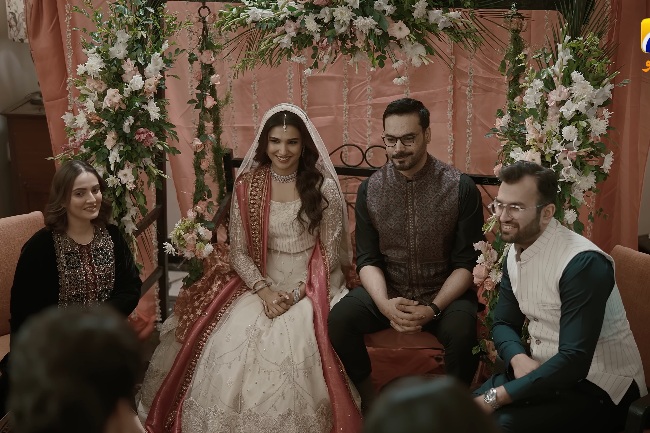
Gohar Rasheed and Amna Ilyas
The brothers represent another familiar but no less infuriating reality. They are fiercely ghairatmand, but their anger is misdirected. They are not angry at the man who committed the crime. They are not angry for their sister. They are angry at her, for bringing shame, for giving the mohalla something to talk about. One brother leaves home. The other stays but cannot function. Neither ever pauses to question the system that teaches people to accept a video at face value without asking who made it, why it exists, or under what circumstances it was recorded. The drama captures this hypocrisy with painful accuracy.
Amna Ilyas, as the lawyer, is the lone voice of reason, the only character who insists on asking where Pakeezah is and what has become of her. Gohar Rasheed’s character provides moral steadiness without grandstanding, while Umer Darr, Davar Mahfooz, Saqib Sumeer, Namra Shahid, Yusra Irfan and Ali Jan all contribute to a world that feels populated, recognisable, and lived-in.
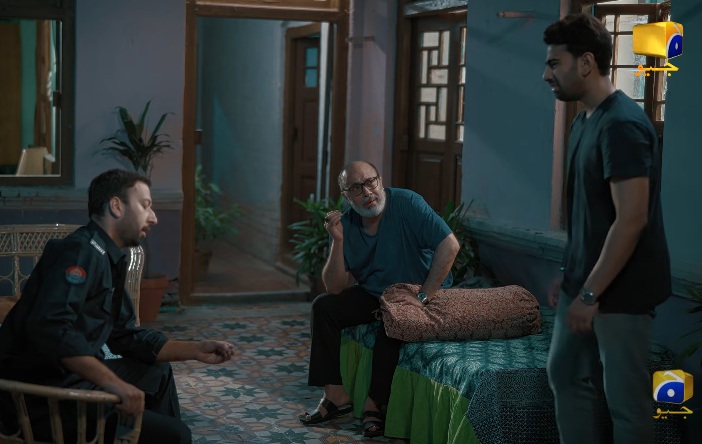
Umar Dar, Noor ul Hasan and Davar Mehfooz
Social behaviour, family dynamics, and institutional responses are depicted with unsettling realism. This is a drama meant to make viewers uncomfortable. It is meant to make your blood boil. That anger is not a flaw. It is the point. The show refuses to offer easy catharsis or neat resolutions because real life rarely does.
Aik Aur Pakeezah is an important production, not because it is flawless but because it is necessary. In a society where women are policed, silenced, and blamed both online and offline, stories like this push the conversation forward. As usual, Kashf Foundation demonstrates an understanding that television can be both responsible and resonant. This drama does not shout to be heard. It holds up a mirror and asks us to look longer than we are comfortable doing.
And perhaps that is its greatest strength.
You may also like: