Written by: Fiza Husnain
Posted on: August 18, 2026 |  | 中文
| 中文
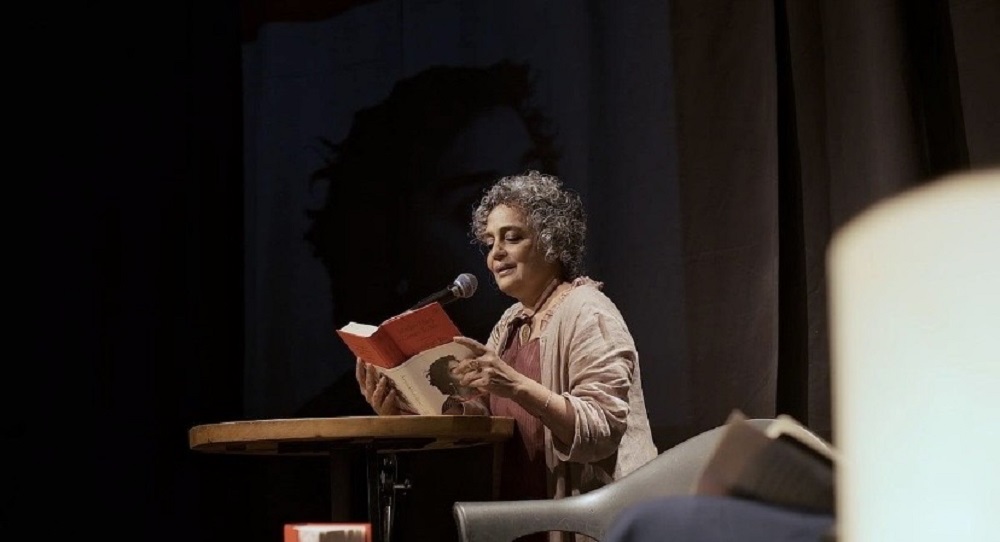
Woman making another woman a subject matter
“All women become like their mothers. That is their tragedy. No man does, and that is his.” Oscar Wilde said that, and Arundhati Roy lived it.
There is a mother in every writer’s mouth. You run from becoming your mother, and then you find yourself in a grocery store thinking you don’t really need that yellow mug; you have gotten two at home. On the way back home, you think that this is exactly what your mother would do. Mothers, they sometimes arrive as memory and sometimes as a panic attack. Arundhati Roy’s memoir does really narrate her mother, Mary Roy, as it becomes her. It is a memoir that breathes the way its subject breathed: in gasps, in storms, in the terrible democratic rhythm of an asthmatic body deciding, moment to moment, whether it would let its children live in peace or in fear. The children who have to choose every day between life and lifelessness.
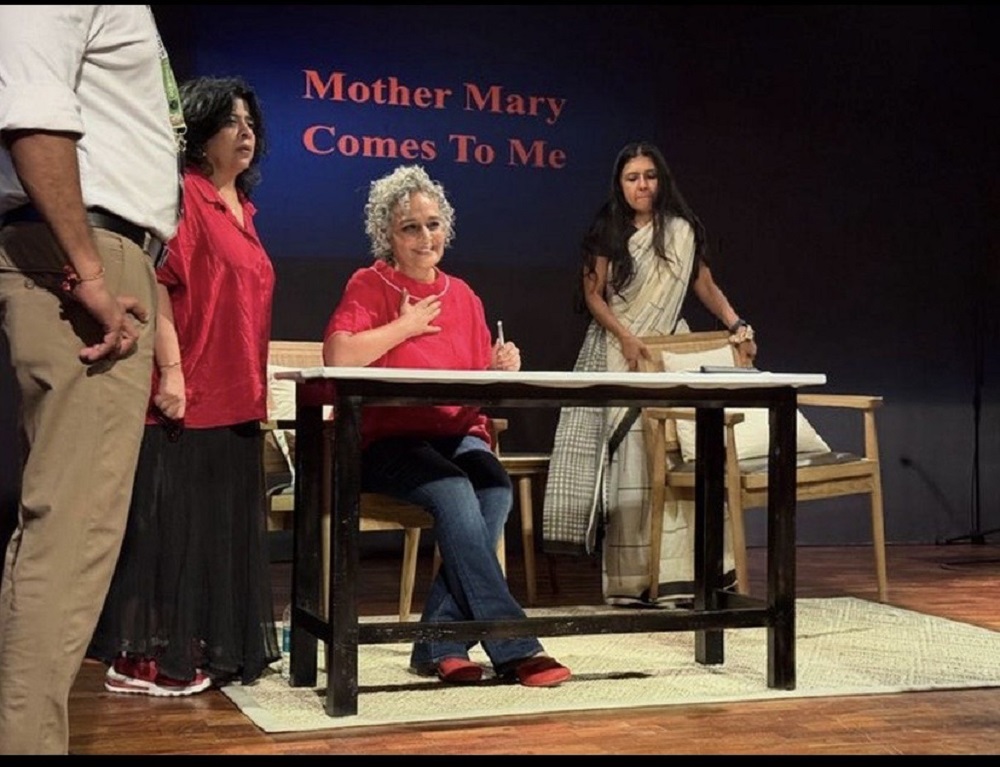
To write about a mother is to dig the architecture of the self
One idea that has remained unexplored, as of yet, is that this is not a book about how pain gave birth to a writer. It is a book that reveals pain had already been writing Roy for decades before she knew it, the narratology of the self was in making that the architecture of her most famous sentences, their withheld clauses, their sudden calculated violence, their refusal to resolve, was never a style she chose. It was inherited. Mary Roy taught her daughter, without meaning to, that language could be a form of control over an uncontrollable body, that a sentence could be the only room in the house where you get to decide to speak or not to speak, to scream or to stay silent. The famous fractured, incantatory prose of The God of Small Things, admired, imitated, often misread as ornament, was not really an ornament. It was survival syntax, learned at a kitchen table where her mother’s fury and her mother’s asthma arrived together along with the scrambled eggs that were never enough, indistinguishable, so that Roy stopped talking almost entirely. A child who cannot speak learns to write. This phenomenon transcends the metaphor. That is this book’s devastating argument, and it is the thesis this review wants to sit with. Art, in Roy’s case, is not the transformation of pain into something just as art. That is given in every artist’s situation. For Roy, Art is pain continuing to metabolize itself in a stomach that fails to produce healthy nutrients, to nourish, the way a wounds heals on skin yet the scar stays, as a reminder of history, a reminder of trauma, while the skin learns a new way to hold together.
Roy has always denied that she writes about her mother; she has said, famously, that she does not write memoirs, that fiction was cover enough, and Ayemenem was invention. This book gently undermines that claim, almost with a calm composure, at its own will. Roy calls Mary “my shelter and my storm,” five words on the surface yet an entire ecosystem, a woman who was simultaneously the roof over Roy’s head and the bulldozer over that roof. It is the kind of phrase that could only be written by someone who has spent forty years learning to hold two irreconcilable truths in a single breath without letting either one collapse the sentence. This is craft, of course, but it is craft, forged nowhere but in the wound, and the memoir never lets us forget that the forge was also a home, with a kitchen, and school uniforms, and a mother who could be, on the very same afternoon, both tyrant and a lover and the only adult who believed her daughter might amount to something. The dialect of horror and beauty holding itself together.
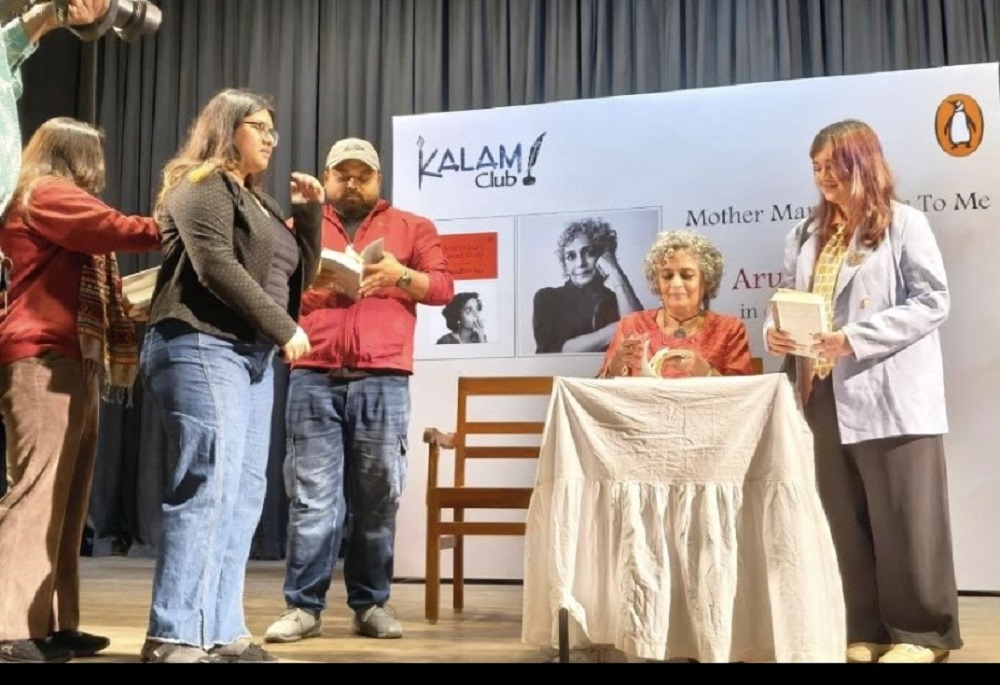
Between love and anger, tenderness and violence, there is this story that refuse to simplify itself.
There is a passage, much quoted already by early reviewers, in which Roy admits her grief at her mother’s death arrived not as sorrow but as confusion, that she felt “more than a little ashamed” of the intensity of her own reaction to a woman she’d spent a lifetime fleeing. This shame is the book’s true subject. Not “how do I mourn a monster,” but “how do I mourn the specific monster who built the exact instrument I now use to mourn her.” Every writer who has ever had a difficult parent will recognize this trap, the parent who wounds you into becoming exactly the kind of person capable of writing astonishingly about the wound. So that grief and craft arrive at the same time, offering the same gift twice. Roy is never eager to resolve the confusion; she rather drowns herself in it like Ophelia; the only difference is that Ophelia had clarity about her father. Roy, on the other hand, keeps the concept of her mother in a state of confusion, maybe to escape the trauma she might endure with clarity. Thus, she lets it stand, unhealed, on the page, which is the most honest thing a memoir about a difficult mother can do.
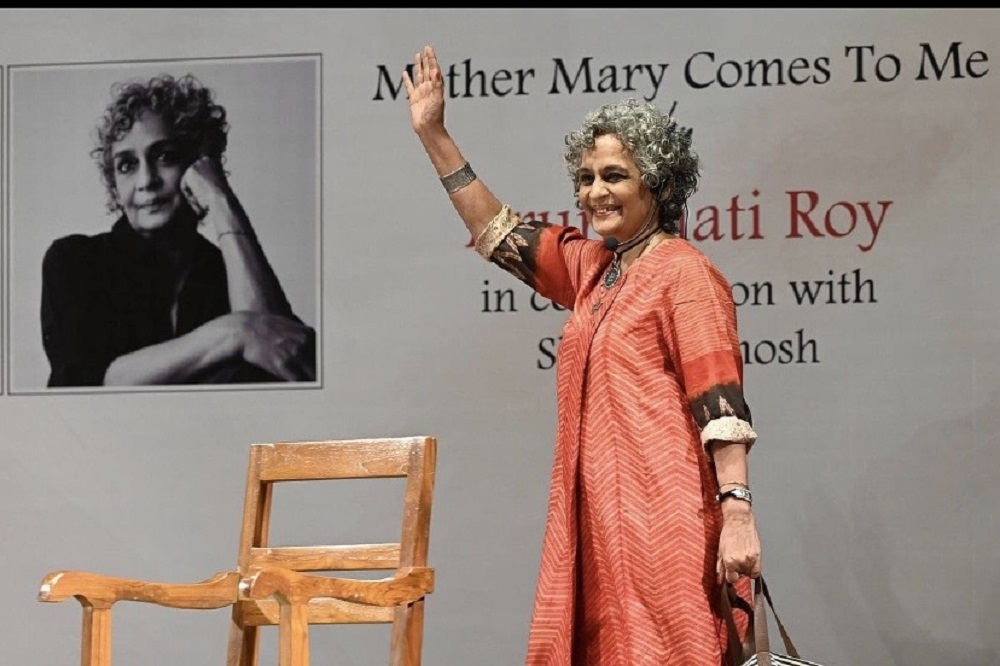
Arundhati Roy turns grief into language with its own linguistic rules
What makes this book mind-boggling - and I use the word with its full weight - is Roy’s refusal to let pain be redemptive in the white Western memoir sense: the arc in which suffering is truly “transformed” into something beautiful, inviting the reader to feel that the transformation was worth it. It resists this very pattern. Where the reader respites in the end. Roy goes to the level of Kristeva’s abjection; she does something stranger and original: that the pain and the art are the same substance, seen at different distances, the way weather and climate are the same measured on different clocks. It's not like she did not survive her mother and then become a writer. No, that would be a reductionist approach. She became a writer during the very act of surviving, in real time, each sentence a small act of the same negotiation her body had been performing since childhood; how much to reveal, how much to withhold, how to breathe around a presence too large for any room. She became hypervigilant at the art of calculation. There is no gold at the end of this lead. There is only more lead, more precisely shaped; lead that treats bipolar disorder, but also kills the brain cells.
This is also, unmistakably, a book about architecture, literal and otherwise. Roy trained as an architect before she was a novelist, and the memoir is full of houses but sadly not homes: the house in Ayemenem, the house Mary built her school inside, the houses Roy and her brother were evicted from, the metaphorical house of the self that a daughter must build when the original one keeps collapsing on her without warning, the houses that remind you of houses that never become home, a home with warmth, familiarity, and comfort. Roy writes of wanting, in her creative work, to “work alone,” not wanting to confer even with people she loved, and you understand, reading this, that this hunger for solitary authorship is not vanity; it is a need of an artist who is occupied. It is a child who grew up in a house where every room could turn into a storm without warning, so she desires to finally build a room of her own where the weather is hers to command, where the storm, for once in her life, answers to her.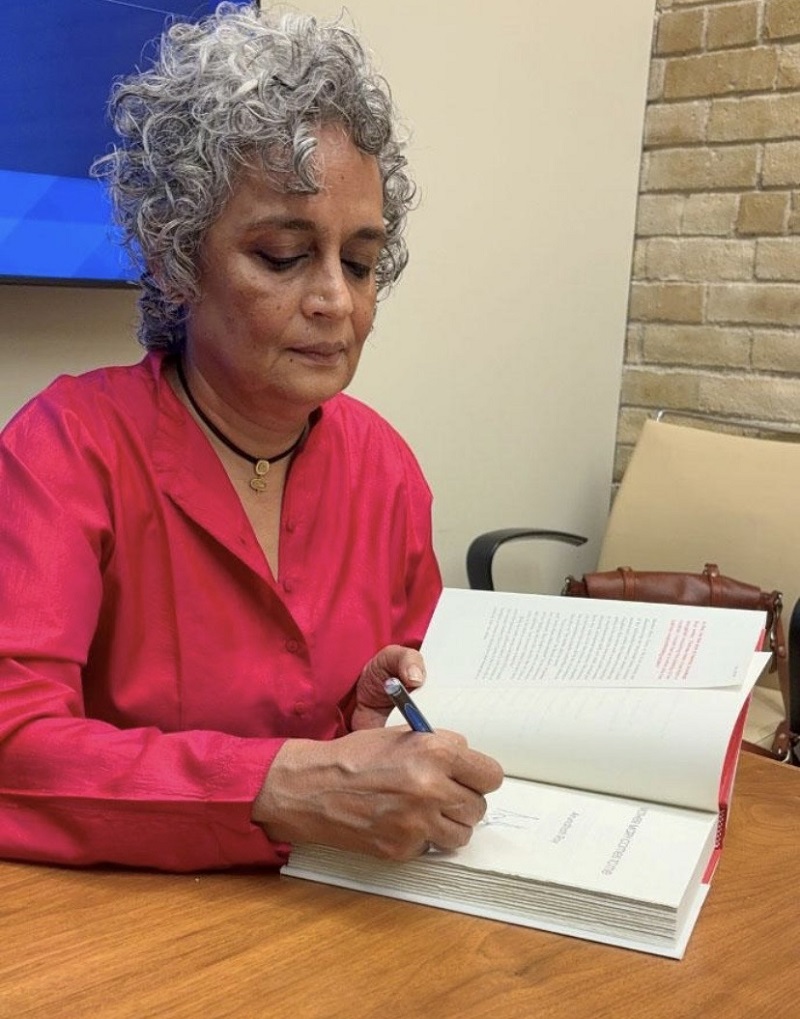
A memoir of hope, despair and shame
Looking into the politics for which Roy is globally known, her activism, her essays on Kashmir and caste and empire, her willingness to be despised by authority are present here too, but transfigured, almost domesticated back to their source. We see now that Mary Roy’s own life, a woman who sued her own brother and the Indian state itself to win Christian women equal inheritance rights, who never stopped learning, stagnated, or feared change, was its own kind of civil war fought inside a single body, in a single small town, decades before her daughter took the fight to a national stage. Arundhati did not invent her radicalism in university seminar rooms. No, she was raised inside a live insurrection, mothered by a woman who treated the world’s injustices and her own household with identical ferocity, so that the line between political conviction and inherited temperament nearly vanishes. The book quietly proposes that Roy’s global conscience and her private wound are of the same origin, doing the same work at different scales, and that to separate the activist from the daughter is to misunderstand both.
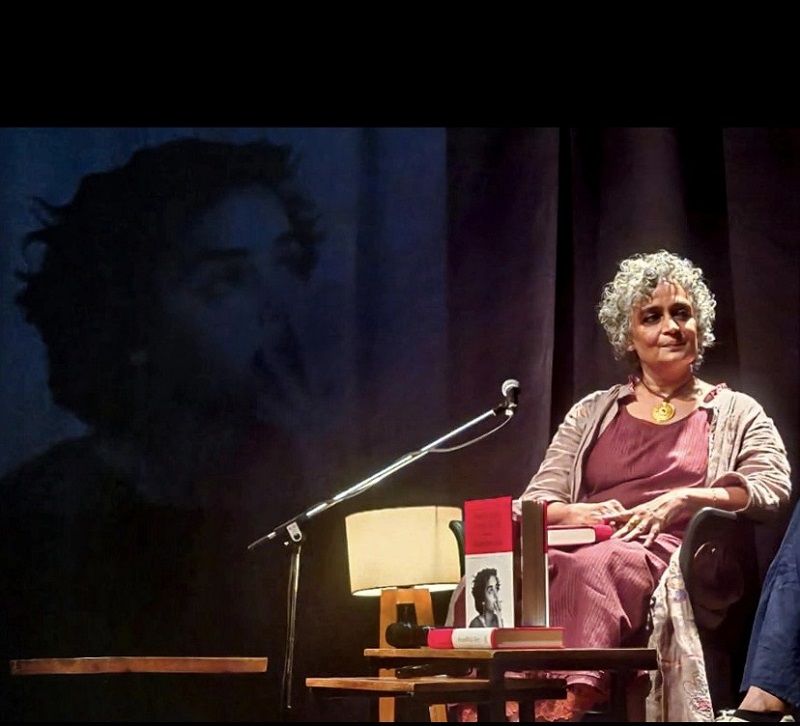
Roy, on motherhood’s love and naked violence.
By the final pages, the turbulence stays; her classic way of resisting is embracing chaos; however, it has been given a shape so that the reader can hold or, if not hold, can at least make some sense of it. Roy herself was finally given, in her mother’s death, a shape she could grieve with contradiction, since the book remained honest in admitting that some contradictions never fully close. This is not a book that asks to be admired for its lyricism, though it is lyrical. Sentence after sentence built the way its author was built, out of pressure and withholding. It questions this instead, asking us to recognize that behind nearly every writer who has ever startled you with a sentence, there is someone who once taught them, at unbearable cost. Mother Mary Comes to Me does not explain Arundhati Roy. It explains why she had no choice, and in doing so, it makes the strongest case I have read in years for the terrible, unglamorous truth that great art is rarely chosen. It is survived into.
You may also like: